the first pair of jeans, road safety, and aversi vs. gpc
may focus
May usually draws our attention to Independence Day campaigns. Since we have already covered that topic, however, we chose to focus on entirely different stories for this month’s roundup. As with our April review, we have supplemented our observations with data processed by Hapttic. This allows us not only to discuss the campaigns themselves but also to examine how audiences responded to them across digital channels.
As a reminder, Hapttic is an AI-powered marketing analytics platform that processes digital media data and provides detailed semantic analysis of brands, campaigns, and topics.
tegeta motors x joyboy – don’t assume safety
Road safety has long been one of the key themes within Tegeta’s CRM strategy. In May, the company brought this commitment into public spaces through a billboard campaign featuring simple yet powerful words such as “I’ll squeeze through,” “I’ll make it,” “It will hold,” and “They’ll let me pass” — phrases that often flash through a driver’s or pedestrian’s mind just before breaking a traffic rule.
Each phrase was paired with a relevant fact or statistic:
-
“I’ll squeeze through” — at high speeds, a driver’s field of vision can narrow from 180° to as little as 40%.
-
“I’ll make it” — the human eye perceives vehicle speed as roughly 20% slower than it actually is.
-
“It will hold” — one in every ten accidents is caused by vehicle malfunction.
Vehicle maintenance has always been a recurring topic in Tegeta’s communications, and as part of the campaign, the company offered free suspension inspections for drivers.
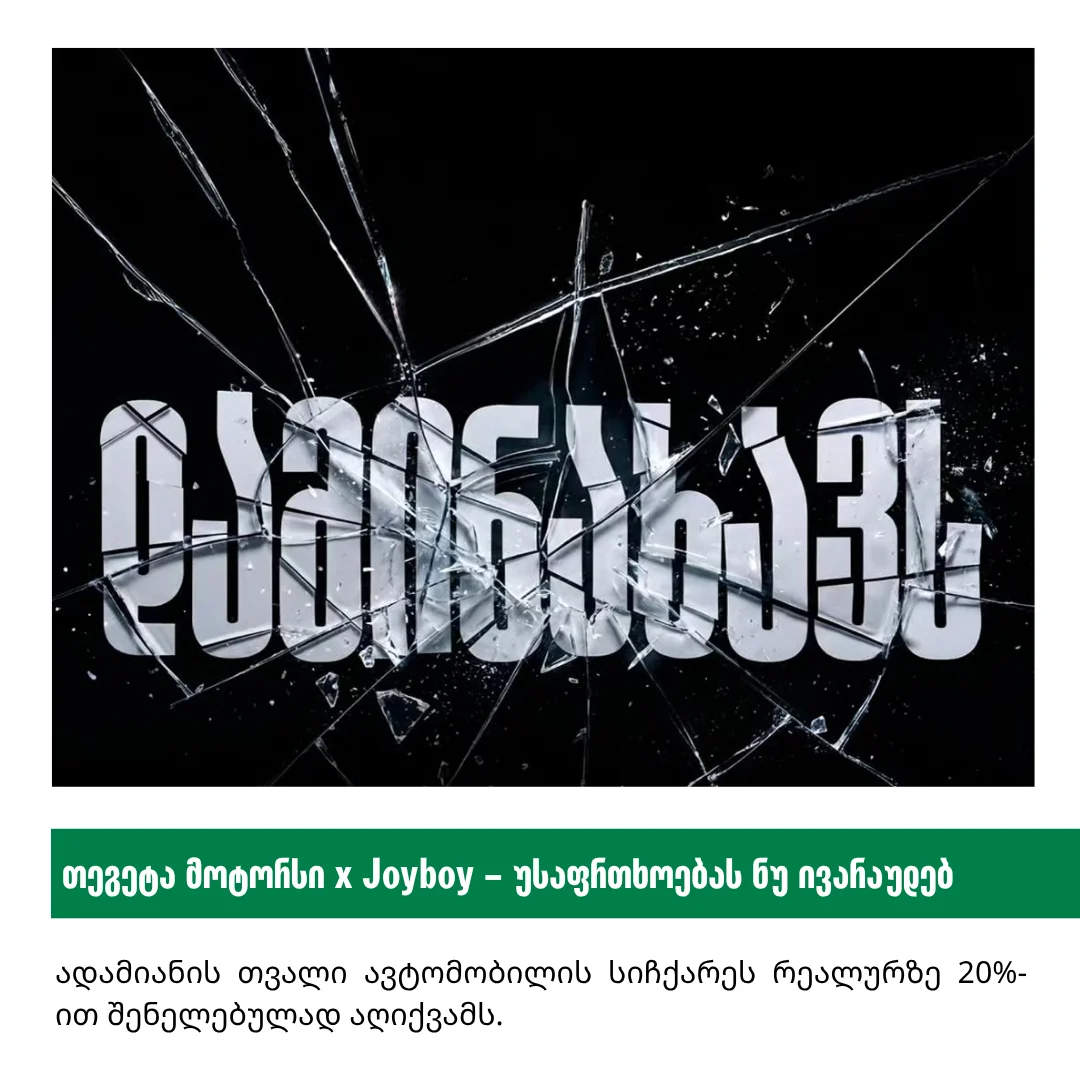
Choosing billboards as the campaign’s primary platform, alongside digital channels, was strategically sound. The format allows brands to reach audiences in high-traffic environments and create a strong emotional impact within seconds through concise messaging and visual clarity.
While the campaign was not heavily supported by social media content, one of its most interesting outcomes emerged online. Rather than simply reacting to the message, users began sharing their own experiences in the comments:
-
“When someone overtakes on a blind curve thinking they’ll make it.”
-
“#MaybeItWillWork”
-
“Some pedestrians think every zebra crossing belongs to them and that drivers will always stop.”
Discussions quickly expanded to topics such as driver and pedestrian responsibility, mutual respect on the road, and broader road safety concerns. In other words, much of the conversation shifted away from evaluating the campaign itself and toward debating the issue it addressed. That is often the strongest indicator of effectiveness: the campaign succeeded in making people think about road safety and created another space for meaningful public discussion.
dressup – do you remember your first pair of jeans?
To celebrate the 153rd anniversary of jeans, Dressup launched an emotional campaign featuring leading denim brands including Levi’s, Lee, Wrangler, Calvin Klein, Tommy Jeans, and others.
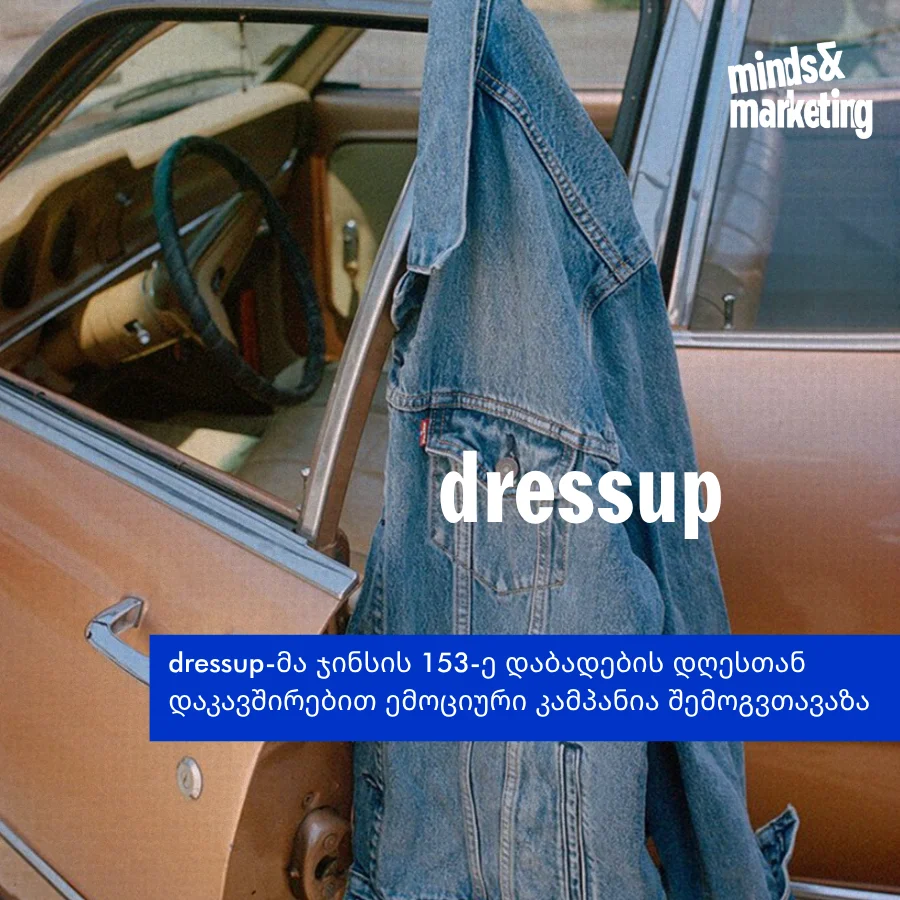
To fully appreciate the campaign, it is important to understand its cultural context.
Jeans are more than a piece of clothing. In Western societies, they have long symbolized youth, individuality, and self-expression. Across post-Soviet countries, however, jeans carried a much deeper meaning: they became symbols of freedom, the Western world, and forbidden aspirations. This symbolic significance is perhaps best illustrated in Dato Turashvili’s Generation Jeans, where denim becomes a metaphor for an entire generation’s longing for liberty.
Today, jeans are universally accessible, but that was not always the case. Photographer Guram Tsibakhashvili reflects on this era in Dressup’s campaign video series, recalling his own first pair of jeans and what it represented at the time.
When I first encountered the campaign slogan, I assumed its emotional appeal would primarily resonate with older generations who genuinely remember their first pair of jeans. For younger audiences born in independent Georgia, life without jeans is almost unimaginable.
Just as I found myself wondering how the brand planned to connect with Gen Z - and recalling our previous discussion about brands and generational dynamics - I came across another campaign video featuring Nana Charkviani. She does not remember her first pair of jeans, but she vividly recalls the first time she saw ripped jeans on another girl and liked the look so much that she attempted to distress her own pair.
That moment revealed something important: jeans are such a significant cultural phenomenon that every generation has its own story to tell.
The campaign culminated in a birthday celebration for jeans, featuring the premiere of a new version of Organi 78, performed by Nina Sublatti and Luka Zakariadze. By connecting the campaign to the legacy of Irakli Charkviani - often associated with Georgia’s own “Generation Jeans” - Dressup successfully tied its narrative together.
According to Hapttic data, the campaign generated nearly 20 pieces of content and accumulated more than five million views across social platforms, primarily Facebook and TikTok.
Audience sentiment was overwhelmingly positive. Comment sections became spaces where people answered the campaign’s central question by sharing memories of their own first jeans. While nostalgia certainly played a role, the campaign’s success was not simply a result of choosing the right product. Dressup made a strategic decision to focus on memories rather than merchandise, and it involved the right voices to bring those memories to life. The result was a campaign with genuine emotional resonance.
aversi vs. gpc – who introduced tirtir better?
The arrival of a new brand is always interesting to observe, but TIRTIR’s entry into the Georgian market offered a particularly fascinating case study. Two major pharmacy retailers introduced the brand almost simultaneously, yet each adopted a completely different communication strategy.
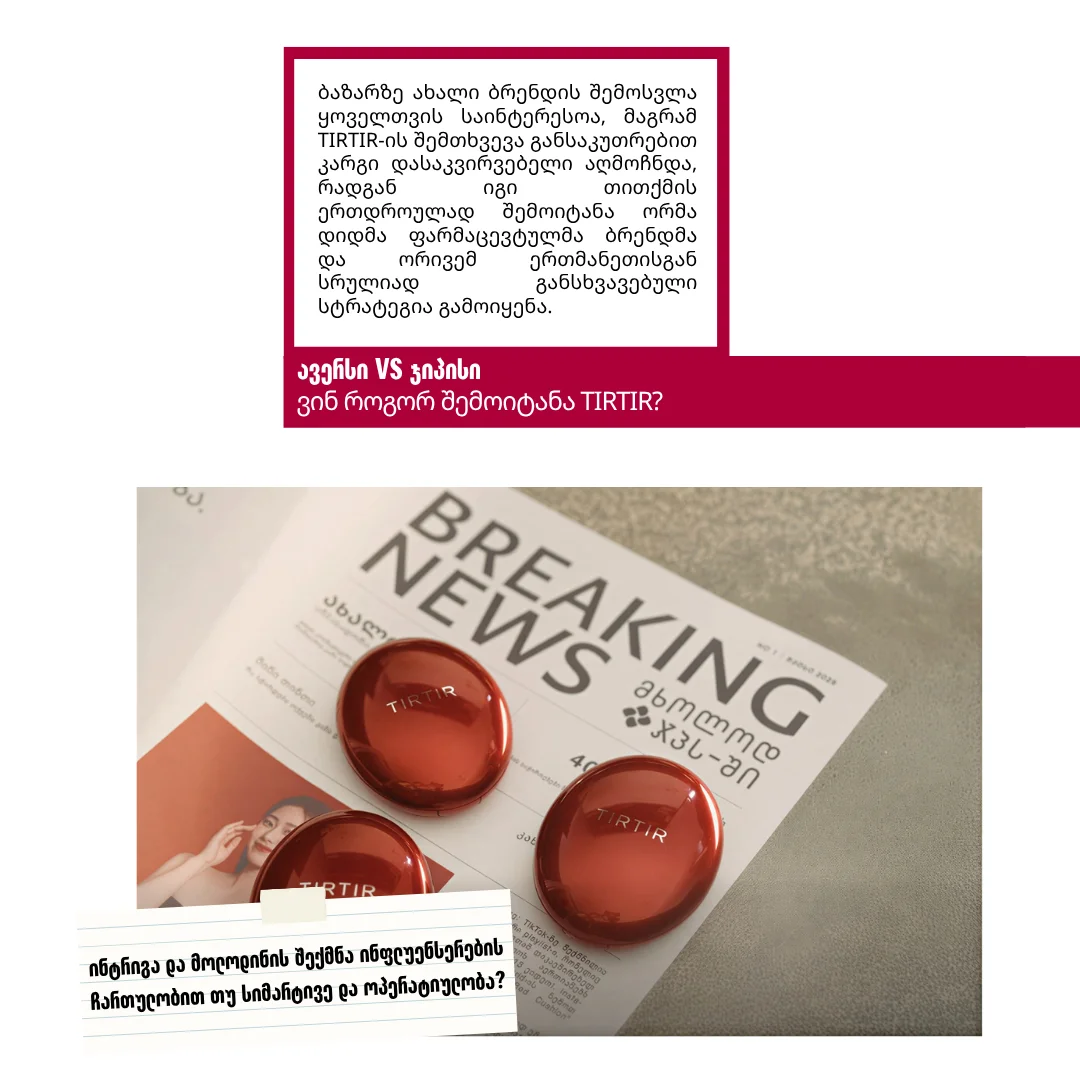
Chronologically, GPC moved first. Weeks before the launch, the company began teasing a “big announcement” through influencer-led content while deliberately keeping the brand name hidden. This approach was consistent with GPC’s established communication style, which frequently relies on mystery and anticipation to build excitement around new products.
At the peak of that anticipation, Aversi unexpectedly released a short video directly announcing that TIRTIR would soon be joining its assortment.
As a result, despite weeks of teaser activity from GPC, Aversi became the first to publicly reveal the brand’s identity — even before the product was available in its stores. The following day, GPC also "unveiled" the secret.
At first glance, one might argue that Aversi won the communication battle. The reality, however, is more nuanced.
-
At the time of its announcement, Aversi did not yet have the products available, whereas GPC did.
-
GPC invested significantly more time and resources into building anticipation through influencers.
-
Aversi currently offers only TIRTIR cushions, while GPC carries a broader product range. (Aversi’s pricing is lower, although pricing is not the focus of this discussion.)
Declaring a clear winner misses the point. What makes this case valuable is the opportunity to observe two fundamentally different strategic approaches in action: creating intrigue and anticipation through influencer marketing versus prioritizing simplicity and speed.
According to Hapttic data, despite GPC’s considerably larger investment, the performance gap was surprisingly narrow:
-
GPC: approximately 800,000 views, 1,500 engagements
-
Aversi: approximately 700,000 views, 1,000 engagements
The comment analysis is equally revealing.
For GPC, much of the audience conversation centered on the influencers themselves:
-
“You look beautiful.”
-
“I love this duo.”
-
“The best girls.”
In many cases, attention shifted away from the product and toward the personalities promoting it.
Aversi’s comments, by contrast, focused more directly on TIRTIR, product availability, and purchase intentions. Users also debated questions of official representation:
-
“Aversi says the same thing, so now I’m confused.”
-
“Aversi says it’s only officially available through them, but GPC says otherwise.”
Here too, the conversation expanded beyond the product itself, though in a very different direction.
final thoughts
This month’s review covered three very different stories:
-
A CRM campaign that generated both emotional impact and meaningful public discussion.
-
A nostalgia-driven campaign that united multiple generations around a shared cultural symbol.
-
The launch of a new product through two competing communication strategies.
The numbers tell part of the story, but together these cases reinforce a broader lesson: campaigns achieve a different level of impact when they tap into social values and cultural codes.
The digital data and semantic analysis support the same conclusion. The strongest-performing brands are not necessarily those with the largest budgets or the loudest campaigns. They are the brands that create space for conversation, invite participation, and build genuine emotional connections with their audiences.