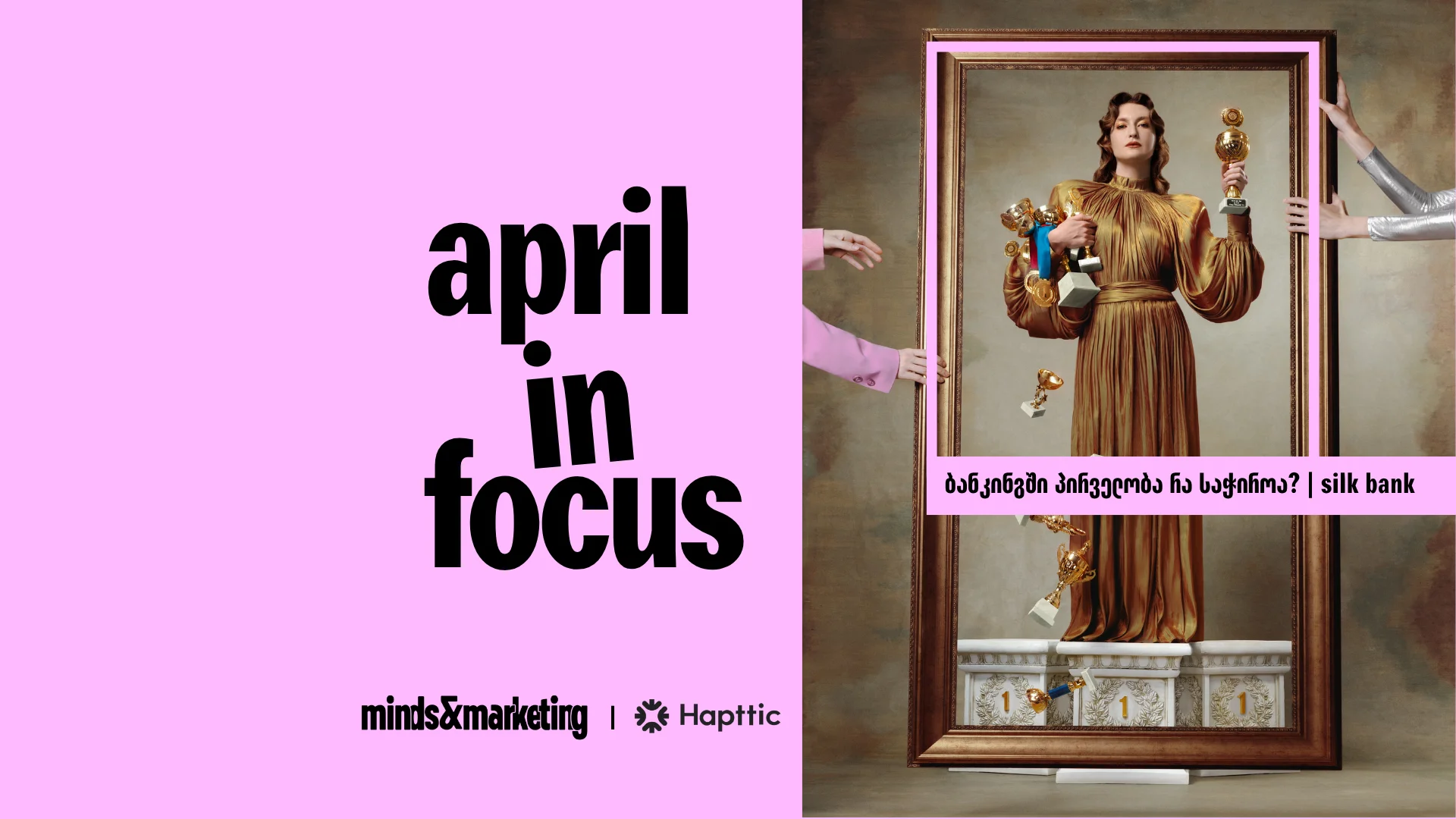
kako’s dopamine, cellfie’s “unlimited everything” and silk bank’s second place strategy
april focus
written by: mariam turdziladze
After March’s wave of Mother’s Day and Women’s Day campaigns, April naturally shifted toward new products, fresh campaigns, and new positioning plays. For this month’s recap, we selected one new product launch, one new campaign, and one repositioning strategy. But this time, instead of simply retelling what happened, we wanted to go deeper — combining both qualitative and quantitative analysis through data provided by Hapttic.
Hapttic is an AI-powered marketing analytics platform that processes digital media data and delivers detailed semantic analysis around brands, campaigns, and conversations. The platform allows us not only to share our observations, but also to evaluate real-time audience reactions and campaign performance across digital channels. Let’s talk.
dopamine — kako’s new energy drink
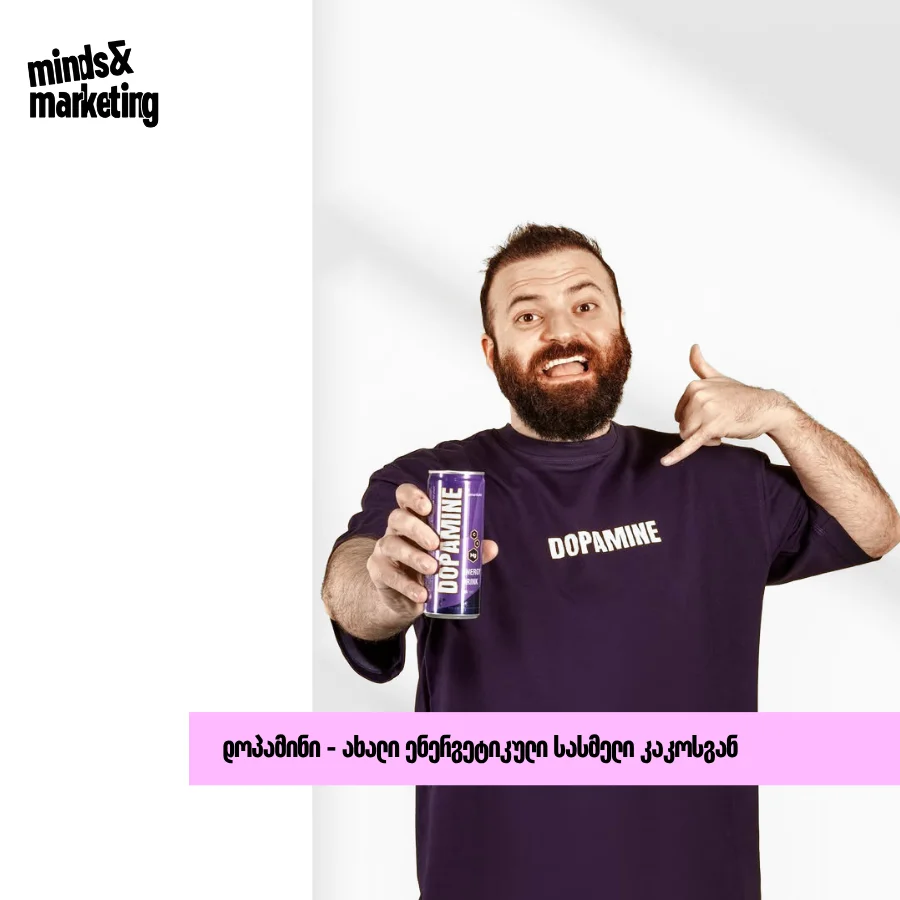
At first glance, it could have easily been dismissed as “just another product launched by a YouTuber.” But the “man full of dopamine” used his personal brand almost perfectly to build his product brand. In just one month, the campaign generated over 8.7 million views across digital platforms and broke sales records within its first week on the market.
So how did what looks like a fairly standard product manage such an effective market entry — especially without involving a creative agency? Let’s start from the beginning.
1. the name — dopamine
“I’m Kako, a man full of dopamine.”
It’s a phrase Kako repeats constantly throughout his videos. He’s known for making wild — sometimes borderline absurd — decisions, for “daring to be foolish” (his own credo), and according to him, the driving force behind all of it is dopamine.
So what better name could there be for his energy drink? The product attached itself seamlessly to the personality behind it. Personal brand and product brand became one ecosystem.
2. the launch video — the core narrative
The brand story was introduced through the launch film: a humorous storyline where young Kako faces off against the school principal, “Red Bullia,” after discovering “a new formula for elevation” that threatens Red Bull’s monopoly.
The reference is obvious. And intentionally so. Through the film, Kako positions himself as the start of a new era — one that is not intimidated by competition. Quite the opposite: the communication suggests complete confidence in the product from day one.
The video received positive reactions both for its storytelling and production quality, but the real engine behind Dopamine’s success was still the audience itself.
3. influencers and UGC content
Whenever a highly active social media personality launches a product, initial traction comes relatively easily. At minimum, their influencer circle will generate visibility through content.
That happened here too — but Kako expanded the strategy further. PR boxes were sent not only to influencer friends, but also to ordinary followers randomly selected from comments and TikTok videos asking for the product.
Earlier this year, while discussing 2026 social media trends, one of the strongest expectations was the continued rise of UGC (user-generated content). Dopamine created an ideal environment for exactly that.
According to Hapttic’s data, more than 500 UGC videos were created within a single month, most of them on TikTok. Some were built around the official Dopamine challenge, while others were driven by pure FOMO — people simply wanting to try the product and record their reactions.
The sentiment landscape currently looks like this:
- 85% positive
- 12% negative
- 3% neutral
Most negative feedback appeared on Facebook and revolved around three recurring themes:
- health concerns (“energy drinks are unhealthy”),
- audience concerns (“part of Kako’s audience are children”),
- and pricing.
Interestingly, we also attended the Dopamine presentation event ourselves. Under our own uploaded video, people were actively commenting that Red Bull tastes better. Meanwhile, Kako regularly uploads blind taste tests where Dopamine wins. Which probably proves one thing more than anything else: taste remains deeply subjective.
The launch was undeniably effective. The real question now is sustainability — whether the Dopamine team can maintain momentum while simultaneously continuing to grow Kako’s YouTube ecosystem.
“it keeps you hooked” — cellfie x holy motors

“Our hero says goodbye to his loyal friend, his beloved mother…” A melancholic soundtrack. Sad faces. Dramatic emotion. You expect someone to leave for war.
Then comes the plot twist.
The “hero” walks into the bathroom carrying Cellfie’s “Unlimited Everything” package — meaning he’ll apparently be staying there for a very long time, at least until the package runs out.
I wouldn’t call this purely a local cultural insight. It feels much more universal. And judging by audience reactions, many viewers clearly recognized themselves in the character. The identification strategy worked.
The campaign immediately grabbed attention through its narrative switch and humor-driven storytelling. Across all three platforms, the campaign accumulated 16.5 million views — objectively impressive numbers. But what do the reactions behind those numbers actually tell us?
As we already know, user behavior changes significantly from platform to platform, and this campaign is a very clear example of that.
According to Hapttic’s analysis:
- Instagram users reacted mostly to visual and emotional elements (“the dog is so cute”);
- TikTok introduced more criticism based on actual service experience (“the internet barely works,” “they call it unlimited but it constantly freezes”);
- Facebook — where the campaign gathered the highest reach — showed the strongest concentration of negative feedback focused on pricing and service issues (“you activate the internet and it stops working in an hour,” “prices keep increasing while service stays the same”).
Final sentiment analysis:
- 52% positive
- 46% negative
- 2% neutral
And this is where the campaign becomes particularly interesting.
Creatively, the execution is genuinely smart. But audience reactions reveal a visible gap between advertising communication and product experience. Ideally, the product should be just as strong as the advertising itself — and vice versa.
“first place belongs in championships, banking belongs in banks” — silk bank
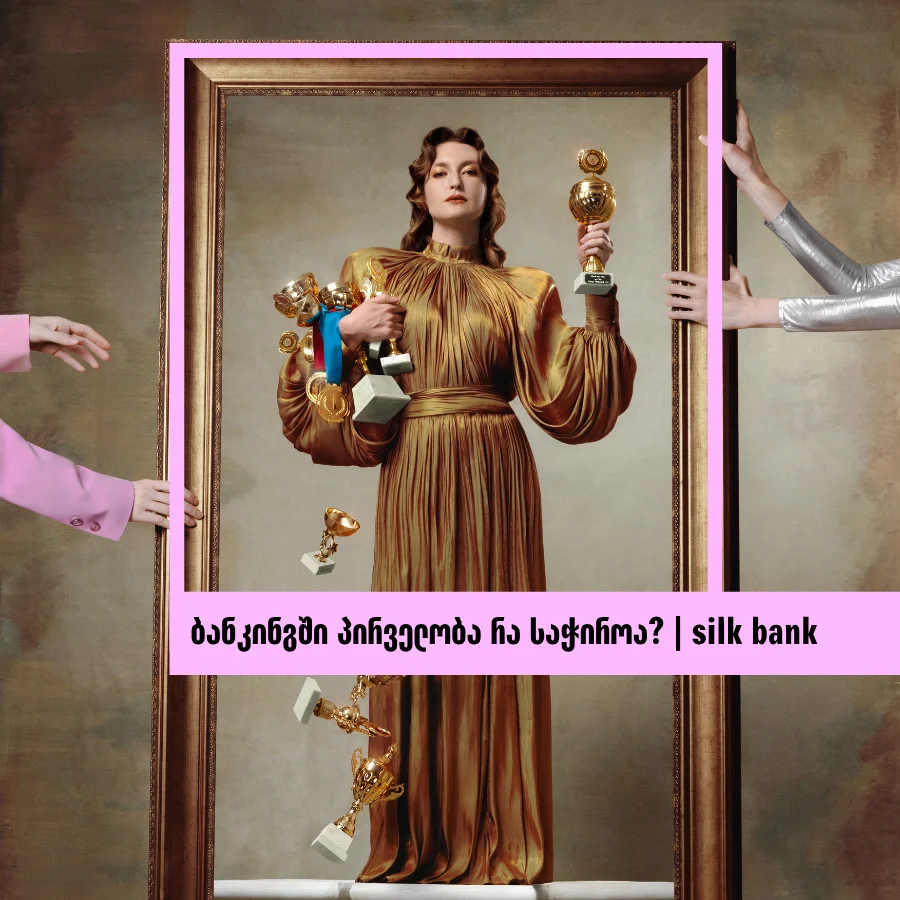
“The purpose of this video is not inspiration or motivation.” The first frame already prepares us for a plot twist. Both narratively and visually, the campaign is split into two acts.
In the first half, Silk Bank intentionally repeats the kind of messaging we constantly hear from other banks: “When you are yet another Georgian victory, maybe that feels good.”
A very deliberate line. And yes, everyone understands exactly which two brands are being referenced.
“Banking is not a competition. It’s not inspiration, not art, and not sports.” More sarcasm.
Then the second half dismantles everything. Awards disappear. Artifacts disappear. Even “Greenland” gets removed. What remains is only what Silk believes belongs in a bank: banking itself.
And finally, the slogan: “Silk — your second bank in a world obsessed with being first.”
The campaign generated over 9.8 million views across platforms. Sentiment breakdown:
- 96% positive
- 2% negative
- 2% neutral
Notably, the negative reactions were aimed more at the banking industry itself rather than the campaign.
A separate mention belongs to the narrator, Nika Tavaze, whose delivery matched the tone of the film exceptionally well.
Silk Bank built this campaign around an unconventional positioning strategy. Instead of fighting for “number one” status through familiar category tropes, the brand calmly embraces the role of “the second bank.”
It rejects the race altogether.
While the campaign is currently performing strongly, the more interesting question lies ahead: how will the bank continue building brand meaning and communicating its services without participating in the very “competition” it openly criticizes?
final thoughts
These campaigns leave us with several important questions:
- Will Dopamine manage to sustain sales momentum while simultaneously expanding Kako’s YouTube ecosystem? Time will tell whether this was simply hype — or the launch of a genuinely successful product.
- How damaging can the disconnect between advertising communication and product experience become, and how will Cellfie respond to growing user criticism?
- How will Silk Bank continue communicating with consumers after adopting a positioning strategy that intentionally steps away from “competition”?
Until next month.