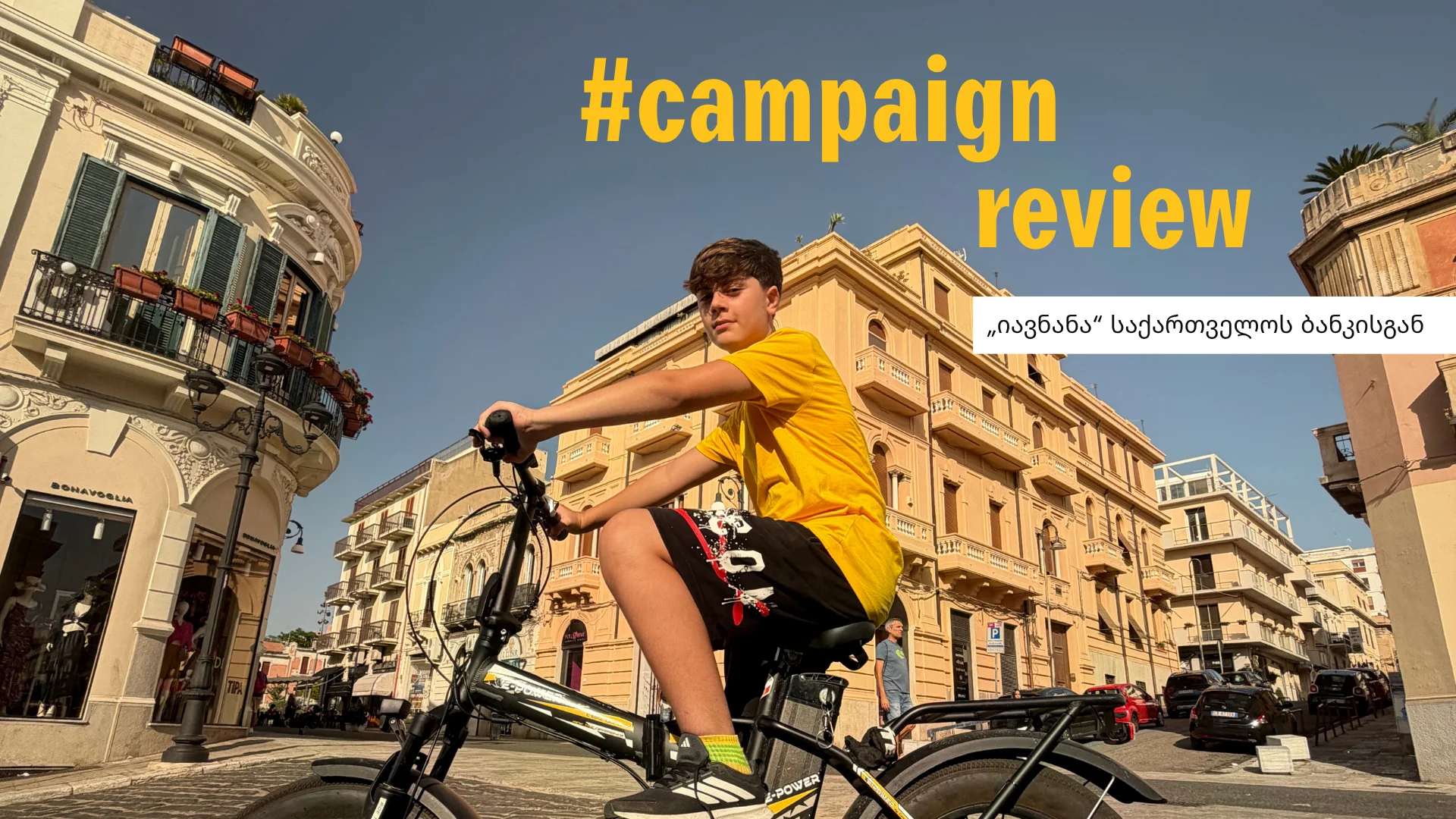
how a Georgian Lullaby became a language lesson
"Iavnana" by Bank of Georgia
From the biggest stages of the creative industry, we are constantly reminded that some of the most powerful creative ideas are rooted in the cultural elements of a particular nation. Some of those elements, over time, even grow beyond their original context and take on global significance.
Culture can serve as the foundation of a creative idea. But it can also become a tool for solving a real problem. Today, we look at a case where it does both.
Bank of Georgia, together with creative agency SUPERMARKET and Heima Production, has recorded bilingual versions of the traditional Georgian lullaby Iavnana, designed to help Georgian children growing up abroad learn and stay connected to the Georgian language.
the idea
When we previously explored Bank of Georgia’s Independence Day campaign, The Future Does Not Stop, we also touched on its second chapter - a message from the future generation to Georgian emigrants. At the time, the bank’s team mentioned that another initiative for emigrant communities was already in development.
Tamar Nozadze, Head of Retail Marketing at Bank of Georgia:
"After working on the May 26 campaign, we started thinking about what we could create for children living abroad. Supporting emigrants and empowering future generations are both strategic priorities for us, so we decided to combine them. We wanted to develop something that would carry not only emotional value, but also a practical purpose - something that could remain meaningful across generations."
the challenge
Bank of Georgia and Supermarket have worked together on numerous projects, and this initiative was shaped by both general human observations and insights available to the bank.
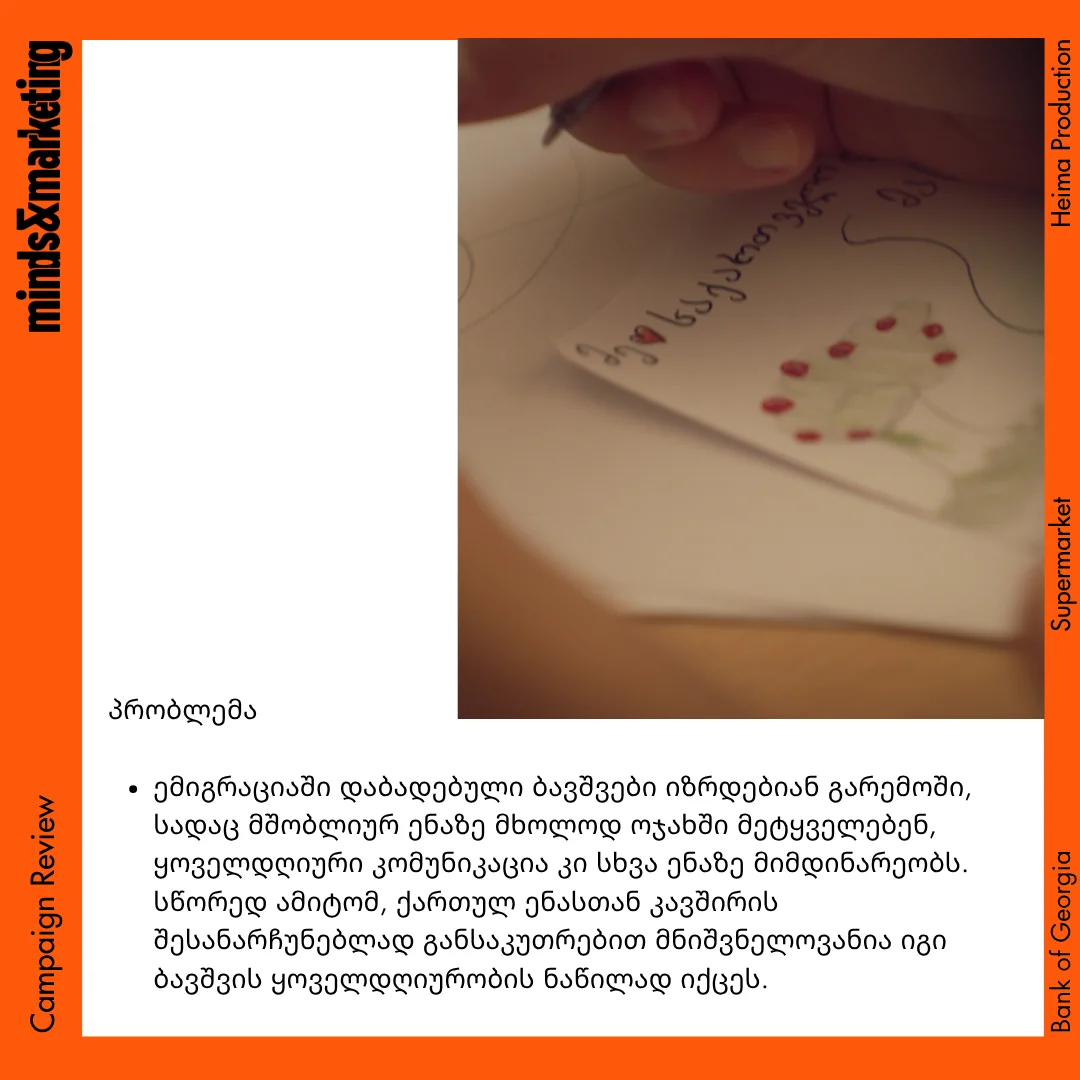
The core challenge became clear: children born and raised abroad often use Georgian only at home, relying on another language for everyday life. To preserve their link to the Georgian language, it must be seamlessly integrated into their daily routine.
the solution
To bring children closer to Georgian, the team needed to find a format that would not feel like another lesson or homework assignment - something capable of transferring knowledge naturally, without requiring additional effort from the child.
That thinking led them to music.
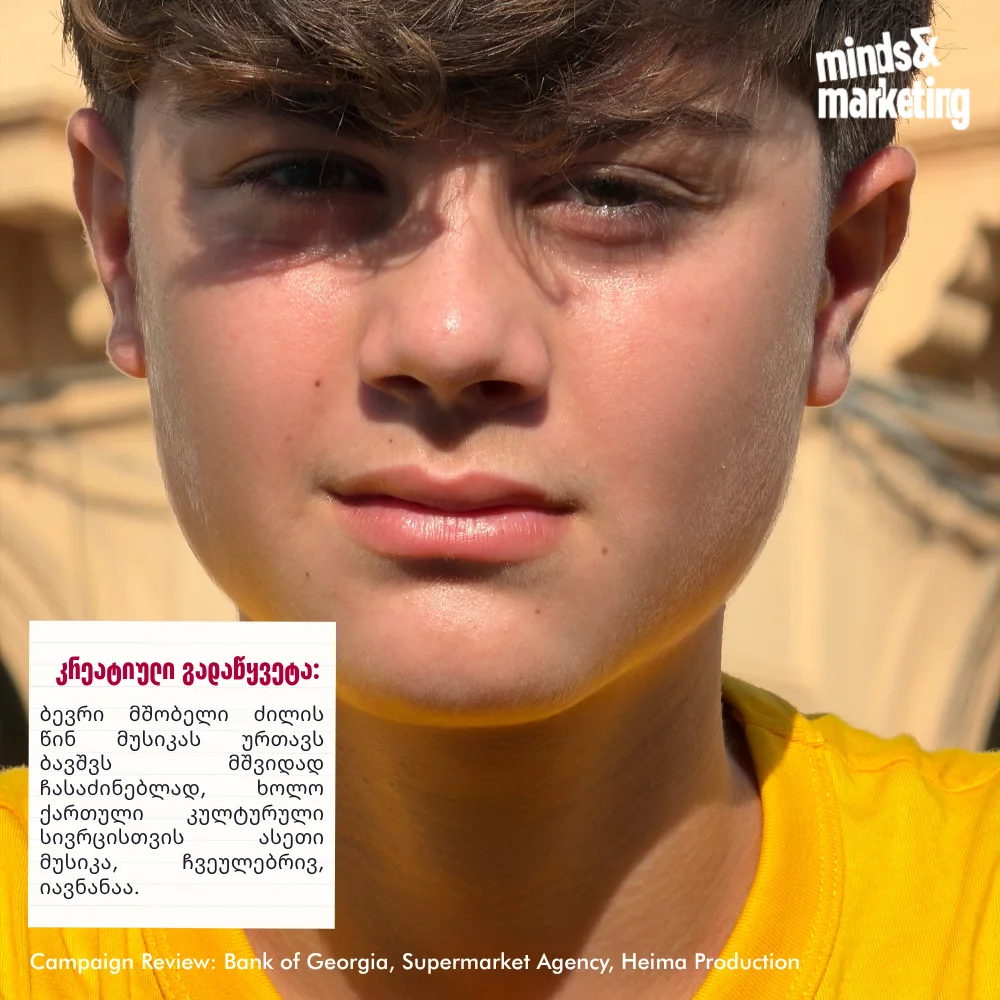
Playing music before bedtime is already a familiar ritual in many families, helping children settle and fall asleep. Within Georgian culture, one of the most deeply rooted forms of bedtime music is Iavnana, the traditional Georgian lullaby.
Its structure and repetition also offered another possibility: the familiar melody could carry new words and phrases, allowing different pieces of vocabulary to flow naturally into one another.
Mebo Nutsubidze, composer and co-founder of Heima Production:
“We needed to find a way to transform the Iavnana everyone knows into something new, across three languages, so that Georgian children living abroad could learn Georgian and maintain their connection to the language. It was quite a difficult task because we had to preserve what matters most about Iavnana - its familiar melody, character and sense of calm - while giving it an entirely new educational function.
What makes this version particularly interesting is that the lullaby is sung by two people - a mother and a father. They respond to one another and also sing together to the child. This made its main educational purpose even more engaging and easier to understand. I perform the male vocal, while Tatia Darsania performs the female vocal.”
Based on the size of the Georgian diaspora, three languages were selected: English, Italian, and Greek. As a result, the team created Georgian-English, Georgian-Italian, and Georgian-Greek versions of the lullaby.
the challenge behind the execution
Given the complexity of the project, numerous challenges emerged throughout the process. The first was the format itself. Unlike a traditional campaign, there was no existing blueprint to follow.
Giorgi Tabatadze, co-founder of creative agency SUPERMARKET:
"This was an unconventional project. Unlike a classic campaign, there is no ready-made roadmap for something like this. Usually, clients come to us with an existing product that needs promotion. In this case, we first had to create the product itself, and only then think about promoting it.
It was one of those ideas where none of the parties involved could be fully certain about every detail of the execution from the beginning. Through collaboration and a shared approach, we gradually arrived at the final result."
Beyond the format, the most significant challenge was the content itself. The lyrics had to be carefully crafted so that children could easily absorb basic vocabulary, while the translations remained natural, accurate, and culturally appropriate.
Mari Bedoshvili, Georgian Language and Literature Teacher, Educational Resource Author:
“When selecting the words and phrases, the main consideration was how children develop language skills at an early age. At this stage, children do not acquire language through mechanically memorizing words or translating them, but through listening, repetition, emotional connections, interaction, and play.
That is why we selected simple vocabulary connected to a child’s everyday experiences. Since the versions are bilingual, it was especially important for both languages to sound natural and authentic to the child, so that the text would not feel artificial or come across simply as educational material.”
execution
A large multidisciplinary team helped bring the project to life. Alongside representatives from the bank, the agency, and Heima Production, educational experts, translators, and vocalists were actively involved throughout the process.
Vocabulary choices were revised multiple times, recordings were reworked repeatedly, and every detail was refined until the final versions met all key criteria: they were functional, educational, practical, and musically harmonious.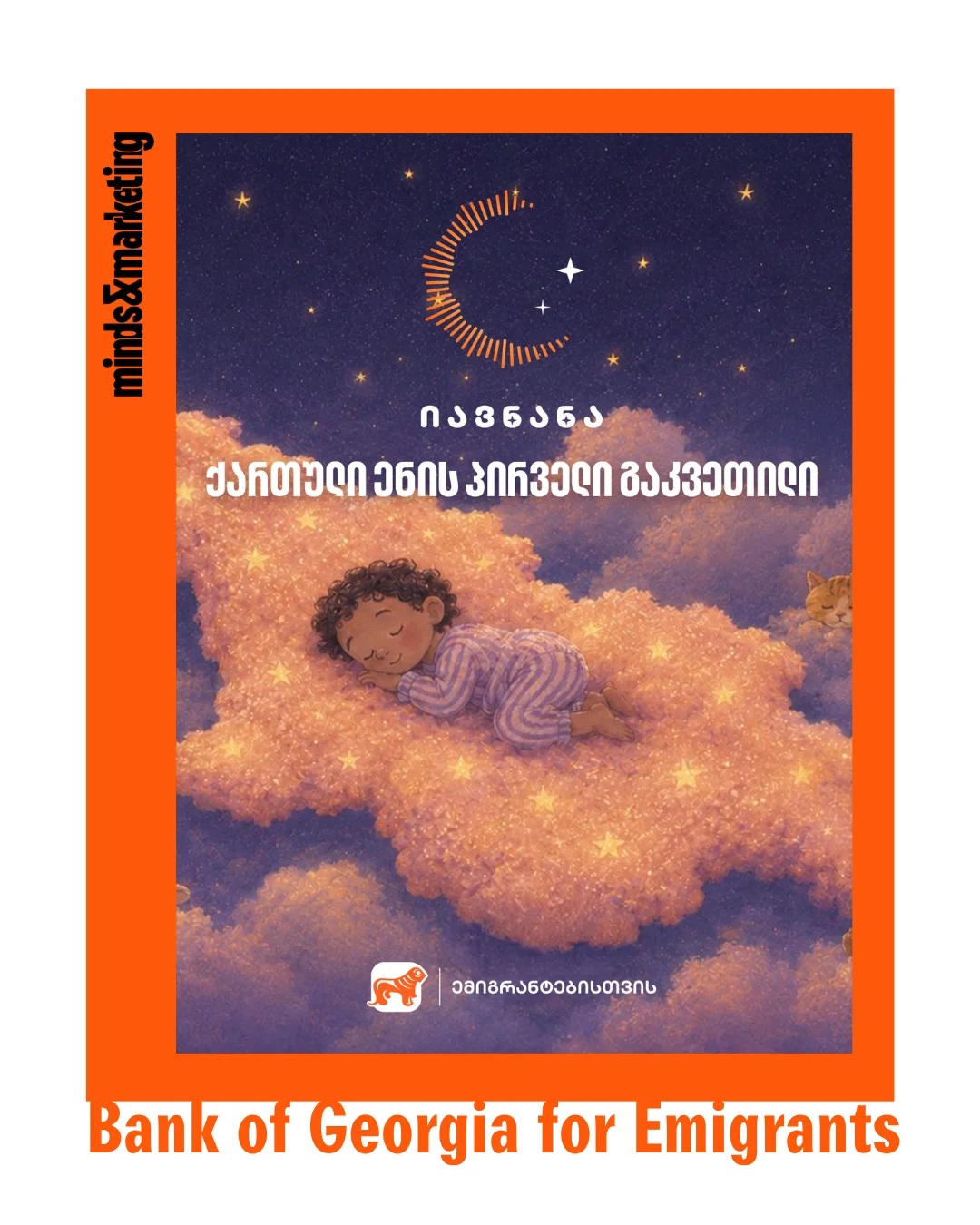
As part of the campaign, the team also produced a video which showed the Sunday routine of immigrant children through the example of a child living in an Italian town.
Tamar Nozadze, Head of Retail Marketing at Bank of Georgia:
"Over the years, we have created many different stories about Georgians living abroad. Yet somehow, we had never truly focused on the children growing up there. This was the first time we filmed young people who eagerly wait for Sunday so they can see their friends and attend Georgian language classes.
We also documented their reactions to the project itself - how an older brother plays the lullaby for his younger sister, and how valuable Georgian heritage is to them."
To ensure the product reached its audience, the team launched targeted communication campaigns tailored to specific countries. Content creators and opinion leaders were selected strategically within each market.
The initiative is also being promoted through partnerships with local Georgian Sunday schools, diaspora organizations, and community networks, helping it reach families directly.
key takeaways
At first glance, the idea appears simple. In reality, it is a highly complex project shaped by the work of dozens of people across multiple disciplines.
More importantly, it highlights several broader lessons:
- A brand campaign can go beyond communication objectives and become a means of preserving and promoting cultural heritage.
- In strategic and complex projects, close collaboration and equal involvement between brand and agency are critical to success.
- Cultural elements can be more than creative inspiration - they can become practical tools for solving real problems.
- Non-traditional projects require the integration of diverse expertise and perspectives.
- The value of a campaign should not end when its communication period is over.