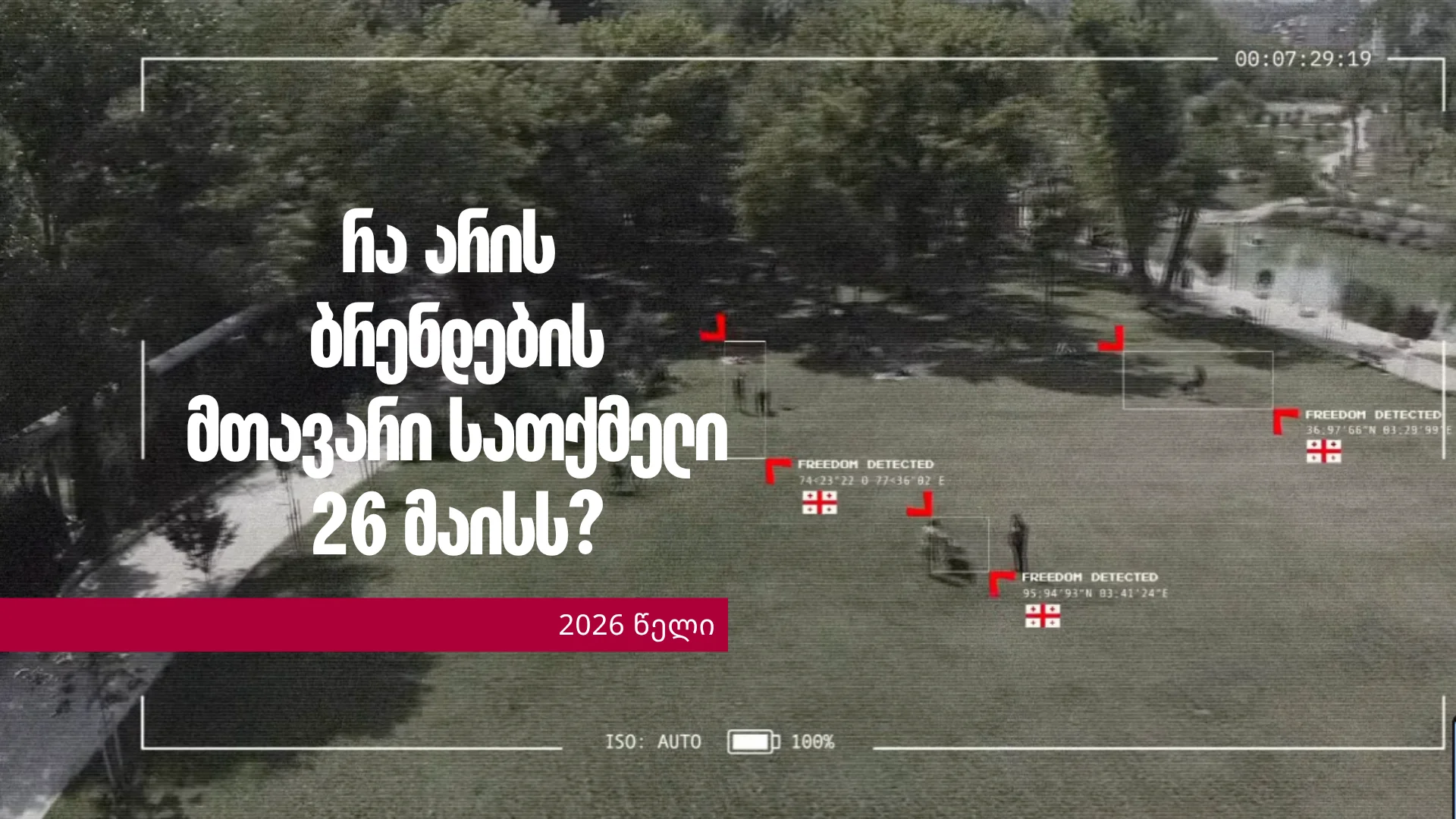
what are brands really saying on May 26
year 2026
In last year’s roundup of May 26 campaigns, we wrote: “Today, a flag means more than a flag. Every symbol means more than a symbol. Every idea voiced by a company from its platform this year means more than an idea — because the context itself has changed.”
That context remains heavy. Perhaps even heavier than before: more tension, more restrictions, more uncertainty.
And so, with or without limitations, it became interesting to observe what brands and agencies chose to say about independence this year — and just as importantly, how they chose to say it.
psp x playmakers — it is virus. freedom is contagious
Everyone remembers last year’s PSP and Playmakers collaboration, “Birds Don’t Forget How to Fly,” which went on to become one of the standout Georgian campaigns of the year, winning at Ad Black Sea 2025 and later receiving multiple international recognitions. Naturally, expectations toward this year’s campaign were exceptionally high.
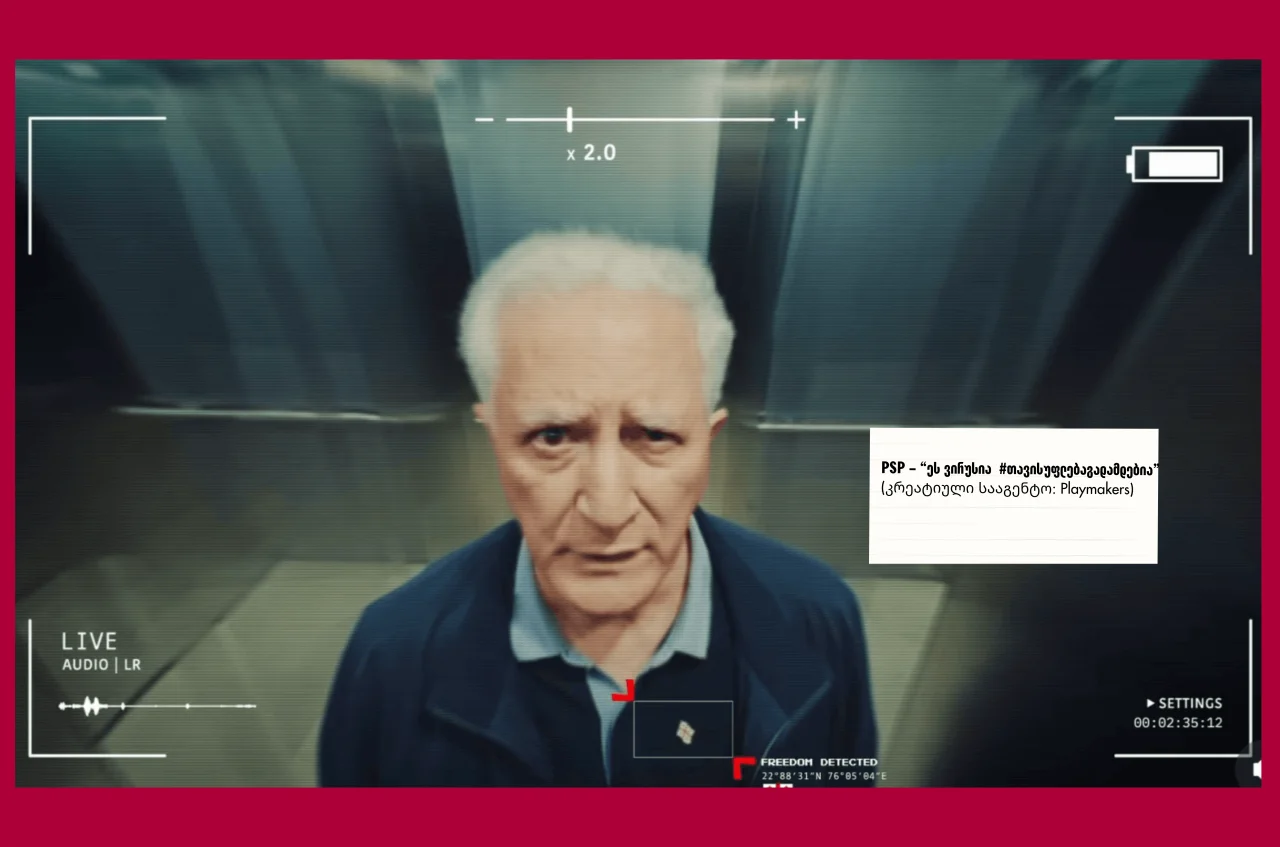
The metaphorical thinking continues here as well, though this time the creative territory feels much closer to the brand itself. For a pharmaceutical company, freedom is reimagined through perhaps the most recognizable metaphor within medical vocabulary: a virus.
The entire film is built through surveillance-style street camera footage. Every individual appears alongside one repeated system message: “freedom detected.” The reference is unmistakable. For more than a year now, surveillance cameras, fines and short-term detentions have become part of everyday reality for many citizens across streets, roads and public spaces.
The voice carrying the narrative belongs to one of the people most associated with the word “virus” itself — former National Center for Disease Control director Amiran Gamkrelidze. A figure who once spent years speaking to the public about danger, distance and restrictions is now speaking about freedom, closeness and human connection.
It is ironic. But more importantly, strategically intelligent.
Last year, PSP’s campaign intentionally broke expectations. The metaphor worked emotionally, though the connection to the business itself felt more abstract. This year, that connection becomes significantly sharper:
“They tried to defeat it through isolation, quarantine and antibodies…”
A clearly socio-political message is translated entirely through pharmaceutical language.
And perhaps what completes the film most effectively is the soundtrack: “Rogor Gavdzlebt Aq?” by LOUDspeakers — itself strongly associated with the country’s ongoing political climate.
tbc x playmakers — independence is your decision
If PSP framed freedom as “the most contagious virus,” TBC Bank approached independence through a different lens: decision-making.
More specifically — the decision to act independently.
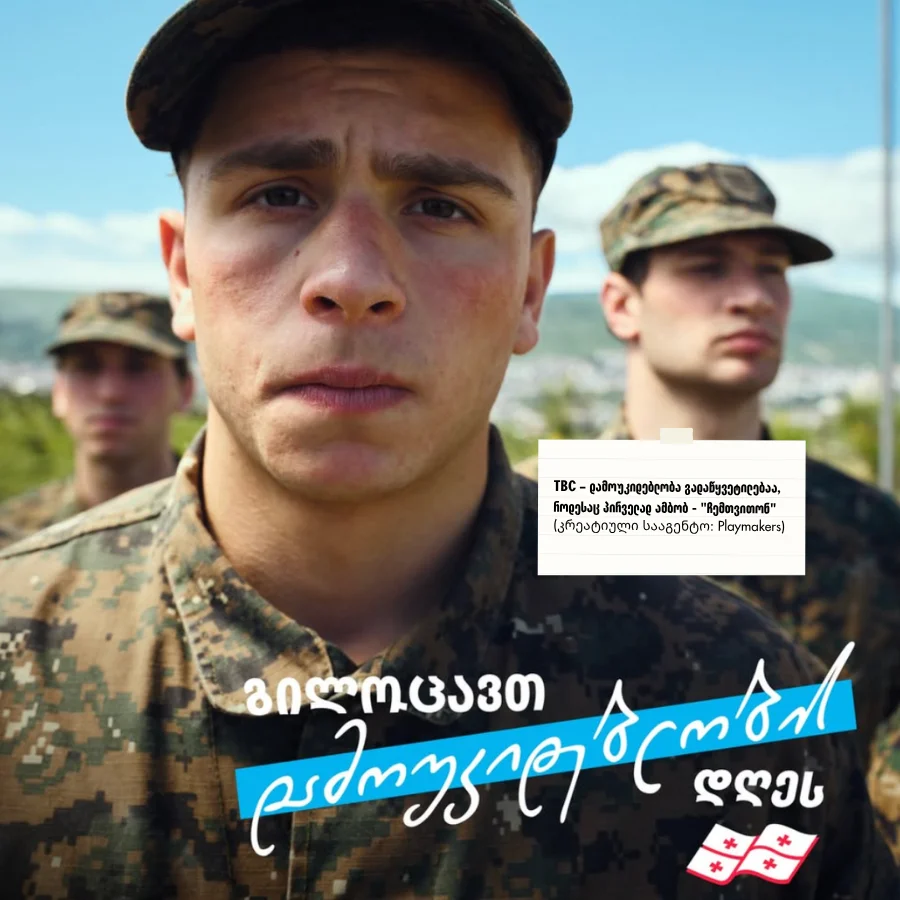
The central word of the campaign becomes “chemtviton” (“by myself”), a grammatically imperfect but emotionally loaded expression often used by children. Linguistically, it merges two similar meanings into one: “by myself” and “on my own.” And precisely because of that imperfection, the word carries warmth, innocence and honesty.
As the film progresses, characters grow older, generations change, but “chemtviton” remains constant — from childhood to old age. Independence here is framed not as a historical event, but as a continuous chain of personal decisions made throughout life.
Unlike last year’s more generalized historical narrative, this year TBC focuses entirely on contemporary, real individuals living across modern Georgia: children traveling alone from mountainous villages, young teachers working in remote regions, women who taught themselves foreign languages through conversations with tourists.
Not mythologized heroes. Not distant history.
But ordinary people shaping today’s Georgia through everyday acts of independence.
The campaign’s strongest transition arrives in its final moments, when the individual “chemtviton” transforms into the collective “we.” Independence is reframed not as a once-achieved national state, but as an ongoing shared responsibility.
And perhaps this is what makes the film strategically stronger than simple patriotism: independence is presented not as memory, but as practice.
bank of georgia x supermarket — the future does not stop
If PSP and TBC built their narratives across multiple generations, Bank of Georgia places its entire focus on youth — children, teenagers and the future itself.
The opening line defines the campaign immediately: “Freedom is born again every day.”
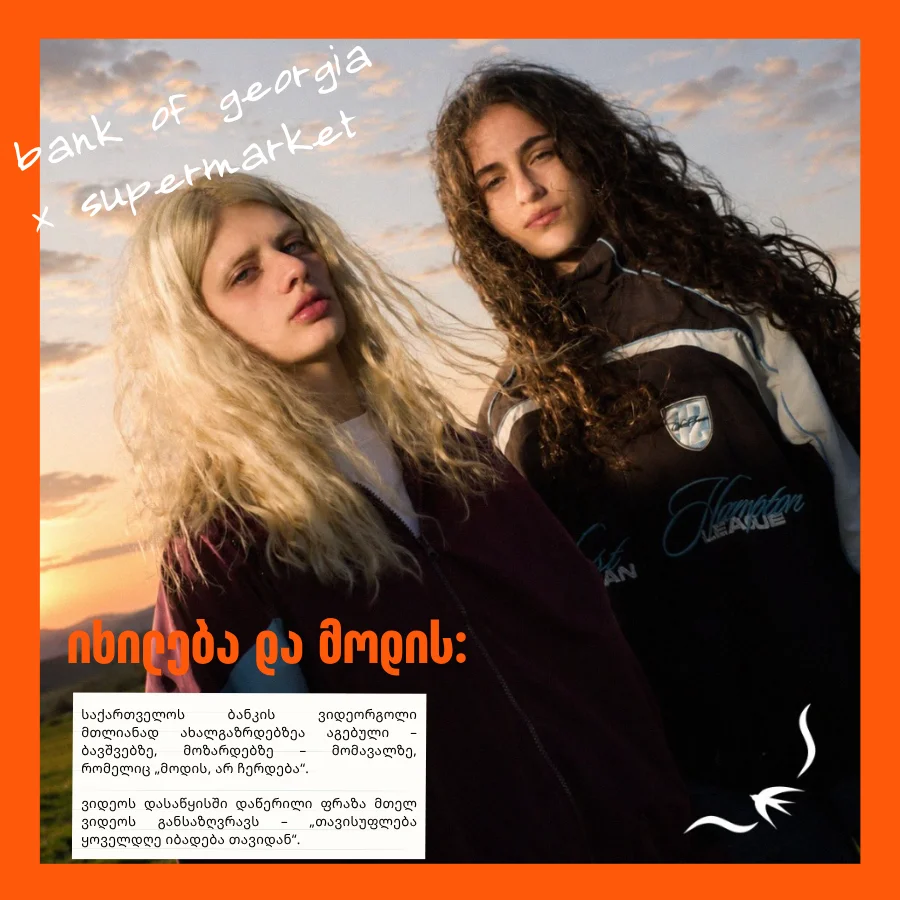
Much like TBC framed independence as a daily decision, Bank of Georgia frames freedom as a constantly renewing process.
The younger generation is portrayed almost like a force of nature: “If a door is closed, it enters through the window. If necessary, it climbs over walls.”
The campaign moves with relentless momentum. The verbs dominate: coming, jumping, accelerating, replacing. Visually, the direction, editing, casting and production design all reinforce that same energy. Every frame feels intentionally alive.
The film also creates an interesting tension between heritage and acceleration. It begins with Ana Kalandadze’s iconic poem “Sad Ari Skhva Sakartvelo” before transitioning into a far more energetic, future-facing rhythm accompanied by the phrase:
“Now it’s your time.”
Strategically, the campaign remains fully aligned with the brand’s long-standing platform — “don’t stop.” But this time, the message evolves beyond individual ambition and enters a national context:
the future itself does not stop.
liberty — a country of independent people
Like TBC, Liberty Bank also builds its campaign around real contemporary individuals. But unlike the metaphor-heavy narratives of the previous films, Liberty chooses directness.
The central symbol remains the Georgian flag — familiar, repeated and emotionally loaded. Yet the film gains its strength not from the symbol itself, but from the people carrying it.
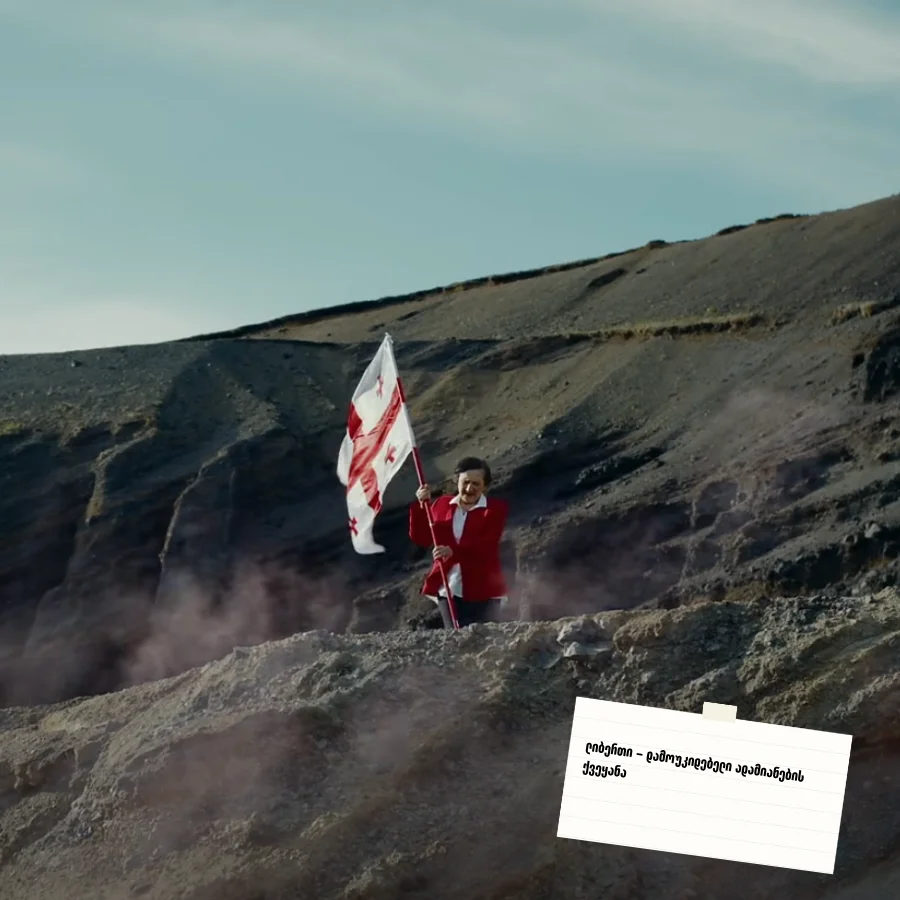
Three women stand at the center of the narrative: an emigrant mother sewing a Georgian flag abroad, a teacher introducing the flag to students in minority-populated regions, and perhaps most powerfully, a woman standing beside occupation wires on May 26, waving the Georgian flag directly in front of Russian soldiers.
Here, the message is no longer metaphorical.
Russia is explicitly named as an occupier. Fear is directly confronted. Patriotism is framed not through nostalgia, but through personal resistance.
And that directness becomes the campaign’s defining creative choice.
While previous years often relied on historical footage and distant heroic narratives, Liberty shifts the focus entirely toward contemporary reality: occupation, migration, language, identity and civic courage.
conclusion
Unlike previous years, brands no longer felt the need to retell Georgia’s history from the beginning. Instead, they focused on contemporary realities, real people and current tensions.
Across all major campaigns this year, the central force is no longer the state, institutions or historical mythology — but the individual. Ordinary people whose decisions, actions and responsibilities shape the country’s future every day.
Sometimes that force appears as an entire generation. Sometimes as youth. Sometimes as one individual standing beside occupation lines holding a flag.
But the underlying message remains consistent across all campaigns: independence is not simply a historical achievement. It is an ongoing responsibility.
And perhaps that is what brands were really saying this May 26:
love for the country has never been enough on its own — and it still isn’t today.