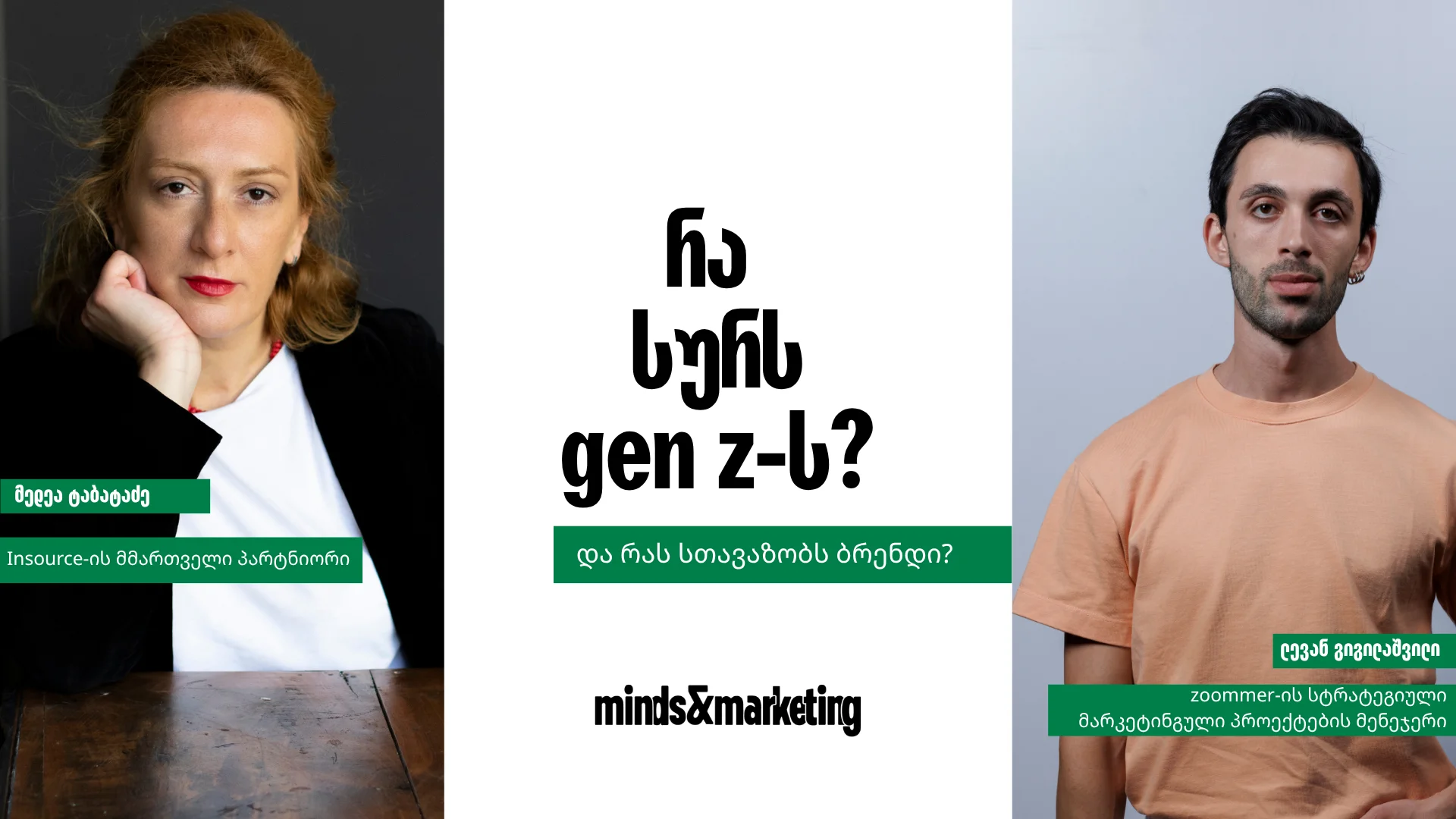
what does gen z want?
and what do brands offer in return
14 to 29 — this is the age range of Gen Z in 2026. this generation represents 22.9% of the global population and ranks second in size after Gen Alpha. This is not just a statistic. behind the numbers stands a generation that is not only consuming, but also producing — and rapidly becoming one of the most influential demographic groups in the world.
Gen Z is evolving fast. It has higher expectations across all areas of life and chooses brands that reflect its values. It is impossible for businesses today to ignore Gen Z’s influence — yet entirely possible that they still fail to communicate with them. And that is a critical mistake, because Gen Z is on track to become the most economically powerful generation.
What differentiates generations, and how can brands earn not only the attention but also the loyalty and advocacy of this new audience? Today, everything is far more complex than it used to be. The key question is: what must a brand do today to remain relevant tomorrow? let’s explore.
how gen z is reshaping traditional approaches
Gen Z is fundamentally transforming traditional approaches to both employment and marketing. Their attitudes toward education, careers, and purchasing behavior differ radically from previous generations.
To better understand these differences, we asked Medea Tabatadze, managing partner at consulting and research company Insource, to outline the defining characteristics of generations currently active in the labor market:
“Generation X is more tolerant of routine work and rigid systems. They rarely challenge structures. their skills and knowledge were formed in a time when information and communication technologies were far less developed.
Millennials are the ones who disrupted systems and drove innovation. They built startups globally and worked 24/7. From this came the demand for work-life balance — they expect jobs that do not consume all their time and energy.
Gen Z rejects rigid systems and routine work. this has already triggered — and will continue to trigger — major shifts within organizations. While previous generations tolerated roles focused on timely and high-quality execution, Gen Z (and Gen Alpha) prioritize meaningful, socially valuable, and engaging work. their expectation is simple: work must be interesting and useful. If it is not, collaboration either does not happen or remains short-term. Short-term engagement may be driven by high compensation — but only temporarily.
Gen Z (and Alpha) value work that benefits both society and themselves, does no harm to people or ecosystems, and aligns with ethical standards. Partnership-based collaboration is essential — where employers care about employees, their environment, their growth, and work-life balance.
Hybrid work models are becoming standard, but that is only part of the shift. Gen Z and Alpha are attracted to portfolio careers and dynamic paths, which require companies to invest more in skills development and internal talent ecosystems.
They expect gamification in recruitment and learning (edtech responds well to this need), and they demand a positive employee experience — one that mirrors customer experience design and management. in fact, the two are becoming identical.”
It is clear that Gen Z is fundamentally different. therefore, marketing approaches that worked even 10 years ago are no longer effective. while many brands attempt to follow Gen Z into new digital platforms, they still struggle to remain relevant. Why?
- Superficiality
Many brands use social media purely as an advertising channel. they move to new platforms but carry old marketing thinking with them. For Gen Z, relevance means usefulness — helping them in real, personal, or professional ways. - Lack of authenticity
Traditional brands are used to controlling content. Gen Z wants to co-create and participate. Yet brands continue hiring influencers and dictating identical scripts. - Ignoring economic reality
Gen Z lives at an “economic crossroads” — education is expensive, inflation is high, and the job market is unstable. Brands lose connection when they only push products without offering real value in return — whether that is free resources, shared knowledge, or networking opportunities. - Maintaining hierarchy
Brands still communicate top-down. Gen Z no longer accepts brands as mere “sellers.” They choose those that act as supporters, mentors, or partners.
The core issue is this: brands change channels, but not mindset. Moving from Facebook to TikTok is not transformation. for Gen Z, relevance is not measured in likes, but in real-life impact.
Adapting to this generation is not a “trend.” It is a long-term strategic business decision. This is exactly why, nearly a decade ago, Zoomer made a deliberate choice — to target Gen Z.
why gen z — the zoommer case
Color, music, dance, entertainment — these define almost every Zoommer campaign. The brand itself is youthful and unmistakably “Gen Z.” but this is not accidental.
Levan Gigilashvili, Strategic Marketing Projects Manager at Zoommer, explains how Gen Z became the brand’s core audience — at a time when most companies did not take this generation seriously:
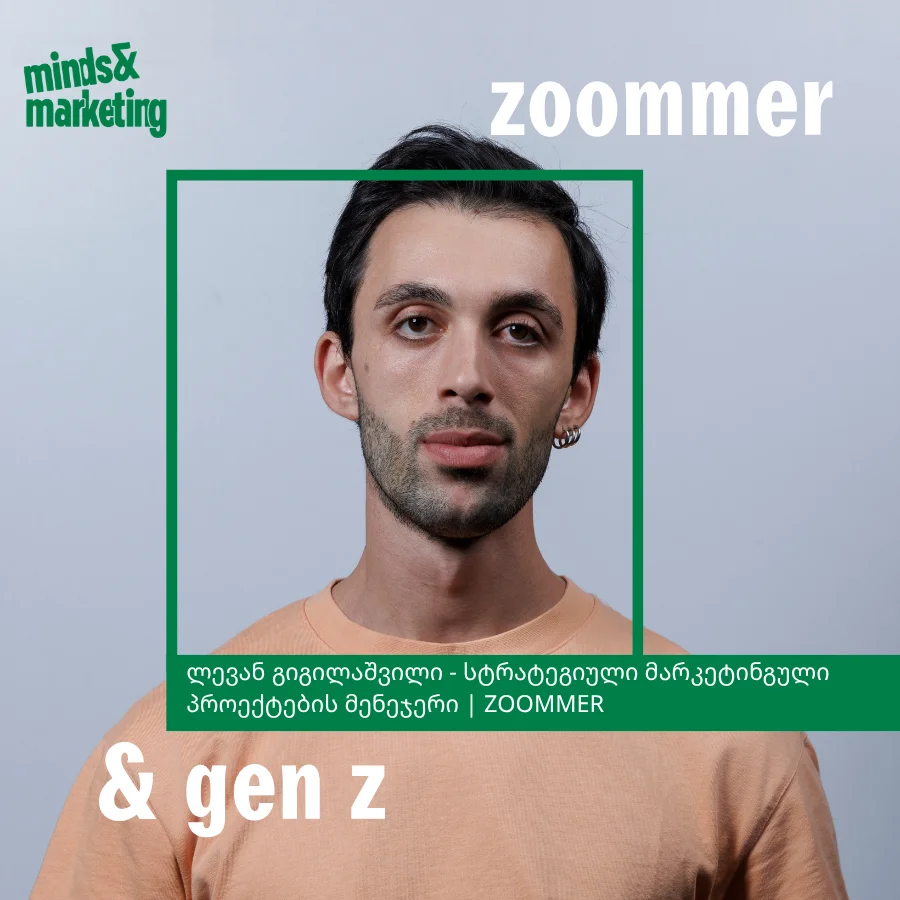
“Between 2015–2017, Georgian consumers were primarily interested in home appliances. Zoomer took a different path — focusing exclusively on digital gadgets. We chose a communication style that was colorful, energetic, and distinct — and it still differentiates us today.
Targeting a younger, tech-oriented audience was not accidental. especially considering competitors were focused on older segments through home appliance offerings.
At the time, Gen Z had little purchasing power — but strong influence over older generations. they were advisors, helping parents navigate technology.
Choosing them as a core segment was a strategic decision. this strategy led Zoomer to leadership — built on the idea that Gen Z would become the bridge to older generations.”
While Zoommer maintains its core age focus, its communication has evolved. In recent years, it has expanded beyond entertainment into more serious topics.
for example, last year marked the first time Zoomer, together with agency Supermarket, launched a campaign for women’s day that diverged from its usual tone — signaling an expansion of its communication boundaries.
what should brands do to stay relevant?
Let’s return to the central question: what must brands do today to remain relevant tomorrow?
Levan Gigilashvili highlights three key components:
- Loyalty
Awareness matters — but it is not enough. loyalty today is shaped by multiple factors: business model, processes, relationships, employee treatment, and communication.
Gen Z loyalty cannot be built through campaigns alone — even strong, value-driven ones. campaigns may attract them, but loyalty requires systemic improvements across the entire brand experience.
- Alignment between communication and product
Communication and product must reinforce each other. consistency is critical.
If a brand communicates as modern, digital, and high-tech, the product and experience must deliver the same. Zoommer, for example, is actively transforming its retail spaces to reflect its communication identity.
- Segment works on the segment
Brands must be built by people who understand the audience from within.
It is nearly impossible to successfully target a segment you are not part of. Zoomer’s team largely consists of people who belong to its core audience — which naturally shapes authentic communication.
Internal collaboration, listening, and diverse perspectives allow the brand to identify new opportunities and translate them into effective strategies.
Medea Tabatadze reinforces this perspective:
“To remain relevant for each new generation, companies must actively involve employees in the process. Simple tools — like internal surveys — can reveal how employees perceive existing programs. This generation understands best what it expects from employers. and very often, these expectations mirror what they expect from brands as consumers.”
conclusion
Gen Z is not the future — it is the present. It is reshaping industries, redefining standards, and setting new expectations for businesses. and importantly — it is already delivering results. The transformation models discussed here are not optional. sooner or later, every brand will need to adopt them. The only question that remains is: who will do it first — and who will do it right?
Sources:
Gen Z's Economic Crossroads: A Generational Opportunity for Brands
Gen Z Trends: What Marketers Need to Know