from an impossible mission to an exploration platform
the story behind building TSISKARI brand
Three people, three months, an ambitious plan, and an idea that seemed almost impossible. That's how a story began that would eventually evolve from a single Antarctic expedition into a long-term platform for exploration and discovery.
But how do you turn an extreme adventure into something bigger than the adventure itself? How do you build a brand around an expedition that hasn't even begun? And how do you make a distant, seemingly irrelevant subject like environmental change meaningful to people thousands of kilometres away?
This is the story of how TSISKARI, a Georgian platform for exploration and learning, came to life: the strategic thinking behind its creation, the people who shaped it, and the ambition to turn curiosity into knowledge, conversation, and ultimately, action.
the idea: why Antarctica?
"Antarctica is one of the planet's most important climate regulators. Changes happening there affect us too. We cannot simply stop every change, so we need to learn how to adapt."
This thinking was the starting point for Giorgi Gotsiridze, a geographer and glaciologist who has spent 28 years studying natural environments through his company, Geographic. His work focuses on understanding environmental change, assessing related risks, and translating scientific knowledge into practical decisions for resort planning, infrastructure development, and other projects.
Antarctica, therefore, was not a random destination. Among the places where environmental changes can have consequences for Georgia, the team chose one of the world's most extreme and inaccessible continents for its first mission. And within Antarctica, they selected an exceptionally demanding challenge: climbing Mount Vinson, the continent's highest peak, followed by a 111-kilometre journey across the Last Degree to the geographic South Pole.
Two people with very different backgrounds joined Giorgi: Bidzina Gujabidze, a legendary Georgian mountaineer, and Nika Lebanoidze, a documentary filmmaker and videographer known for capturing extreme achievements. Together, they brought three distinct perspectives to the same mission: a scientist's curiosity, a mountaineer's determination, and a storyteller's eye.
What they didn't yet have was a brand capable of bringing all three together.
the challenge: making an impossible idea possible
The extreme nature of the expedition became apparent long before anyone set foot on Antarctic ice. The team had only a few months to mobilise substantial financial resources for a project of exceptional complexity. Despite their individual achievements and professional reputations, three people could hardly secure everything they needed through personal networks alone.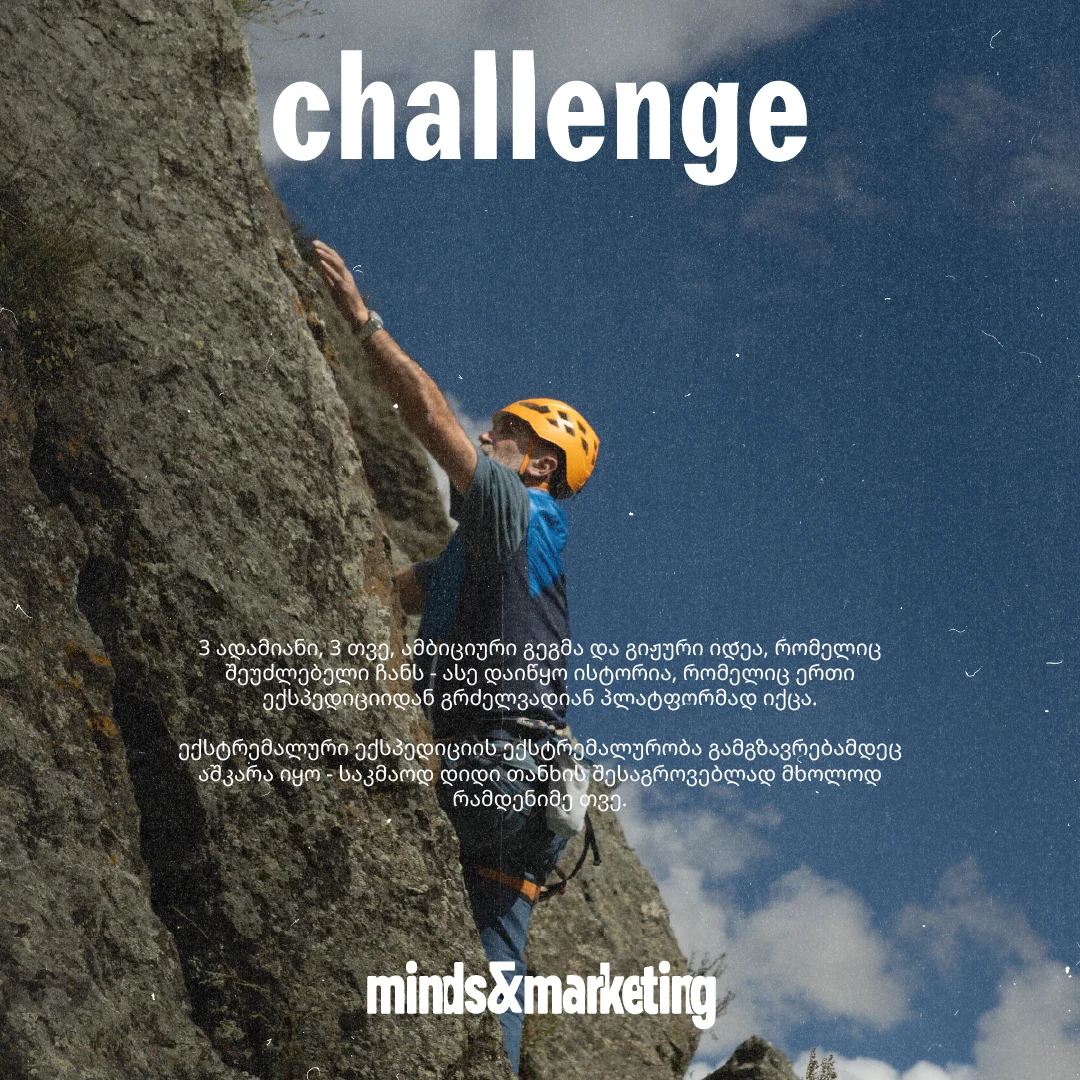
They needed businesses, institutions, and the wider public to become part of the journey. But this raised a more fundamental question: Why should a Georgian business support three people travelling to Antarctica? What value could a partner find in the expedition? Why should the public feel connected to a journey taking place on the other side of the planet? And perhaps most importantly, what would remain after the expedition was over?
These questions transformed a fundraising challenge into a branding challenge. The strategic task was no longer simply to make the expedition happen. It was to find a way to turn three people's journey into an experience that many others could share.
the strategy: building a platform, not just an expedition
In conventional marketing, a product or service is developed first, and communication follows. TSISKARI's development challenged that familiar sequence. Before the expedition could become a story worth following, the team needed to define what it stood for, who it was for, and why it should matter beyond the people directly involved.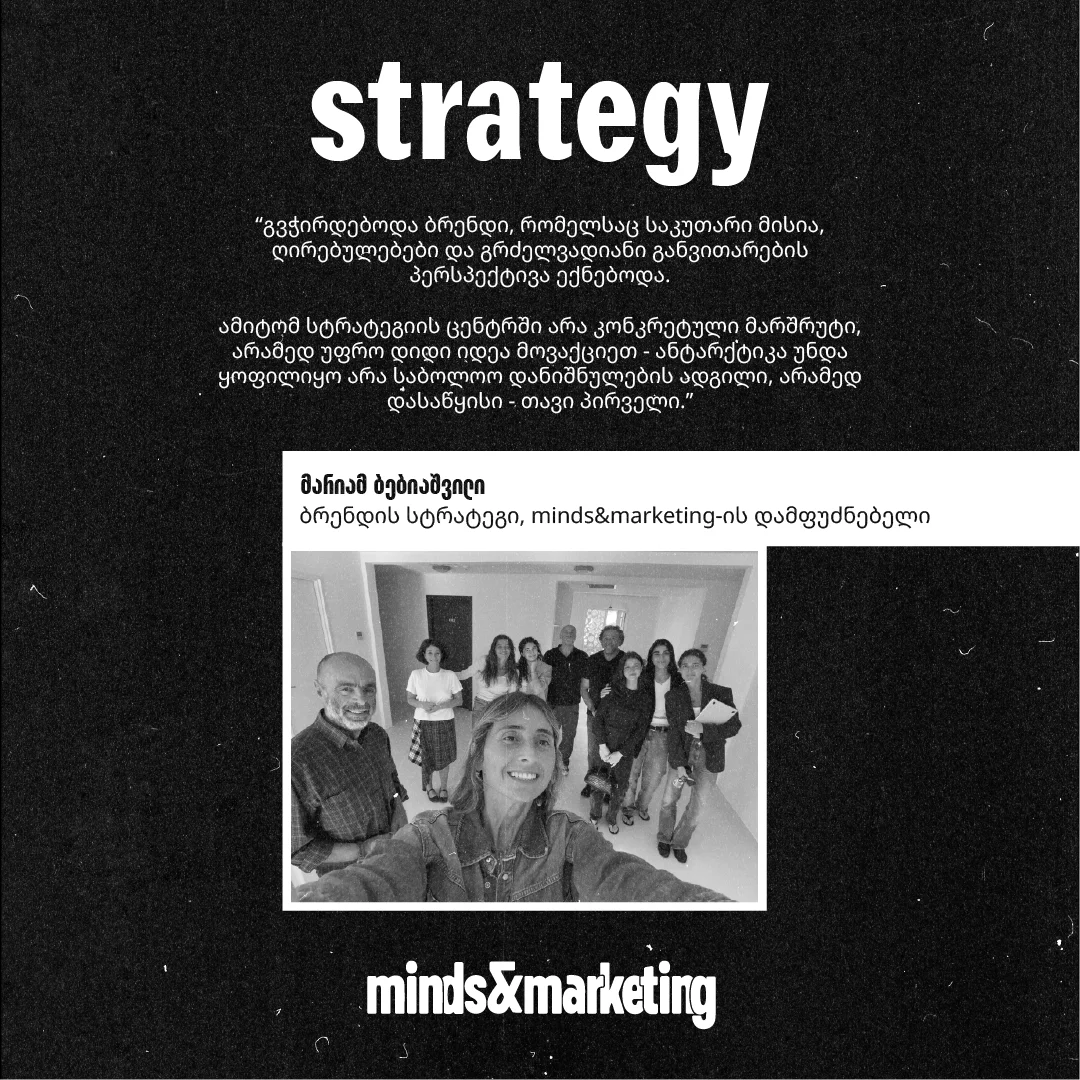
Brand strategist and minds&marketing founder Mariam Bebiashvili led the development of the brand strategy.
"From the beginning, we knew that creating a name, a logo, and a sponsorship presentation wouldn't be enough. We needed a brand with its own mission, values, and long-term development potential. That's why we placed a bigger idea at the centre of the strategy, rather than a particular route. Antarctica shouldn't be the final destination. It should be the beginning - chapter one.
This approach would allow the expedition to move beyond a sporting achievement and gain broader social and educational relevance. It would also give partners an opportunity to contribute not only to financing the expedition but to creating and sharing valuable knowledge about environmental change and adaptation.
Ultimately, we wanted to build a platform that wouldn't end with one expedition, but could continue bringing together people, ideas, and resources."
This distinction became fundamental to TSISKARI's positioning. Antarctica would be the first mission. Exploration would be the long-term purpose. Instead of building an identity around a specific geographic destination, the strategy established a broader territory: understanding our changing world, exploring the limits of human adaptability, and sharing what we learn along the way.
Before the brand could take shape, however, three essential questions needed clear answers: why, for whom, and how?
the why: turning attention into understanding
We live in an attention economy where the first few seconds often determine whether someone engages with a subject or scrolls past it. And the more complex the subject, the harder it can be to communicate its importance.
Environmental change is a good example. Its consequences are profound, but the subject itself can feel distant, technical, or overwhelming. A scientific lecture about Antarctica is unlikely to attract hundreds of thousands of people, let alone encourage them to think about what the changes there might mean for their own lives.
TSISKARI needed another way in. The answer was a format people have always been drawn to: adventure, exploration, and human storytelling.
An expedition naturally contains the elements that make a story compelling: uncertainty, risk, ambition, personal sacrifice, and a goal that may seem almost impossible to achieve. Will three Georgians complete one of Antarctica's most demanding expedition challenges? How will they survive in extreme temperatures? What will they eat? How does a 66-year-old mountaineer prepare for such a challenge? And how will a documentary filmmaker capture the experience in temperatures reaching -55°C?
These are the questions that can bring people into the story. But the expedition is only the entry point. The real opportunity lies in what happens after curiosity has been captured.
As George Gotsiridze, TSISKARI's co-founder, explains:
"People may initially become interested because of our ambitious goal. But along the way, they may learn what's happening in Antarctica, how environmental changes there are connected to Georgia, and why learning to adapt matters. The expedition is a way to attract attention and then direct that attention towards knowledge and understanding. That's exactly why TSISKARI is a platform for exploration and learning."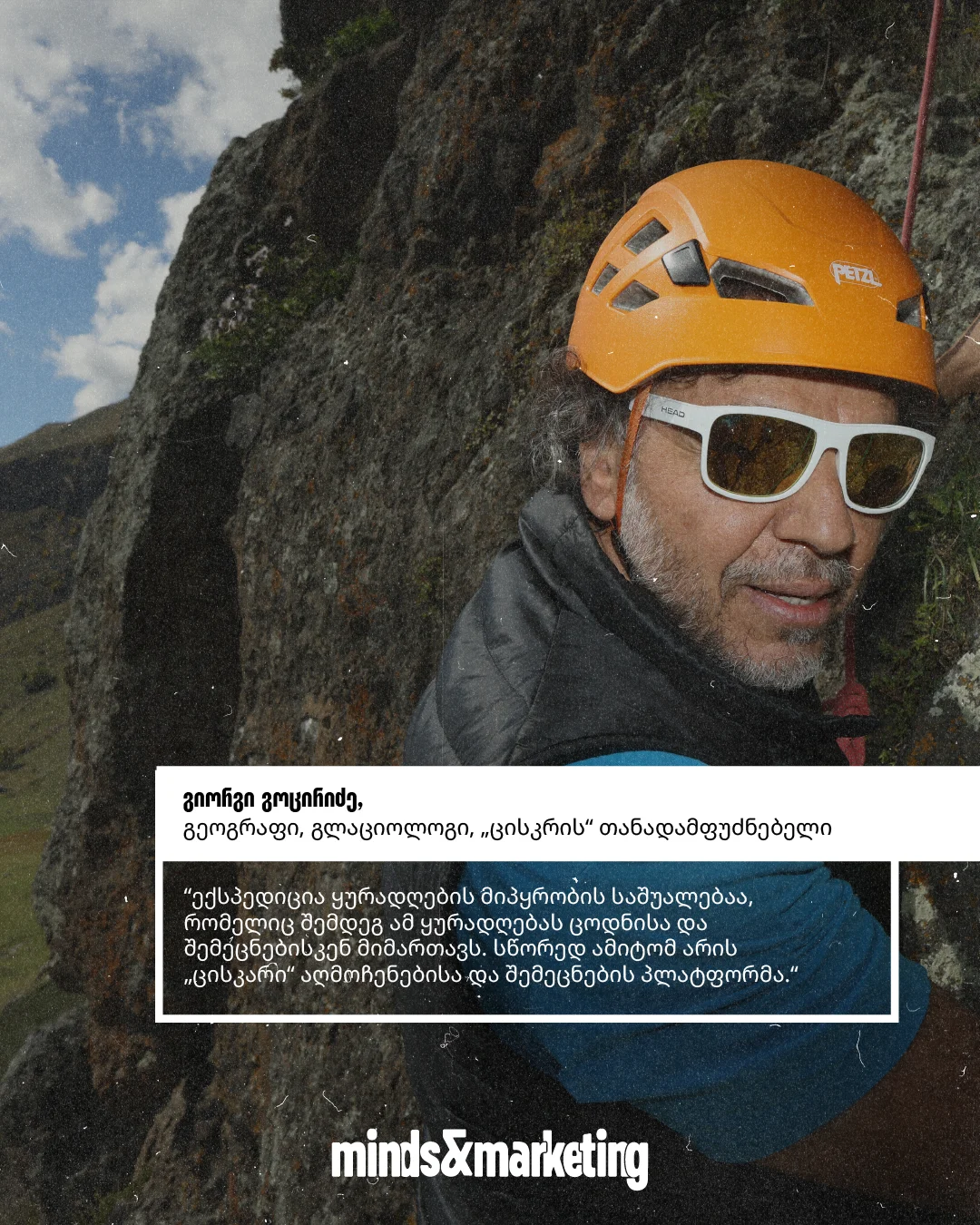
This became the central idea behind the communication strategy developed by the minds&marketing team: make an important but complex subject accessible through a story people genuinely want to follow, experience, and share. The strategic ambition was to turn attention into curiosity, curiosity into understanding, and understanding into meaningful conversations.
the audience: connecting through motivations, not demographics
Defining TSISKARI's audience required looking beyond conventional demographic segmentation. Age, profession, and income could describe potential followers, but they couldn't fully explain why someone would care about an Antarctic expedition. The more useful questions were psychological: What motivates people? What do they believe in? What excites them? And what might make this particular story personally meaningful?
Three overlapping audience motivations emerged.
Those driven by the desire to explore. These are people fascinated by travel, unfamiliar environments, adventure, and the limits of human possibility. For them, the journey matters as much as the destination. They want to understand how the team prepares, what challenges arise, and how the explorers respond physically and emotionally. TSISKARI offers them a rare opportunity to experience a remote expedition up close.
Those who care about tomorrow. This audience is interested in environmental change, sustainability, education, and quality of life. They want to understand what developments in different parts of the world mean for the future and how that knowledge might be applied in Georgia. For them, TSISKARI is a platform for discovering and sharing knowledge with practical relevance.
Those who long for a national achievement. Few experiences create a stronger sense of collective belonging than seeing people from your own country accomplish something extraordinary. Think of the emotions surrounding Georgia's national football team's qualification for the European Championship. TSISKARI taps into a similar sense of pride: the possibility of seeing the Georgian flag reach a new destination and Georgian explorers achieve something remarkable.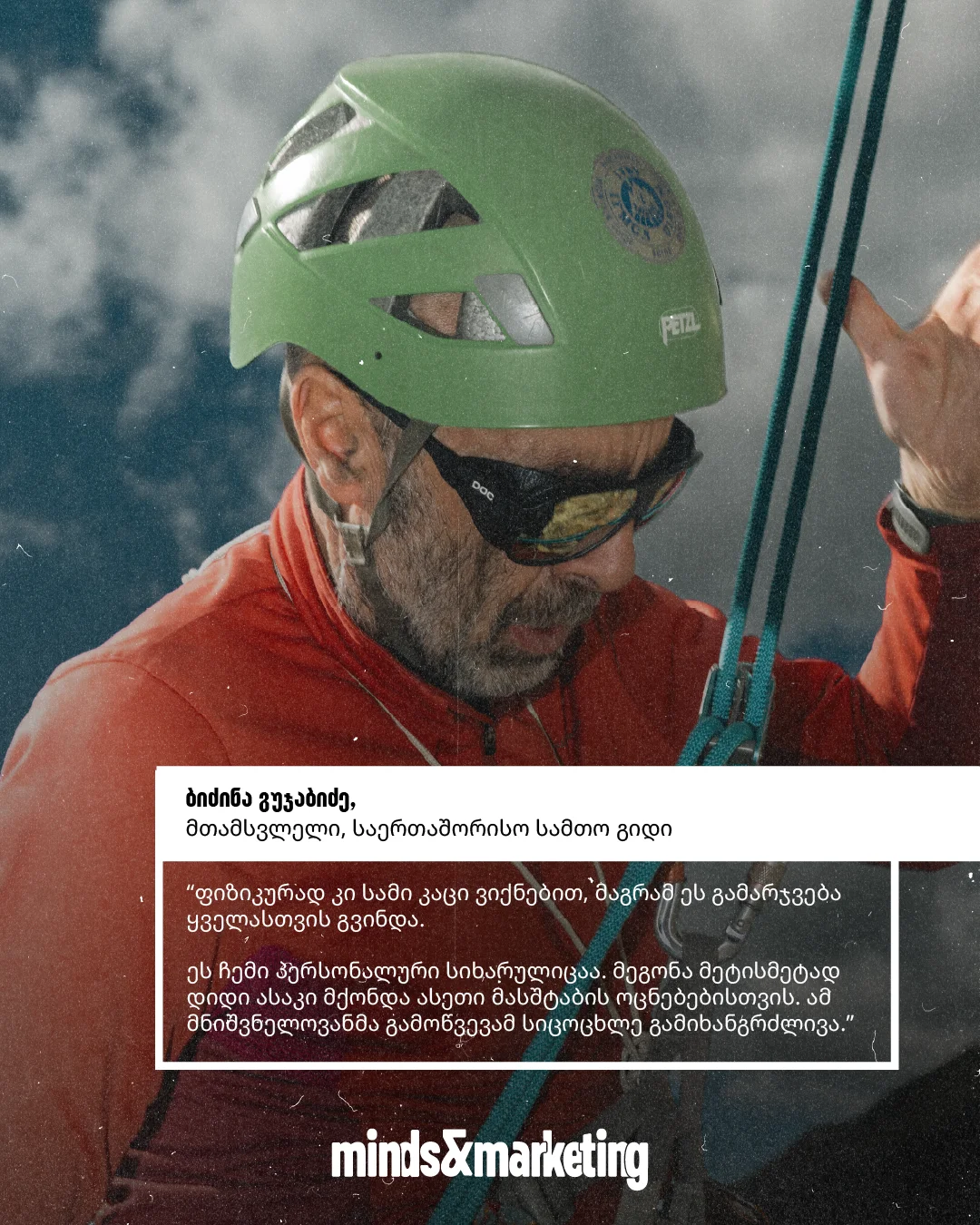
Bidzina Gujabidze, mountaineer and international mountain guide, describes this motivation personally:
"We've missed victories, achievements, and positive emotions. I believe everyone has a responsibility to bring that kind of joy to their country. Physically, there will only be three of us, but we want this achievement to belong to everyone.
For me, it's personal too. I thought I had become too old for dreams of this scale. This challenge has given me a new sense of life."
These three groups are not mutually exclusive. Someone can love adventure, care deeply about the environment, and feel proud of their country's achievements at the same time. It is precisely at the intersection of these motivations that TSISKARI's communication strategy takes shape. Rather than speaking to one narrowly defined audience, the brand creates different emotional and intellectual entry points into the same story.
the name: why TSISKARI?
Once the strategic foundation was established, the next challenge was finding a name that could carry the idea. It needed to be Georgian, memorable, and meaningful. But it also had to avoid limiting the brand to Antarctica, mountaineering, or any particular expedition. The name had to express something more enduring: curiosity, discovery, new perspectives, and the desire to move beyond what is already known.
During a naming workshop at the Design Institute, Nino Egadze proposed the name TSISKARI. In Georgian, tsiskari refers to dawn - the moment when darkness gradually gives way to light and what was previously invisible begins to emerge. The symbolism connected naturally with the brand's purpose.
Dawn represents the beginning of understanding: the transition from uncertainty towards knowledge, guided by questions, observation, and discovery. The morning star, associated with the arrival of a new day, adds another layer of meaning. It symbolises hope, direction, and new beginnings - much like TSISKARI's ambition to bring back knowledge and perspectives from unfamiliar places.
The Georgian word also allows another interpretation: tsis kari, meaning "the door to the sky." A symbolic gateway from the familiar into the unknown. Together, these meanings captured the essence of the brand. TSISKARI wasn't simply a name for an expedition. It was a name for a platform built around the possibility of seeing the world differently.
the mission architecture: why S90?
A long-term exploration platform needs room to grow. That principle also shaped TSISKARI's brand architecture. Rather than incorporating Antarctica into the masterbrand, the strategy introduced a system in which each future expedition would have its own mission name and number, connected to its geographic destination.
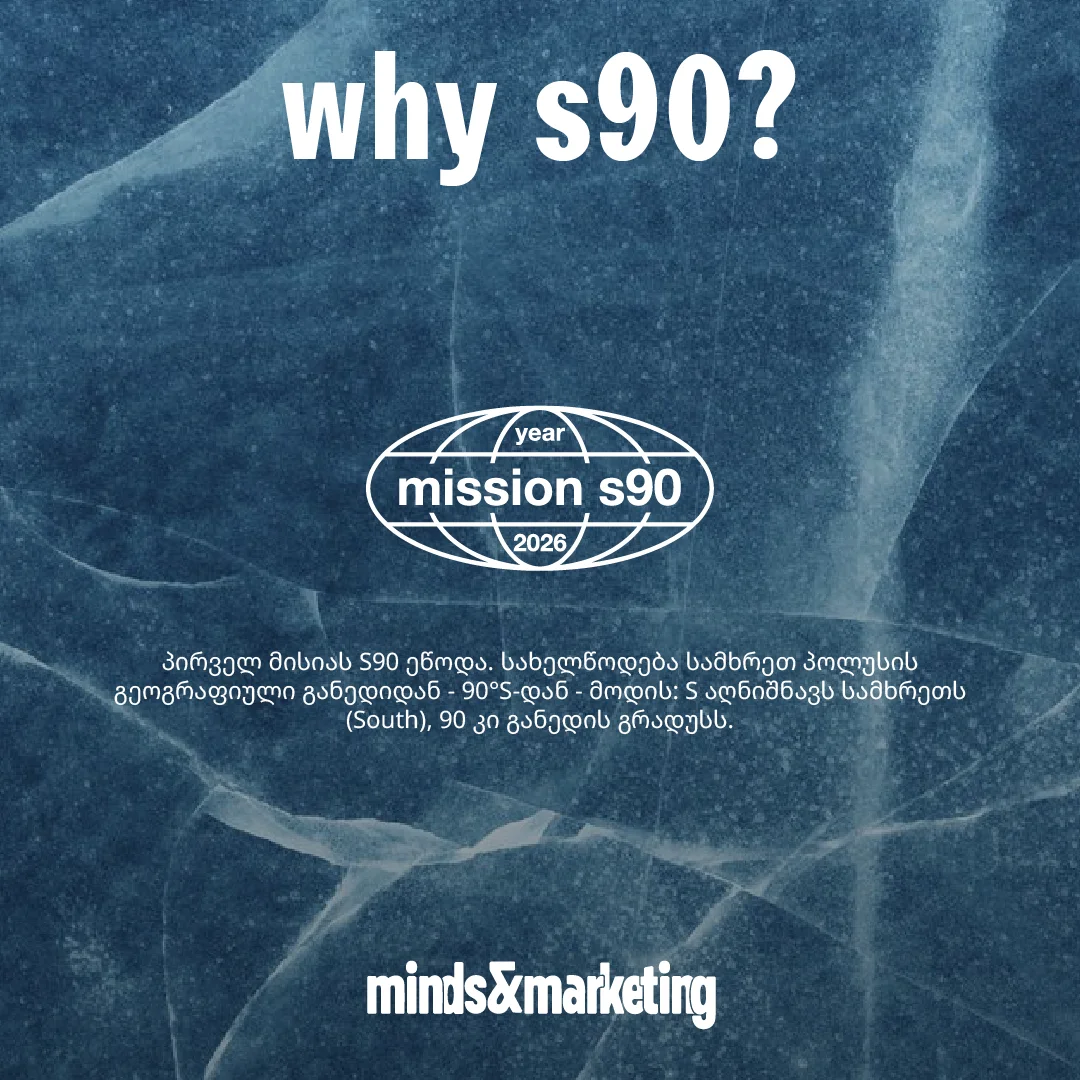
The first mission became S90. The designation comes from the geographic latitude of the South Pole: 90°S. The letter S stands for South, while 90 represents the latitude in degrees. A geographic coordinate became a brand code - short, distinctive, and directly connected to the mission's final destination.
The system creates a clear relationship between the masterbrand and its individual missions: TSISKARI represents the enduring purpose, while S90 identifies the first chapter of its exploration journey.
the brand voice: an explorer with something to share
From the beginning, TSISKARI's greatest asset was its people. Bidzina Gujabidze, Giorgi Gotsiridze, and Nika Lebanoidze come from different professional worlds, each bringing distinct motivations and ways of experiencing the same journey.
For the mountaineer, the expedition is a test of physical and mental endurance. For the scientist, it is an opportunity to observe, question, and understand. For the documentary filmmaker, it is an experience that needs to become a story. These perspectives are different, but complementary.
The brand's archetype was defined as the Explorer - driven by curiosity, independence, freedom, and the desire to move beyond familiar boundaries. Yet TSISKARI's exploration isn't motivated by adventure alone. Its purpose is to return with something worth sharing.
This thinking shaped the brand's central narrative:
"We go not only to reach a destination, but to see with our own eyes, understand, and help others see what is already changing each of our lives. We want what we witness to become a story. The story to become a thought. The thought to become a conversation. And the conversation to become action."
This narrative also defines the logic of the brand's communication. TSISKARI wants to spark interest, encourage questions, open conversations, and connect knowledge from distant places with everyday life. That is why its voice is human, curious, and sincere - without unnecessary heroism or grand declarations.
The explorers are not presented as unreachable heroes. They are people with ambitions, fears, limitations, expertise, and a shared desire to understand more. And that makes their story easier to connect with.
visual identity: designing a brand beyond its first destination
With the strategy and verbal identity in place, the next task was translating the brand into a visual system. The challenge was not simply to create an identity for an Antarctic expedition. TSISKARI needed to function as a masterbrand capable of bringing together future missions across different geographic locations.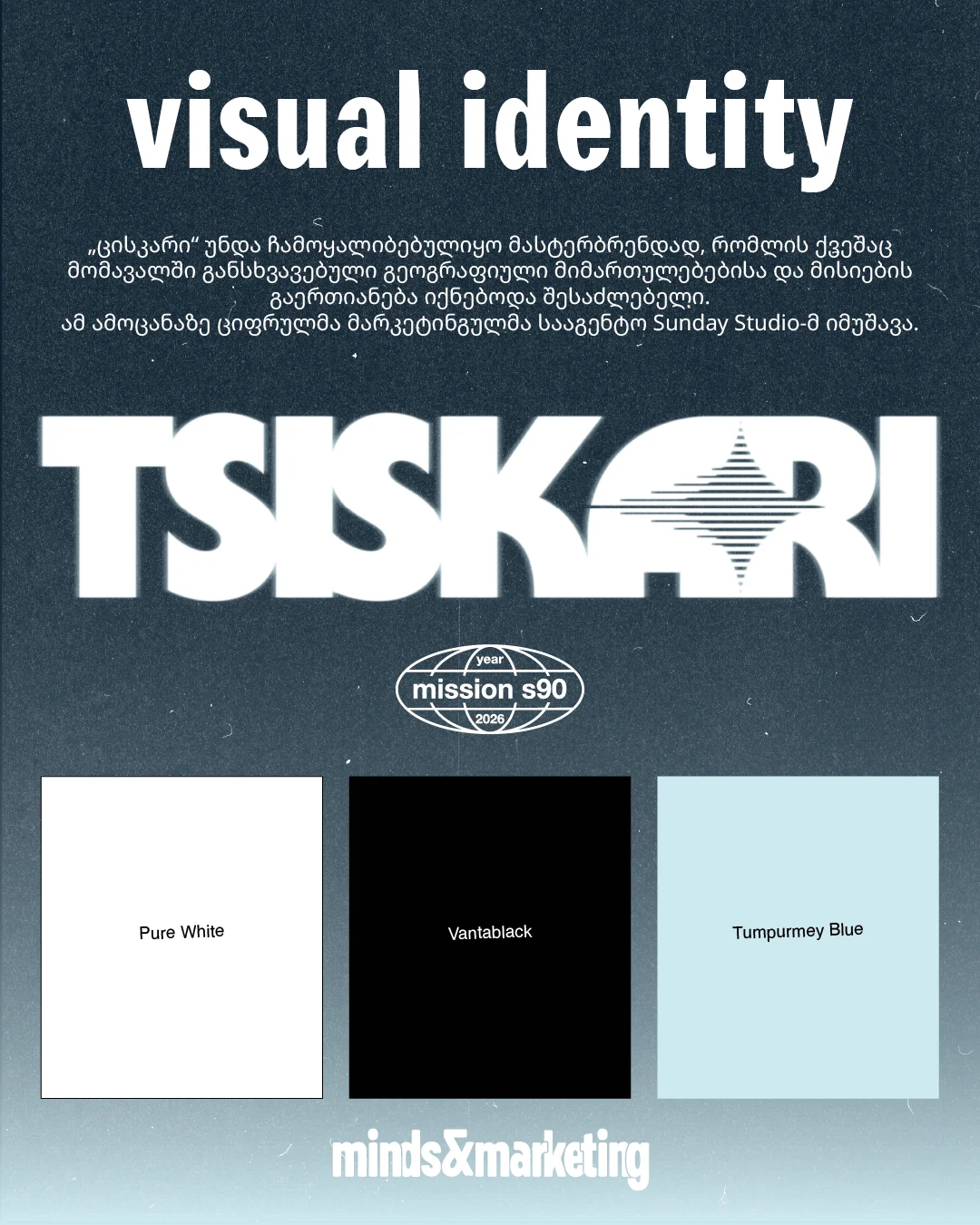
This required a flexible design system that could preserve a consistent brand identity while allowing each mission to develop its own distinctive character. The visual language also needed to reflect two complementary qualities: the Explorer's determination and curiosity, and the Storyteller's desire to share knowledge and experience.
Digital Marketing Agency Sunday Studio was responsible for developing the visual identity. How the strategy was translated into design, and how TSISKARI's visual universe came to life, deserves a story of its own - one we'll explore in a separate article.
the content strategy: making the audience part of the journey
A strong brand narrative is only valuable if it can be translated into an experience people want to follow. For TSISKARI, the content strategy began with a simple question: What does someone actually gain by following this expedition? What should they see before the team leaves, while the expedition is underway, and after the explorers return?
The minds&marketing team structured the communication around three phases, each serving a different purpose in the audience's relationship with the brand.
before the expedition: building curiosity and connection
Pre-expedition communication was divided into two stages: before and after the brand's official launch. Initially, the explorers themselves introduced the idea, sharing their personal motivations, experiences, and ambitions. Their individual voices helped build early interest while the brand was still taking shape.
At the same time, conversations with potential partners began. What emerged was an ecosystem of organisations from different industries, united around a shared mission.
Partners included Geographic, Tegeta Holding, Adjara Group, Zoommer, Aldagi, Cellfie, LSG Solutions, the Design Institute, Vitality Blueprint, NozNutrition, Megalab, Eliava BioPreparations, and the University of Georgia.
Media support also became an important part of the project's development, with coverage from minds&marketing, BMG, Palitra Holding, and Entrepreneur.
Following the official brand launch, communication shifts from the individual explorers to TSISKARI itself. The platform begins introducing its mission, values, and long-term vision, while continuing to tell the human stories behind the expedition. Audiences will see how the team prepares, what challenges lie ahead, and why Antarctica matters far beyond its geographic distance.
during the expedition: "you are there too"
The second phase is built around participation. Through diaries, videos, voice recordings, daily challenges, personal observations, and route updates, TSISKARI aims to make its followers feel like they are travelling alongside the team.
The goal is not simply to document the expedition from a distance, but to create a shared experience. This is where the strategic idea of turning three people's journey into a collective story becomes tangible.
after the expedition: turning experience into shared knowledge
TSISKARI's story does not end when the team returns from Antarctica. The experience is intended to continue through interviews, educational events, scientific and practical discussions, exhibitions, a documentary film, and other formats that allow the knowledge and stories gathered during the journey to reach wider audiences.
This phase is especially important to the platform's long-term purpose. An expedition may last weeks, but the value of what is learned and shared can extend much further.
Across all three phases, video storytelling plays a central role. Gorillas' Production is responsible for documenting the team's preparation, the expedition itself, and the personal experiences of its participants.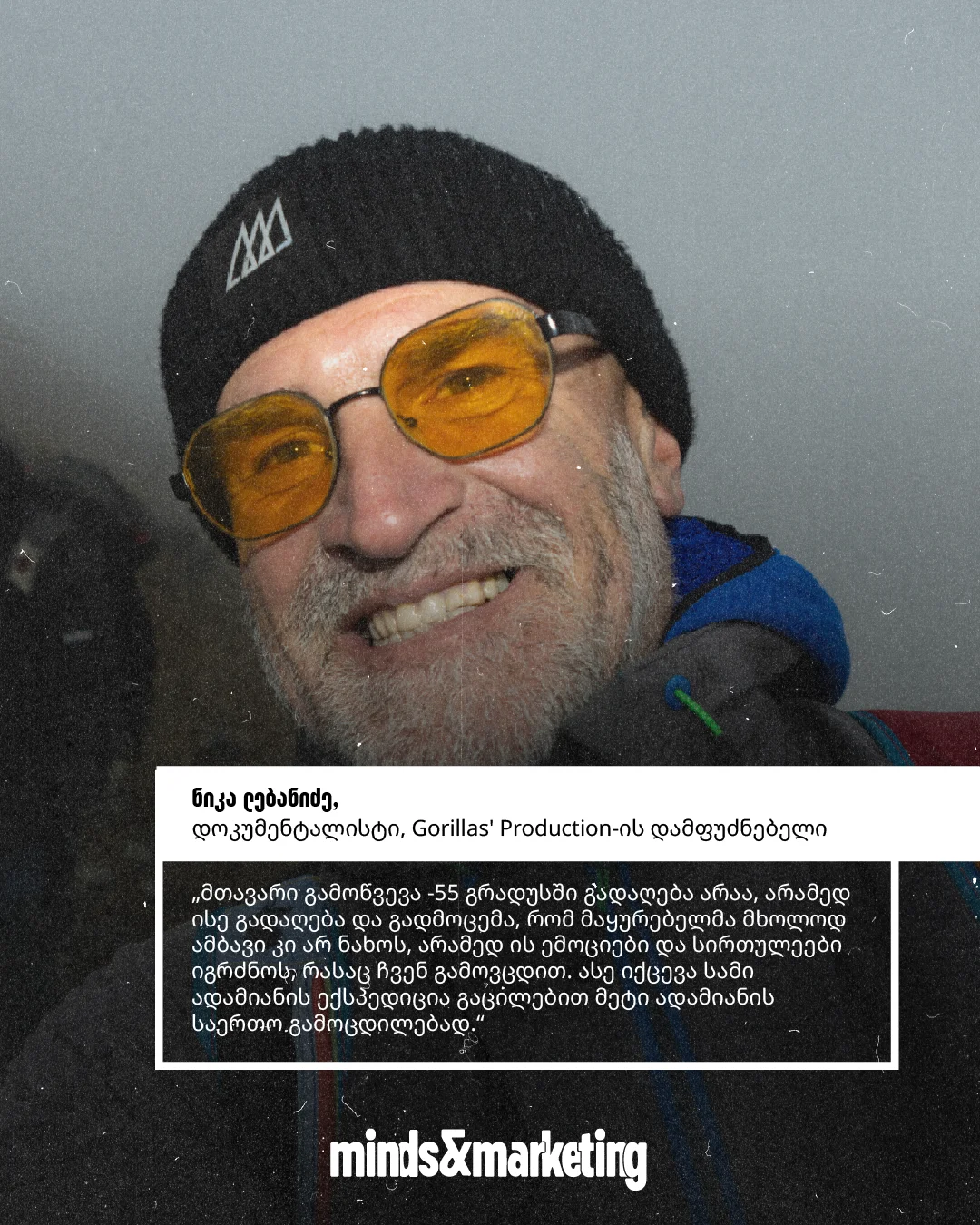
For Nika Lebanoidze, documentary filmmaker and founder of Gorillas' Production, the challenge goes beyond capturing extraordinary footage.
"Ultimately, everything depends on what material we bring back from Antarctica and how we tell the story. We won't have a second chance to film there. The main challenge isn't shooting in -55°C. It's capturing and communicating the experience in a way that allows viewers not only to watch what happened, but to feel the emotions and difficulties we'll go through. That's how an expedition involving three people becomes a shared experience for many more."
from impossible to possible
What began as an almost impossible idea has evolved into a brand with a clear purpose, a long-term vision, and a growing community of partners and supporters. From a branding perspective, TSISKARI offers an interesting case: how strategic thinking can transform an individual ambition into a shared platform capable of mobilising businesses, educational institutions, media, creators, and the wider public.
The important shift wasn't simply from an expedition to a brand. It was from asking people to support three individuals to inviting them to participate in something with broader meaning. And this is where the real power of branding becomes visible: a strong brand does more than communicate an idea. It gives people a reason to believe in it, find their own connection to it, and contribute to making it happen.
The Antarctic expedition is still ahead. It will demand endurance, expertise, courage, and the ability to navigate extraordinary uncertainty. But TSISKARI's greatest ambition is not simply to complete that journey.
Antarctica is only the beginning.