the recipe for a chef’s personal brand
how a chef’s personal brand is made
How many times have you wished there were a ready-made recipe for achieving a difficult goal or navigating a complicated challenge?
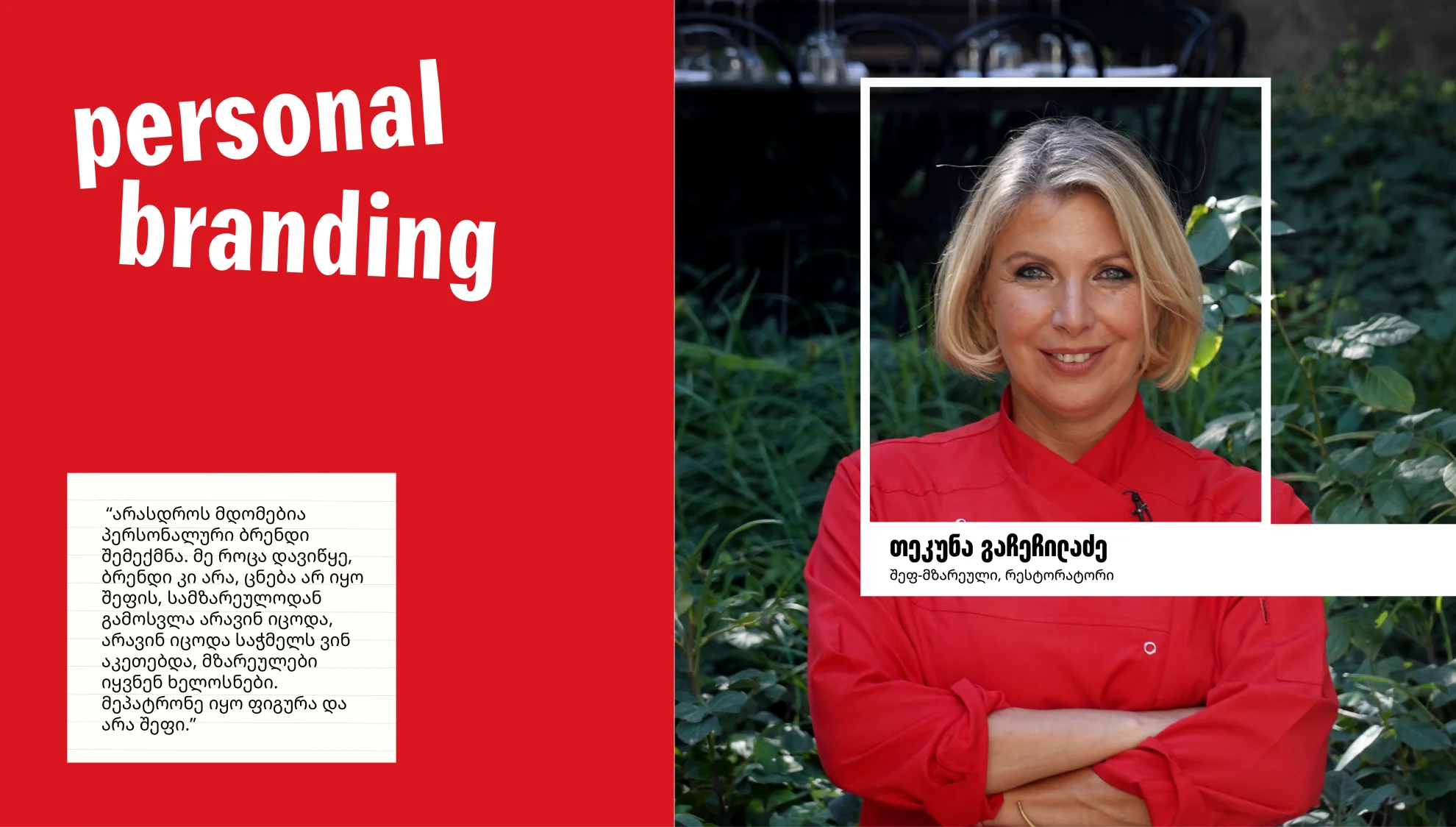
This editorial is about personal brands, so naturally, we wanted to find the recipe for building a chef’s personal brand - and to get it from someone behind some of the most memorable recipes on Georgia’s culinary scene: Tekuna Gachechiladze.
But there was one problem. It turns out the recipe is entirely improvised.
Tekuna Gachechiladze, chef and restaurateur:
“I never set out to build a personal brand. When I started, there wasn’t even a concept of the chef as a public figure. Chefs didn’t come out of the kitchen. Nobody knew who was making the food. Cooks were treated like craftsmen. The owner was the face of the restaurant, not the chef.”
So we approached the story the same way you might approach a dish - tasting it, identifying the ingredients, understanding how they work together, and slowly reconstructing the recipe.
This is Tekuna Gachechiladze’s recipe for a chef’s personal brand.
ingredients
1. the chef’s story
A chef works in a constant feedback loop.
During peak service, dishes leave the kitchen every minute and arrive in front of dozens of guests, all with different tastes, expectations, and appetites. The dish is the same. The reactions are not. Imagine how many different opinions a chef can hear about the same plate, in real time. In that environment, it is surprisingly easy to slip into people pleasing without even noticing. The dish can end up somewhere between the chef’s original idea and the guest’s expectations, until the creator’s own voice starts disappearing.
Cooking is a creative act, and creativity is ultimately a form of self-expression.For Tekuna, one of the best ways to discover that expression is through travel - through real experiences, unfamiliar flavours, memorable emotions, and unexpected discoveries that can come from something as simple as a dish prepared in a tiny village. That process of searching gradually creates a story. And that story does not stay on the plate. It appears in the entire restaurant experience - in the name, the concept, the service, the atmosphere, and the way the brand presents itself.
A chef’s story, then, is not a biography written afterwards. It is something built through accumulated experiences and translated into every detail of the work.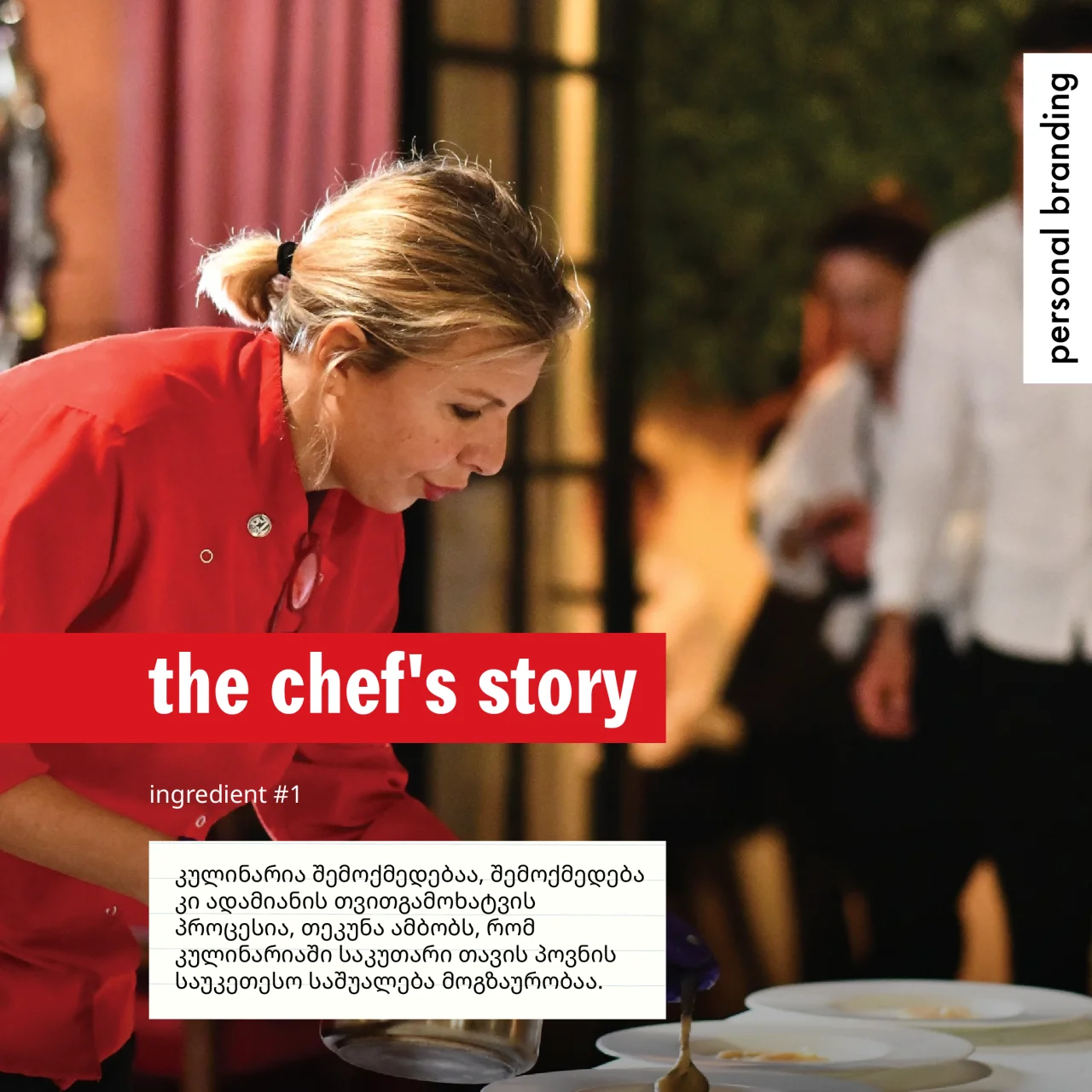
2. change
The more critically society reacts to change, the more memorable the person behind that change can become.
Georgia has one of the world’s most distinctive culinary traditions, yet for years everyday menus were also heavily shaped by Soviet-era staples - mashed potatoes, cutlets, soup kharcho. Restaurant menus often looked remarkably similar, sometimes even following the same sequence of dishes. For Tekuna, who had recently returned to Georgia, that was reason enough to start her own small revolution. That is how dishes such as khinkali soup and elarji balls appeared. Before long, similar ideas started appearing on other restaurant menus too - often without asking. Tekuna considers that a compliment.
“The important thing is that change happens. What difference does it make whether my name is attached to it or not?” There is an important personal-branding lesson here. A strong personal brand is not always built by repeatedly claiming ownership. Sometimes it is built by becoming so closely associated with a new direction that your influence remains visible even when your name is not. Being the author of change can become a form of positioning in itself.
3. self-expression
You do not always need to taste a dish to recognise a chef’s signature. Sometimes it is enough to see how they enter a room, how they welcome a guest, how they talk about their work, or even what they wear.
In Tekuna’s case, there is the red kilt, the red lipstick, and even the memorable name itself - details that have gradually formed an identity of their own within Georgia’s culinary scene. In branding language, these are distinctive brand assets - colours, shapes, styles, behaviours, or ways of speaking that become associated with a particular person over time and make them easier to recognise. But there is one important condition. Distinctiveness only works when it feels like a natural extension of the person.
In Tekuna’s case, these elements are not decorative branding devices added afterwards. They reflect the same freedom, boldness, and individuality that appear in her cooking. That is why they feel credible. The strongest personal brands rarely feel constructed. Their distinctive assets simply make an existing personality easier to recognise.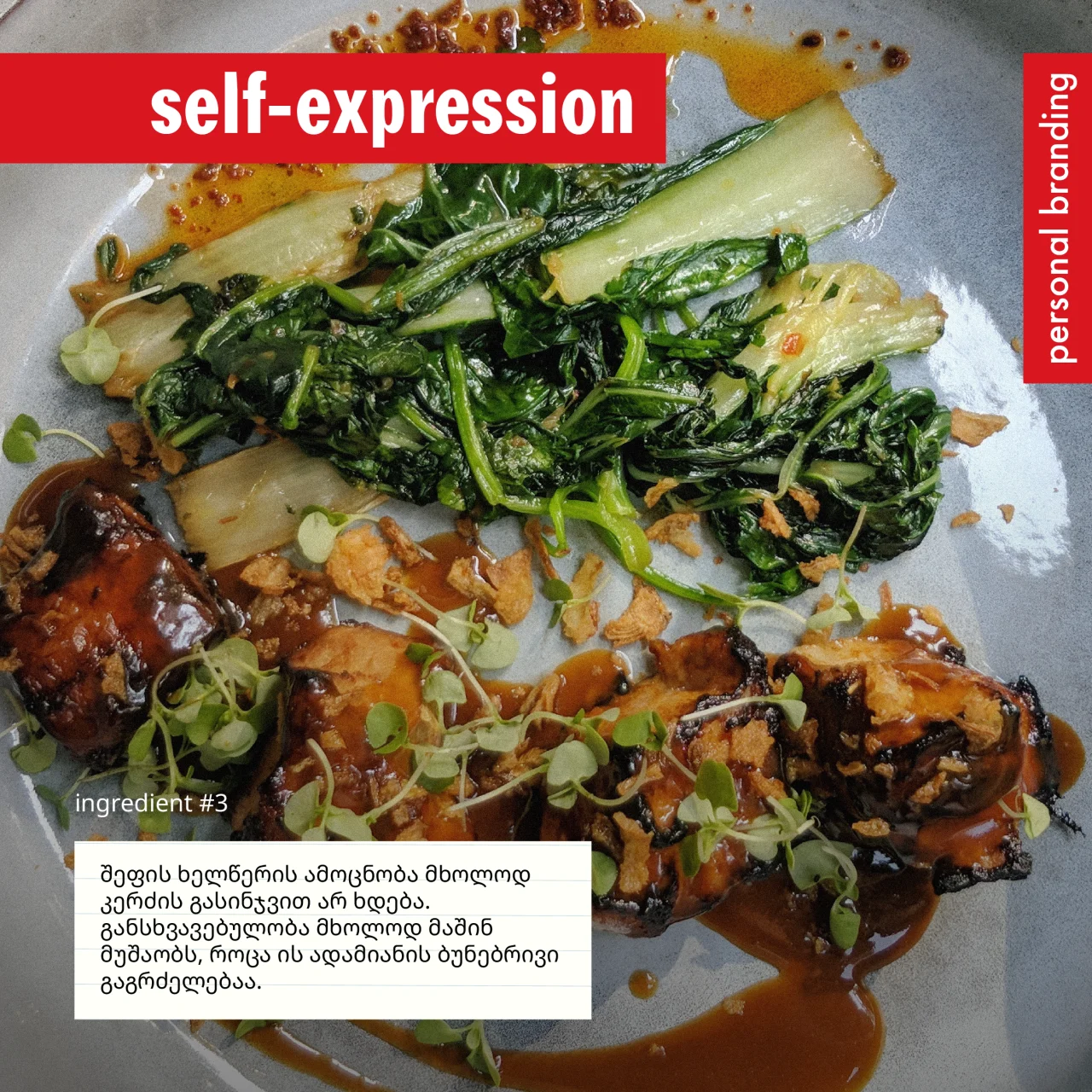
4. influence
You can be an exceptional chef and still have an impact limited to the people who physically taste your food. In Tekuna’s case, cooking moved far beyond the restaurant. Television, culinary courses, education, and sharing knowledge with thousands of people became extensions of her professional work. This is where the difference between awareness and influence becomes important. Awareness means people know who you are.
Influence means that, because of your work, they start doing something differently. That distinction also separates being a well-known person from having a strong personal brand. Do people simply recognise you, or does your knowledge, worldview, enthusiasm, or way of working actually change how they experience some part of their own lives?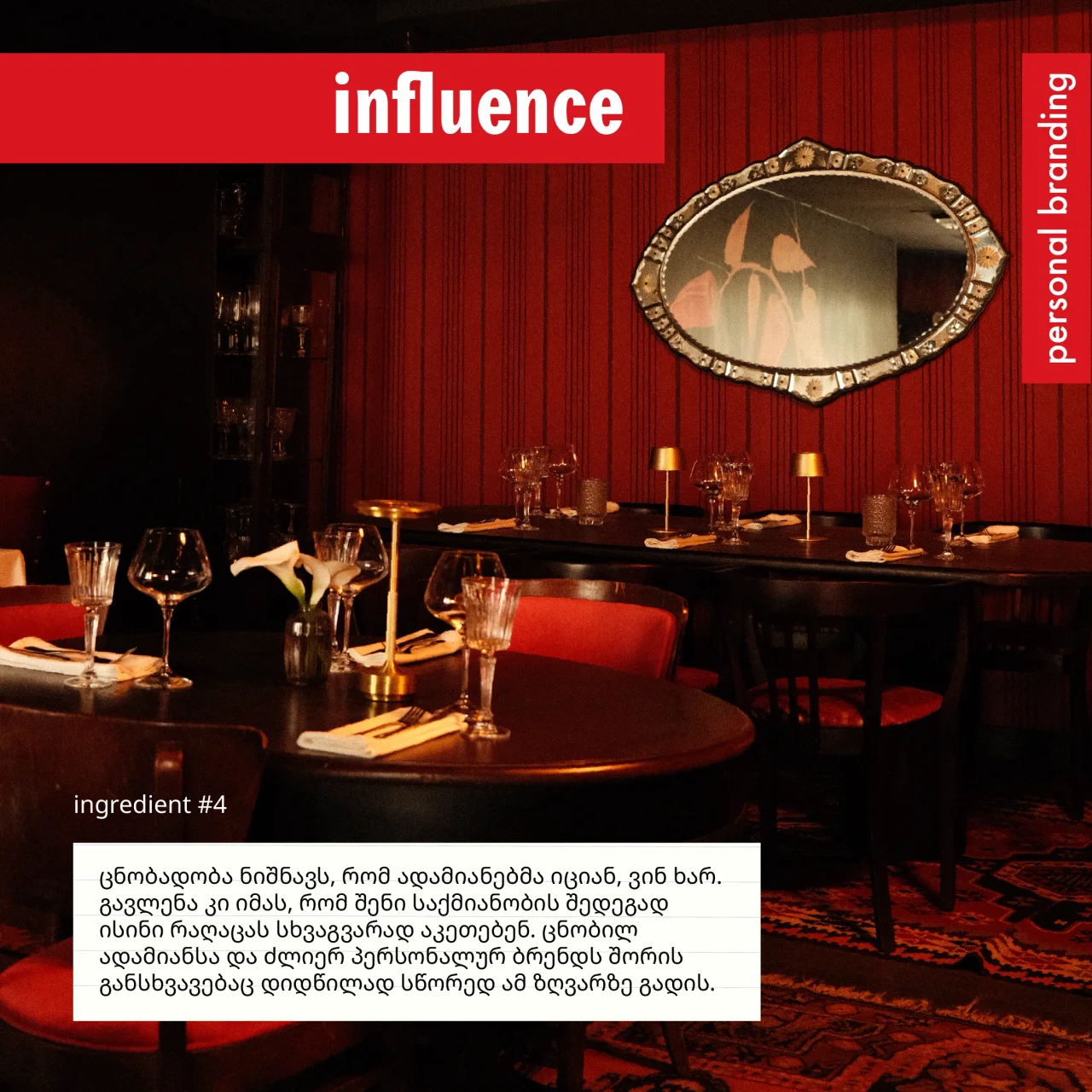
5. the magic ingredient
This ingredient does not appear in any written recipe, but every branded chef seems to add their own version of it. Hosting guests, replacing a plate, talking to people at their tables - in Tekuna’s personal brand, the magic ingredient is human connection. And it is easy to understand why. She is the kind of person people quickly become curious about. You want to talk to her, understand what she is making and why she is making it. That interest gradually becomes emotional connection. Then the food feels more personal. The restaurant feels more memorable. You want to return, bring someone else, and tell your friends about the chef who came over to your table and hosted you personally. A few other guests do the same and, voilà, a unique brand experience begins to form.
As Tekuna points out, however, this level of personal involvement can also create a business challenge.
“People have called me so many times and asked, ‘Will you be at the restaurant today? We want to come.’ If I say no, sometimes they decide not to come and postpone the visit.”
There is a tension here.
On one hand, making a business so closely dependent on one person is risky. On the other, that person can become the strongest asset the business has.
The challenge is not whether to use that card, but how and when to play it.
insight: the method
This is where the recipe stops working. There is no universal instruction for how much of each ingredient to use, or in what order.
Whether you choose slow cooking or deep frying is entirely up to you.
Still, the chef left us with a few useful principles.
-
keep the focus on the work - This does not mean ignoring how you want to be remembered or what you want people to say about you. But if most of your energy goes into thinking about how you appear, you may eventually forget why you wanted to be seen in the first place. Tekuna is a strong example of the opposite approach. First came the cooking, the search for her own flavours, the experiments, and the new ideas. Recognition followed naturally. Influence came after that.
-
be ready before you launch - Tekuna puts it this way: “I don’t believe that lots of failure on the road to success is necessarily a good thing. At some point, failure can break you so badly that you cannot recover. So you shouldn’t rush into opening your own restaurant. Travel first, learn in someone else’s restaurant, find your individuality and understand what you want to say.” In brand language, the same principle applies. An idea and enthusiasm are not enough. Craft, experience, and professional confidence matter too.
-
stay a beginner - “Always remember that you are still at the beginning. There is still so much to learn and see. Recently I learned mixology, then agriculture. I realise that not only can someone else be better than me, but sometimes I may not even be better than my own previous self.”
Perhaps that is the most useful contradiction in personal branding. A strong identity does not require becoming fixed. It requires being recognisable while continuing to evolve.
in summary
Today, a chef’s personal brand is an increasingly important part of the overall restaurant experience. By revealing their story, worldview, and individuality, a chef creates an emotional connection that goes beyond the food itself.
That is why the chef’s personal brand can become the restaurant’s most distinctive ingredient - the element that gives the business its personality, its story, and the kind of taste people remember long after the meal is over.