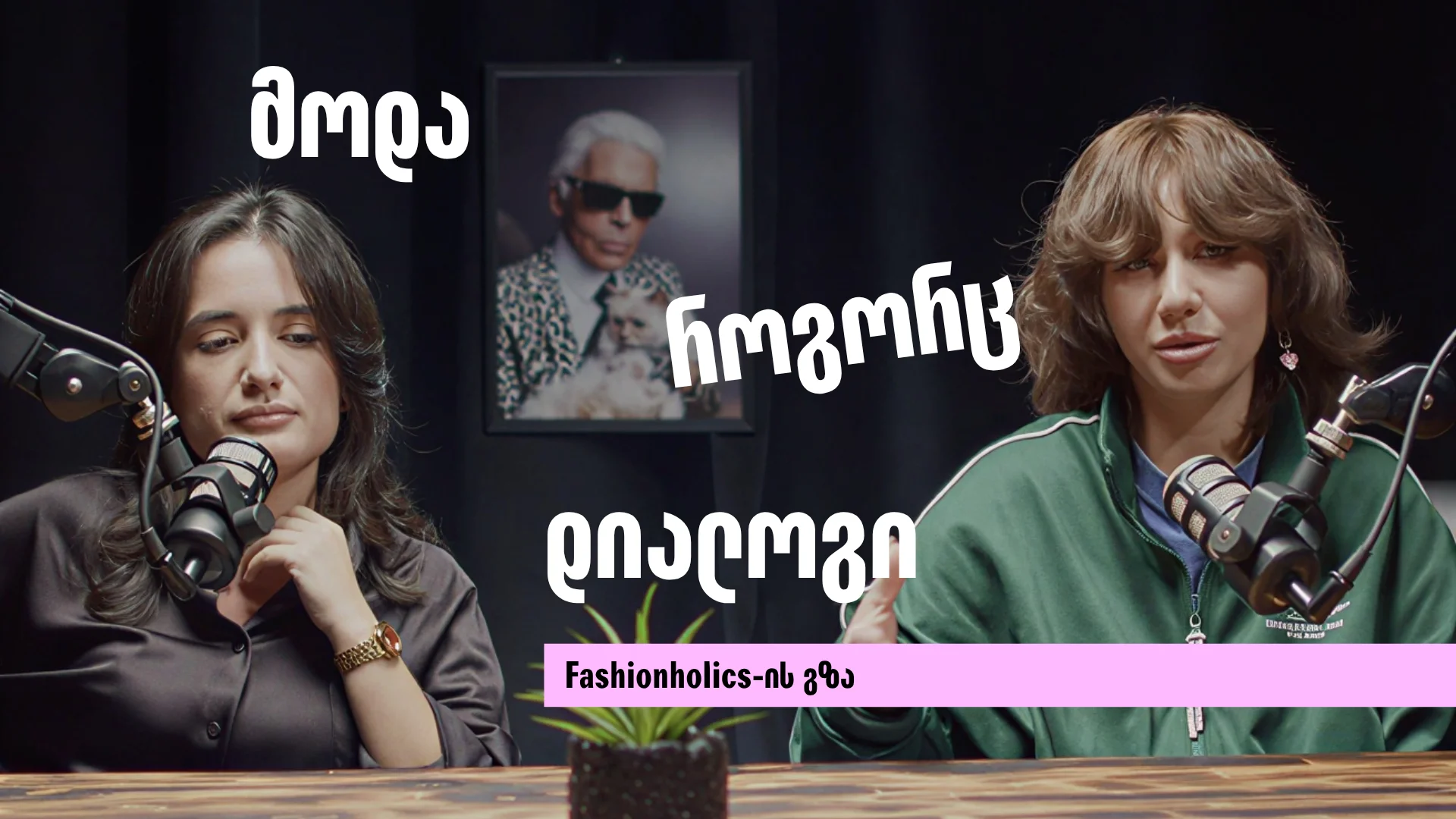
fashion as dialogue: the journey of fashionholics
fashion&marketing
written by: nini lekishvili
In Georgia’s fashion landscape, one of the most distinctive media platforms of recent years is Fashionholics Online — a project that has evolved from an enthusiast-driven blog into an influential digital media.
Today, Fashionholics brings together up to 300,000 followers across platforms, while its Facebook group, with 17,000 members, stands as one of the most active communities in the Georgian digital space.
In recent months, the platform has also expanded into podcasts, where its co-founders — Gvantsa Kikalishvili and Nino Imerlishvili — discuss the fashion industry in a tone that feels more like a friendly dialogue than a traditional media narrative.
Observing this evolution raises a central question: how did a blog driven by genuine interest transform into one of the most influential media platforms in Georgia?
how it all started
The story of Fashionholics began at a time when almost no one was talking about fashion in Georgian.
In 2014, it was simply a Facebook page — a space where Gvantsa Kikalishvili, together with a few like-minded individuals, shared their interests. At that stage, there was no strategy, no commercial intent, and no grand vision for the future. The driving force was a desire to fill the content gap around fashion in Georgian society and raise awareness.
At the time, Georgia was largely absent from the global fashion map, and local audience interest in the field was low. This is why Fashionholics’ initial value was not in its format, but in making the topic accessible — essentially, democratizing fashion.
the turning point
2018 became a defining year for Fashionholics. Organic growth naturally demanded structure, strategy, and a new vision for development. At this stage, Nino Imerlishvili joined the team. Her experience in television media enabled the platform to transition from a blog into a fully-fledged media outlet.
Together, Nino and Gvantsa built a website, an editorial framework, and a commercial development plan. They actively began searching for investors — yet, as is often the case, reality did not meet expectations.
Nino Imerlishvili (Co-founder, Fashionholics Online):
“Looking back now, we were very inexperienced and naive. We thought that having a large readership and writing well would be enough for investors to line up.”
This phase reveals an important insight: content quality does not automatically translate into a successful business model.
Nino Imerlishvili (Co-founder, Fashionholics Online):
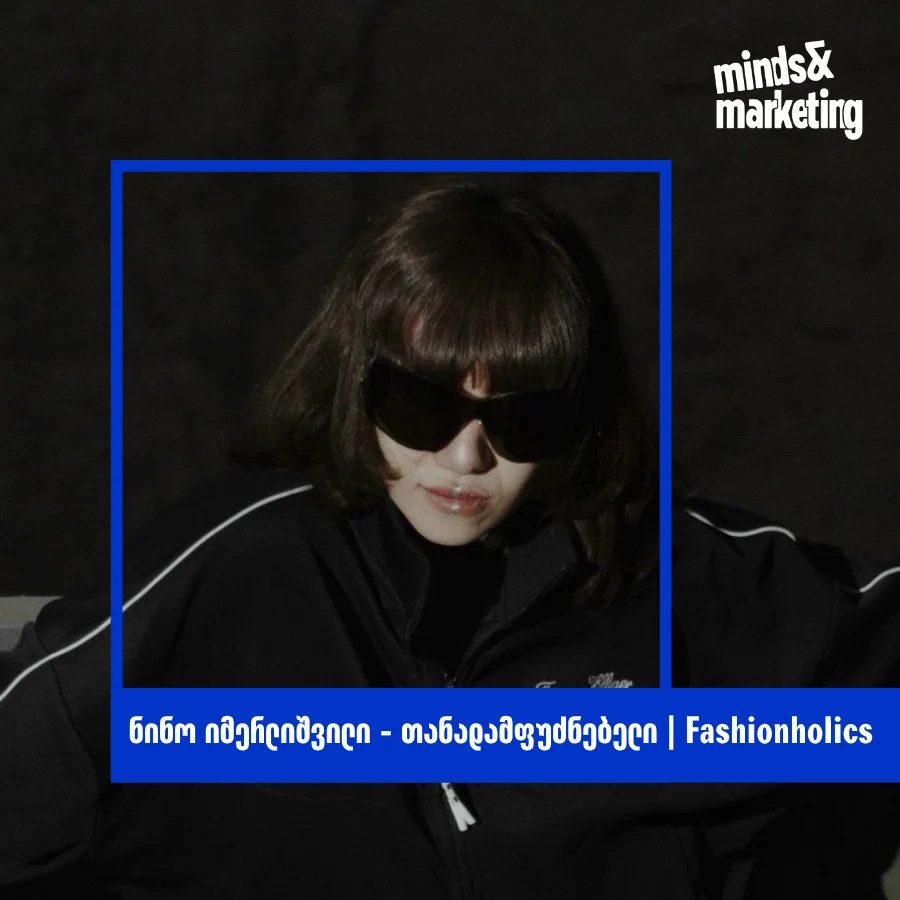
“In the end, we learned that while planning is essential, you shouldn’t obsess over a plan if it doesn’t work. You need to look around — sometimes opportunities appear in places you didn’t initially consider.”
This is where the founders internalized a critical lesson: they continued writing about what genuinely interested them, in the same direct tone that audiences had come to love — a tone that still distinguishes them within the Georgian media ecosystem.
what’s happening today?
Today, Fashionholics sees itself more as an opinion-maker than a traditional media platform — and this distinction is most visible in its approach to commercial communication.
When working with clients, the platform deliberately takes on the role of a partner rather than an advertising distributor — still a relatively rare practice in the Georgian market.
Gvantsa Kikalishvili (Founder, Fashionholics Online):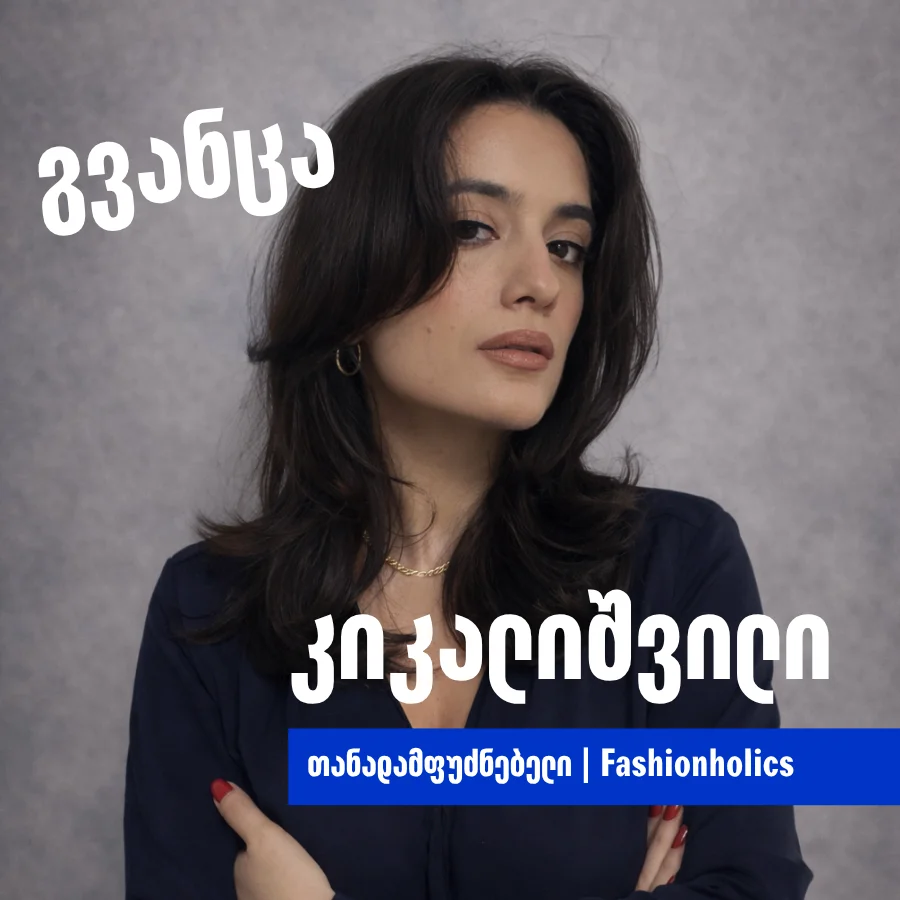
“Our page is the only place where we publish neutral, informative content as part of commercial collaborations. Personal recommendations are reserved only for products we actually use and genuinely like. If we feel that a client disrespects our principles or our audience, we refuse to collaborate.”
The result of this approach is something that is extremely difficult to achieve in digital media: long-term audience trust. And that trust becomes the platform’s most valuable asset — both for its audience and its commercial partners.
community as a brand asset
At a time when even large brands are trying to build authentic communities — and when this has become one of the key challenges in Georgian marketing — Fashionholics’ Facebook group stands out as an organically formed audience.
The group, created spontaneously during the pandemic, has evolved into a space where content is no longer one-directional. On average, 300 posts are published monthly — often inspiring Fashionholics’ articles and podcasts. Its scale has also enabled multiple collaborations, including partnerships with international brands.
Nino Imerlishvili (Co-founder, Fashionholics Online):
“The group made the brand much more alive. Today, Fashionholics is me, Gvantsa, and our audience. The idea for the podcast was born in the group, and we even run internal training programs for international brands there — something we could never have imagined at the time.”
This reflects a broader transformation in both media and marketing: the audience is no longer just a consumer — it becomes a co-creator.
Nino and Gvantsa also note that timing played a key role in the growth of their community. During the pandemic, social media groups became especially relevant, as people spent more time at home. This isolation created a natural need for connection and shared spaces (we all remember platforms like Clubhouse or Discord).
When asked whether they would still choose the group format today, they acknowledge that while forum-like spaces — including Facebook — still have a few years of relevance left in Georgia, video formats now offer a more direct and effective connection with audiences. Reels, TikTok, and podcasts enable faster, more dynamic communication and higher engagement.
Adapting to this shift, Fashionholics has actively expanded into video content, developing both its TikTok presence and podcast format.
content evolution: from text to video
The logic of digital media is constantly evolving — and adapting to this change is critical.
Today, when you have just 3–4 seconds to capture attention, content format itself becomes a strategic decision. This is why Fashionholics expanded into video and entered both TikTok and podcast formats.
The podcast, in particular, emerged as a natural extension of this process.
Gvantsa Kikalishvili (Founder, Fashionholics Online):
“We realized our audience was ready for deeper, more analytical storytelling. The podcast allows us to expand on topics that don’t fit into short posts or articles. It’s a natural continuation of our community — where the reader becomes a listener, and the dialogue becomes more personal.”
Nino Imerlishvili (Co-founder, Fashionholics Online):
“Once the group built a bridge between the brand and the audience, we could clearly see what interested them, what they responded to, and what was missing. The podcast became a way to elevate that direct communication to a more professional level.”
This illustrates a key truth: while content formats evolve, dialogue with the audience remains the core driver of strategy.
fashion and marketing in georgia
One of the most visible challenges in the Georgian fashion industry lies in marketing.
Despite the fact that local brands are actively creating internationally recognized products, communication and strategic positioning often remain secondary.
According to Fashionholics’ founders, the issue is largely tied to limited resources. In small teams, product creation almost always takes priority, leaving little time or energy for marketing. As a result, communication becomes fragmented and inconsistent — directly affecting brand visibility and growth.
In this context, they believe competitive advantage should come not from budget, but from ideas.
Gvantsa Kikalishvili (Founder, Fashionholics Online):
“When resources are limited, honesty and creativity are the solution. If you can’t compete with large brands’ marketing teams, creativity becomes your main weapon in the internet era.”
Equally important is context. Modern marketing cannot exist without it — brands must understand what is happening around them, what topics are relevant, and what audiences are responding to.
Nino Imerlishvili (Co-founder, Fashionholics Online):
“If you want to go viral, you need to know what’s relevant and what people are talking about. Today, when viral moments shape media conversations, falling behind or operating outside of context is a losing strategy — especially in a consumer art like fashion.”
To illustrate this, Gvantsa recalls Demna Gvasalia. His success is largely built on the ability to keep fashion in constant dialogue with time, culture, and current events. One of his early viral moments was linked to an image of Celine Dion wearing a Vetements Titanic T-shirt.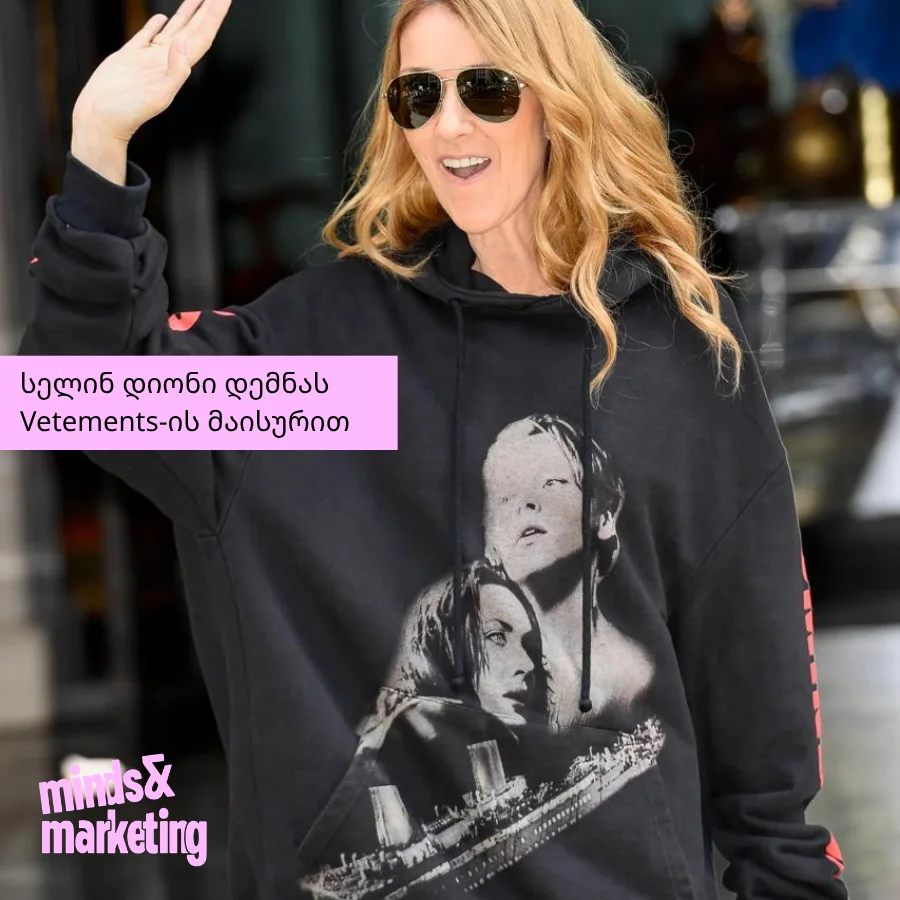
A similar example appeared at this year’s London Fashion Week, where George Keburia referenced a contemporary pop culture moment with the slogan: “Hi Lauren Sanchez Bezos!”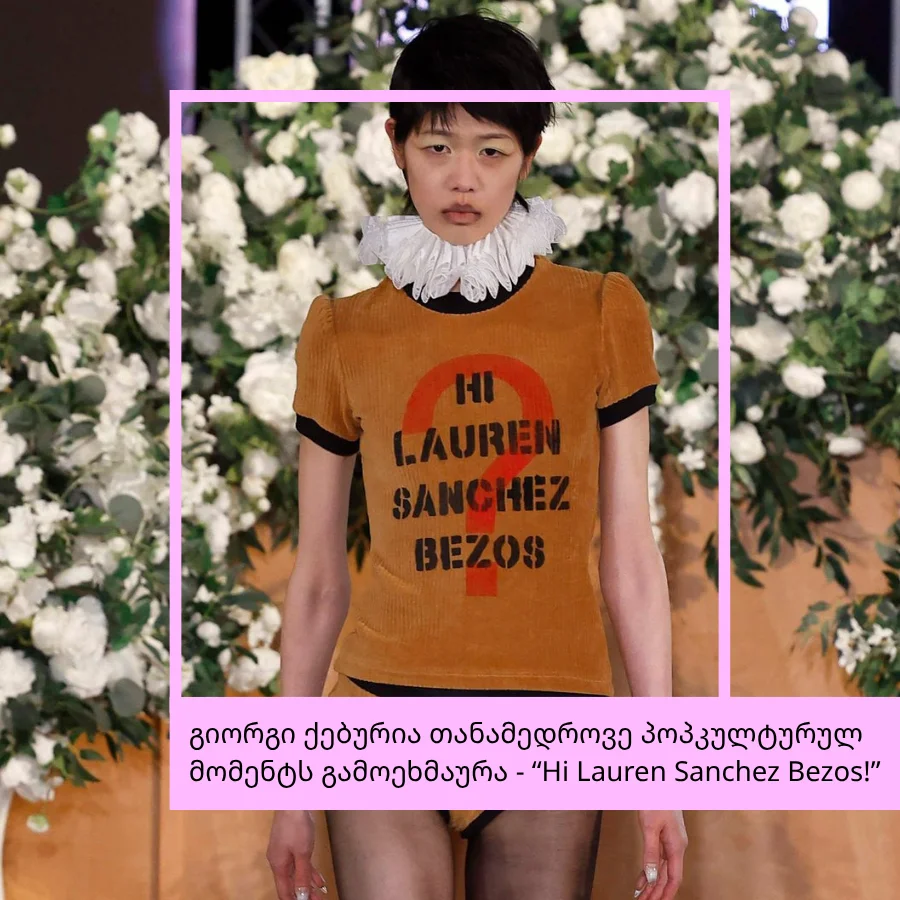
This becomes even more critical in smaller markets, where limited resources can only be offset by creative, context-driven communication.
Gvantsa Kikalishvili (Founder, Fashionholics Online):
“AI can absolutely be used in marketing — and we already see giants like Gucci, Zara, and H&M doing it. Young designers should also embrace this opportunity. A single AI agent can fully solve communication challenges with an audience.”
conclusion
The story of Fashionholics once again proves that a strong media brand is not built on content alone.
What truly matters is:
A tone that creates a real connection with the audience
Trust that remains uncompromised by commercial interests
Continuous adaptation — to formats, platforms, and changing audience behavior
Fashionholics Online stands as a living example of how an enthusiasm-driven project can evolve into an influential platform — when guided by consistent development and clear values.