
the first lunch on linkedin
the poke bar experience
Why don’t brands actively use LinkedIn? Let me reverse the question: Which brand comes to mind that has recently executed a visible marketing move on LinkedIn?
For many of you, the answer is probably the same as ours: Poke Bar.
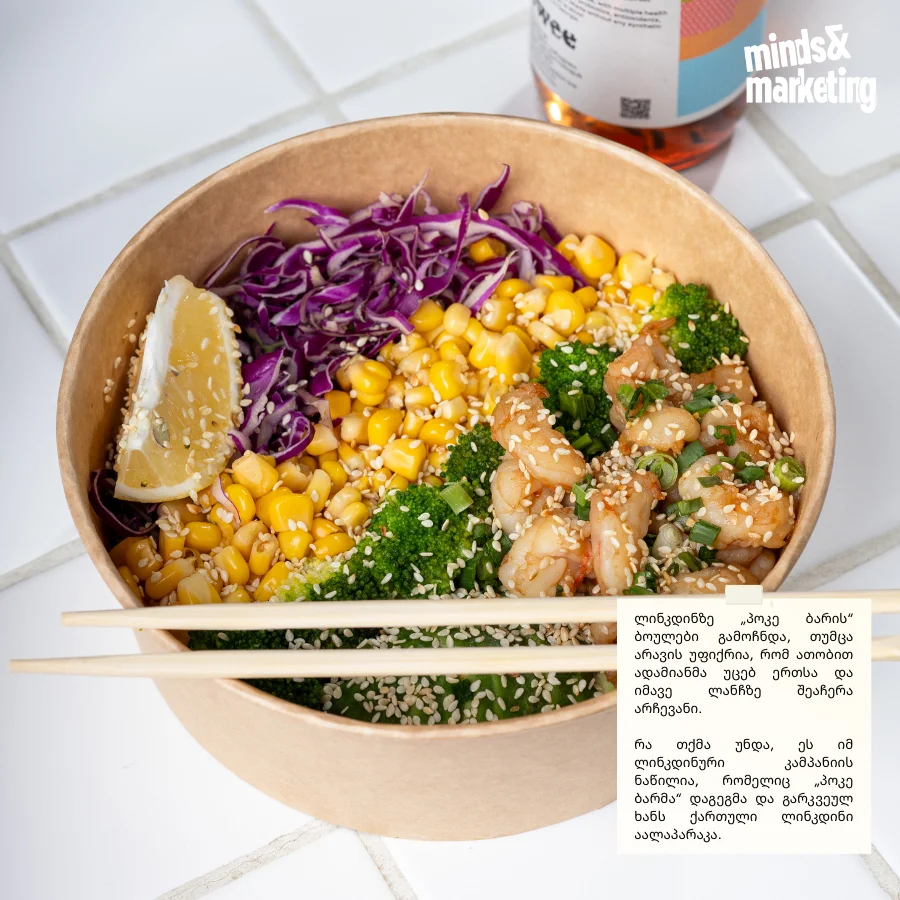
Poke Bar has been present in the Georgian market since 2018. Yet for some, awareness came only recently. The brand was not afraid to take a risk – to become the “first swallow” – and appeared on LinkedIn with a notably loud campaign. Naturally, it caught our attention. We reached out to the brand to understand the thinking behind the move.
Let’s unpack how important LinkedIn visibility is for brands – and how “risky” such a decision truly is.
not just a food spot
Before diving into the campaign mechanics, it’s important to understand how Poke Bar sees itself. They do not position themselves merely as a food outlet.
“We want to help people eat healthy – especially those who work, stay busy, or live active lifestyles.” This idea extends beyond bowls. Saturday group runs. Coffee. Music. Small community activities.
Poke Bar is building a place where people don’t just eat – they connect and recharge.
This context matters. Because LinkedIn is not a random choice for a brand that speaks directly to working professionals.
why LinkedIn?
When the Poke team began planning their first awareness campaign, one principle guided them: Maximum effect with minimal resources.
As Mariam Jikuri from Poke Bar explains:
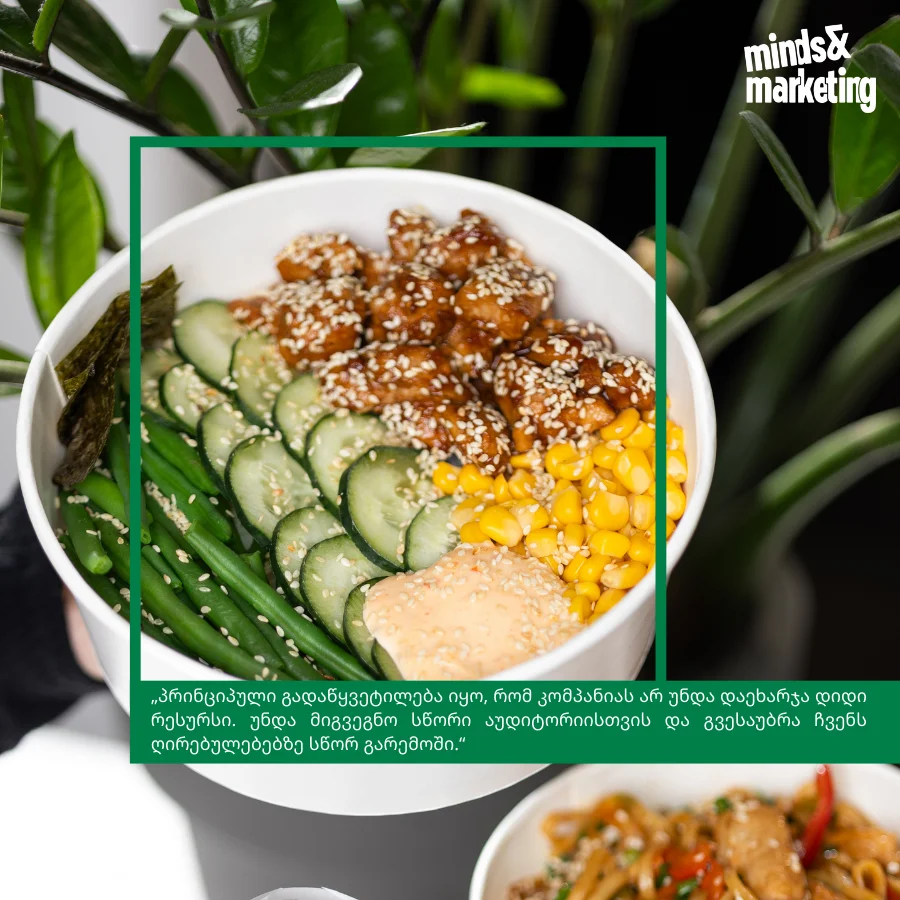
“It was a principled decision not to spend large resources. We needed to find the right audience and talk about our values in the right environment.”
For them, that “right environment” was LinkedIn.
“I always wondered why other companies don’t show up on LinkedIn. Even small things can reach many people there. Posts are read more often compared to other platforms, where content is more entertainment-driven and easier to ignore.”
This was not accidental. For the Poke team, LinkedIn is not just a career platform. It is a space where brand moves are more noticeable — because attention is different. More focused. More intentional.
audience selection: relevance over reach
Follower count was not the deciding factor. “What mattered was that the person was active on LinkedIn.” Around 20–25 individuals received products.
As Mariam shares, almost no one declined.
One condition was non-negotiable: absolute honesty.
“We didn’t interfere in posts or comments. We didn’t give instructions. It was important to see how people would evaluate Poke — both positively and negatively.”
This shifts the campaign closer to experience-based marketing rather than classical influencer marketing.
No scripts.
No forced messaging.
Just real reactions.
how a campaign participant saw it
Mariam Turdziladze (10K+ LinkedIn followers) was among those who received a bowl.
According to her, the campaign succeeded precisely because it chose the right channel to reach its potential consumers.
“Poke Bar is a good example for other brands that marketing activities can be executed on LinkedIn — if your target audience is here. Realizing this and using existing resources with minimal cost is highly commendable. They sent bowls to dozens of people I read and respect — which shows they built the communication correctly within the LinkedIn community.”
The insight is clear:
Channel selection is not about trends.
It is about audience alignment.
a strategic recommendation
From Mariam Turdziladze’s perspective, the impact could be amplified even further with duration:
“Strategically, I think that speaking about yourself indirectly – through posts and comments – for at least three months could be an even stronger solution.”
This is not criticism. It is a growth opportunity.
Her experience confirms that:
-
The brand correctly identified its audience;
-
People were genuinely allowed to express their opinions;
-
Authenticity created differentiation.
And that is what placed Poke at the center of conversation.
negative reactions are part of the process
When many people talk about the same product at once, positive attention is almost always accompanied by criticism.
“I remember one negative comment. At first, it hurt. But then I realized it’s normal. An audience is healthy when everything doesn’t receive only positive reactions.” – Mariam Jikuri
Most reactions were positive – largely because the brand reached the right audience.
However, some people:
-
Felt overwhelmed by the number of posts;
-
Found it unusual for a food brand to be active on LinkedIn;
-
Criticized the price of the bowls.
But here is the strategic question:
If some of the most economically active, purchasing-capable individuals are scrolling LinkedIn daily – and a significant portion of lunch consumers are on this platform – is LinkedIn really a strange choice for a food brand?
Or is it simply underutilized?
conclusion
I don’t know whether this article will motivate other brands to enter LinkedIn.
But I hope it encourages at least one thing: Don’t be afraid to experiment.
Sometimes the biggest discussions — and ultimately the biggest progress — come from steps no one has taken before.
The Poke LinkedIn campaign shows us that:
-
Brands can think beyond Instagram and TikTok;
-
On LinkedIn, a brand can become one of the main conversation topics for several days – if the context is right;
-
Risky decisions are often the most noticeable and memorable.
This is not a story about a single bowl.
It is a story about how a brand can make people talk — not just run a beautiful ad.
And in our view, Poke Bar has created a strong example of what happens when a brand clearly sees – and confidently addresses – its desired audience.