beyond the octagon: how an event filled an arena in 72 hours
RKENA 2
A packed arena. 8,000 tickets sold in just three days. More than 20 sponsors. And the emotional energy of thousands of passionate fans.
This is the effect of RKENA 2 — a brand that, just three months after its birth, managed to turn one of Georgian sport’s biggest challenges — filling arenas and stadiums — into its strongest advantage.
Rkena filled the Sports Palace in 72 hours.
We have already discussed the success of RKENA 1, but RKENA 2 revealed an entirely new perspective.
Here is the story of how RKENA 2 was built — and how it became the city’s main sporting event.
communication with the fans
RKENA 2 was born directly from the success of Rkena 1. The moment the first event ended, one key question appeared everywhere: When is the next one?
The bar had already been set incredibly high, which meant the expectations for the second event were even higher.
Communication with fans started roughly two months before the event. Step by step, the audience was slowly prepared. The anticipation was built gradually.
There was no announcement. No date. Only iconic footage from RKENA 1, already turning into history, paired with powerful lines celebrating victory:
“a place that was once full.”
“victory tastes different on this stage.”
“there is no place for fear in this cage.”
“the desire to win never disappeared.”
“the fighting spirit never left.”
This is well-crafted storytelling — first emphasizing the importance of the place, and then the importance of the moment. Fans slowly begin to relive those emotions, and anticipation for what comes next naturally begins to grow.
The next phase was an interactive campaign: “what would be your walkout song?” For a moment, fans stepped into the fighter’s role — imagining themselves walking toward the octagon with their own inspirational soundtrack. The template quickly spread across Instagram stories as people shared their favorite songs. This was the second phase of warming up the audience.
Then came the date announcement:
“rkena 2 is here.”
“the countdown begins.”
The comment section immediately filled with questions about ticket sales. Three weeks before the event — the fight card was revealed. Rkena 2 was approaching. Ticket sales opened.
24 hours.
36 hours.
72 hours.
All tickets sold. At this point, not much more needs to be said.
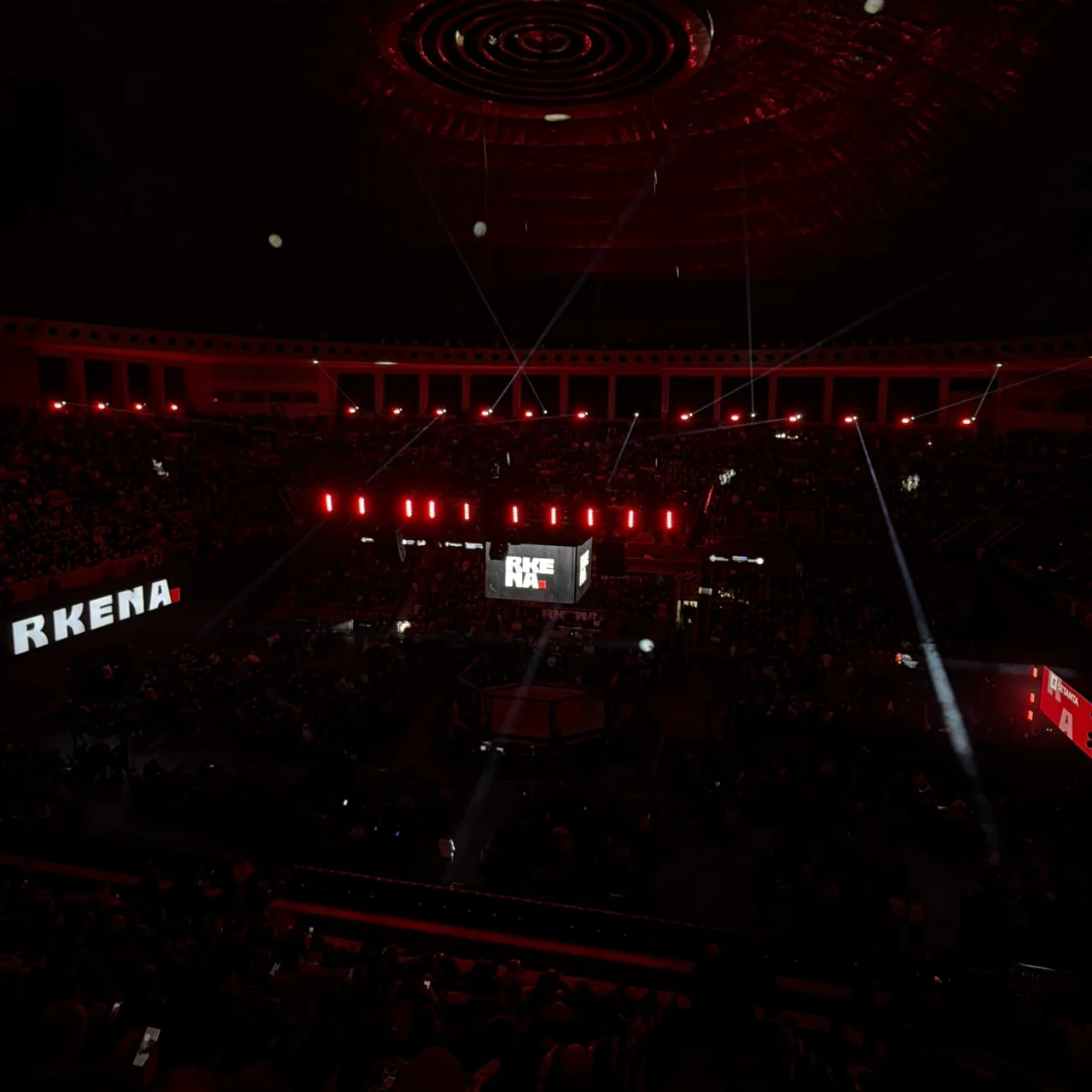
What followed was a stream of content focused directly on the fighters — something that is critically important for building emotional connection with fans, yet something Georgian sports clubs often overlook.
Perhaps that is why in our country a sports commentator is often more famous than National League football players (we’ll return to this topic in a future article).
RKENA introduced the fighters from a new perspective: We learned their stories. Their journeys. The path they walked to reach this stage. Today, these fighters have already become heroes and role models for many fans. People are not just coming for the show anymore. They are coming to see them.
The countdown continued, and slowly we moved closer to fight night.
the role of the hero
Every sport has its hero — the person who transforms a sporting moment into something emotional and historic. Sport becomes special because of people first, and spectacle second.
The hero of Rkena 1 was Merab Sharikadze — through his story, his dedication, and his spirit. The audience waited for Buka’s triumph, and it happened. This time, however, Buka took on a different role — stepping in as an interviewer and actively participating in social media content.
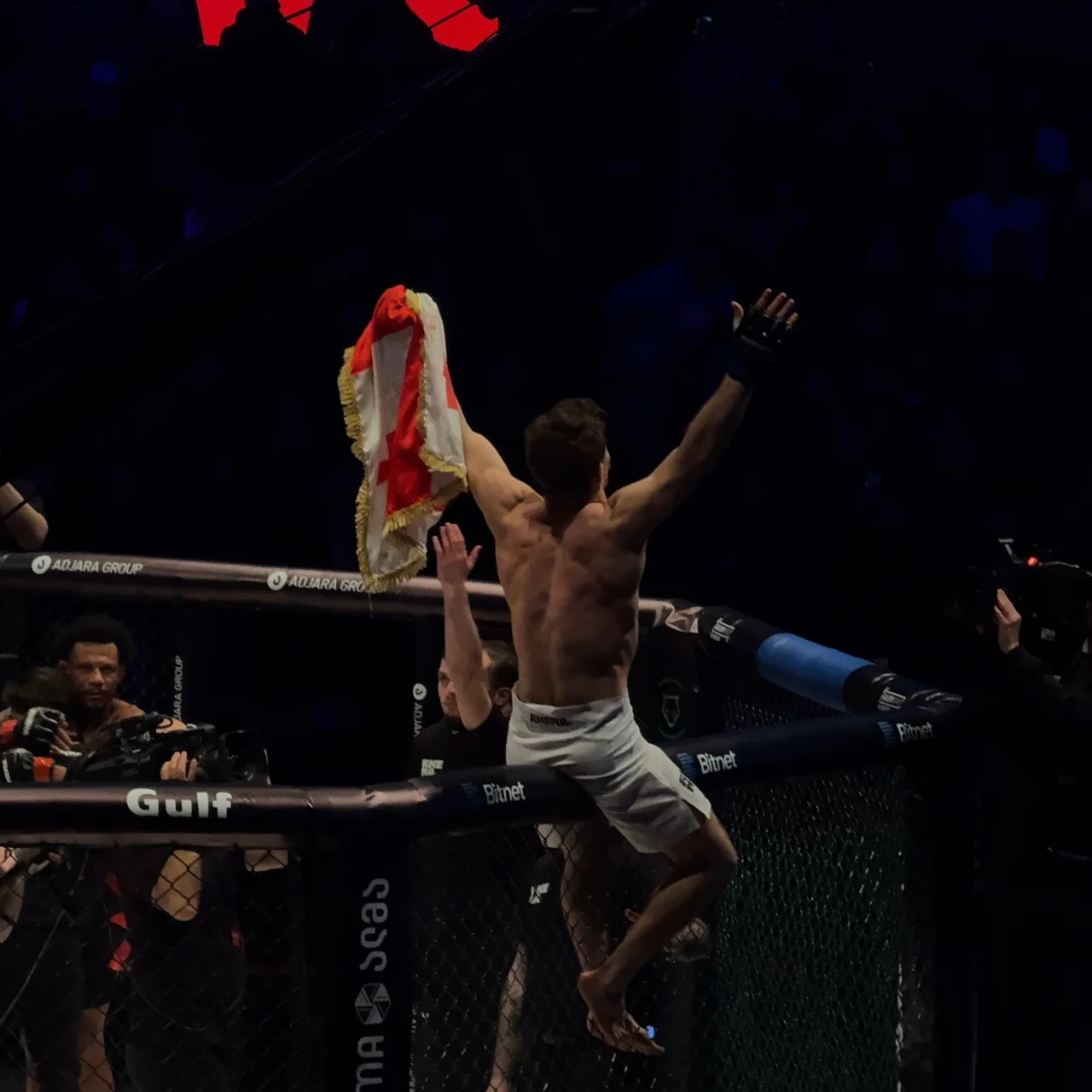
At Rkena 2, the hero’s role belonged to “The Lion.” Davit Lortkipanidze headlined the event. Inside the lion’s cage stood a Brazilian cowboy — Oliveira. But the fight didn’t last long. The Lion forced the Cowboy out of the cage in 41 seconds.
sponsors
Celfie. Alma. Borjomi. Archi. Gulf... RKENA 2 had an unprecedented number of sponsors — something that Georgian sport traditionally struggles with. And this was achieved by a brand that is only five months old.
What could be a stronger signal to companies than this? If a brand is built correctly, investing in Georgian sport becomes worthwhile.
And it also sends a message to Georgian sports clubs: if you invest effort, follow the right strategy, and adapt to your fans, companies will come to you.
This once again proves an important point: The problem in Georgian sport is not the lack of interest. The problem is the lack of a well-packaged product.
Sponsors were also present inside the event space with their own marketing activations. Celfie created a 360-degree Faceoff Ring. Archi presented an interactive photo zone with a boxing bag and championship belt installation — allowing fans to step into the symbolic world of champions and leave the event with memorable photos. One of the main sponsors was Borjomi’s new energy drink “Energia.” It appeared repeatedly as product placement inside the octagon — often in the hands of the fighters.
halftime show
The Halftime Show has become one of the key pop-culture elements of modern sports events, playing an important role in both marketing and the overall experience.
Until the very last minute, it remained unknown who would perform at Rkena’s Halftime Show — a decision clearly designed to amplify anticipation and intrigue.
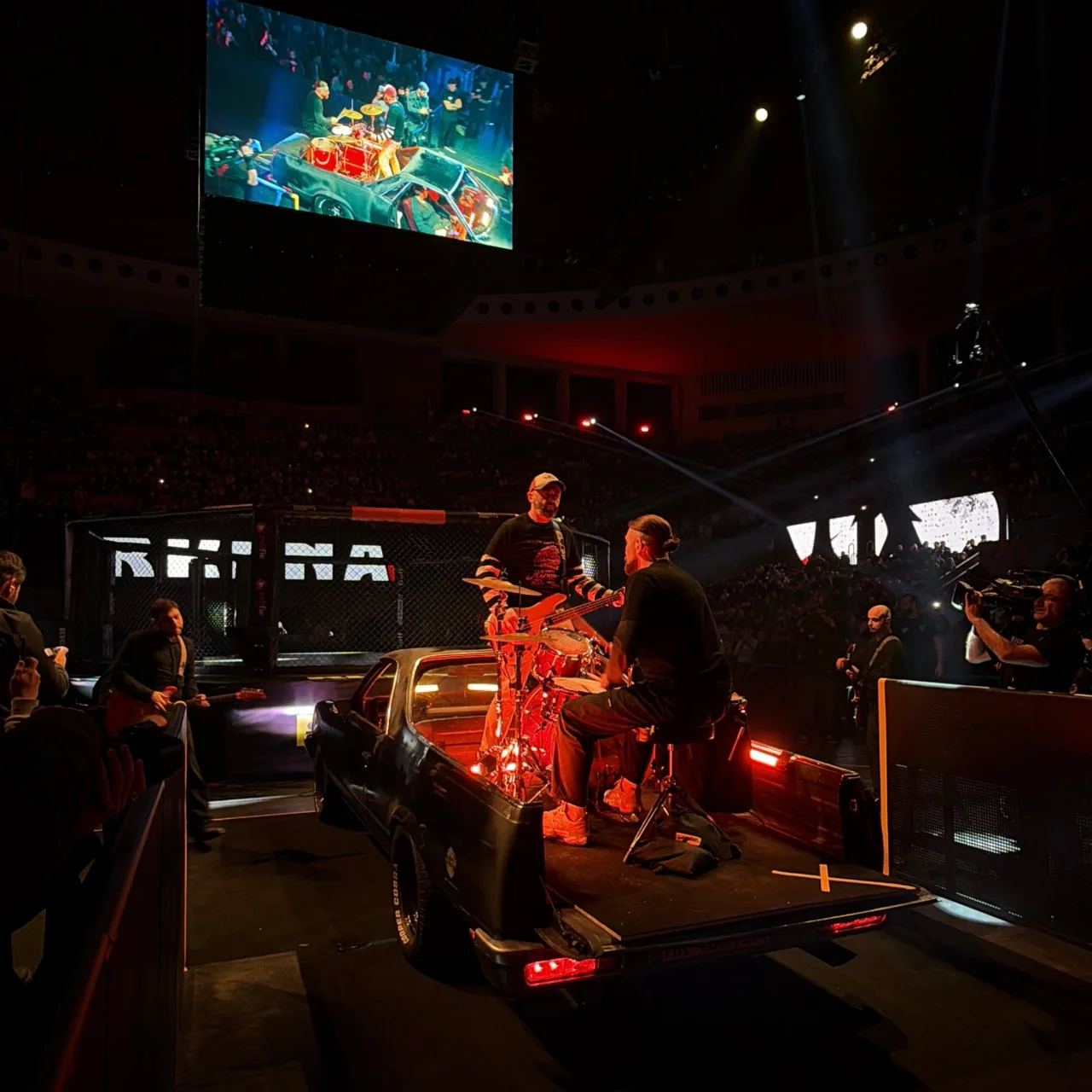
Eventually, the Georgian band SKAZZ appeared on stage, delivering a powerful performance and creating a unique atmosphere with their original sound and energetic presence.
culmination
RKENA 2 ended with the same triumph as RKENA 1. After such a successful first event, it is extremely difficult to send fans home just as satisfied the second time around.
Yet the Rkena team managed to do exactly that. When the first question you hear minutes after the event ends is: “when is the next one?” — it means you are doing something right.
RKENA 3 — we’re waiting.