design is dead. what awaits the designer?
Touch RGB 2026
“Design is dead. Long live design.” — this is perhaps the phrase that best captures the core discussions of Touch RGB 2026. The international digital design festival, organized by Touch Platform, was held in Georgia for the third time, bringing together hundreds of professionals from the design and broader creative industries over two days.
Visual art remains one of the most powerful tools in marketing — it captures attention, attracts, engages, evokes emotion, and builds trust. At the same time, we are witnessing the speed — often chaotic — at which AI is taking over multiple fields, including the creative industry. We’ve said it many times: artificial intelligence can simplify, accelerate, and reduce the cost of many processes. But where does that leave the human role? How do we balance AI with individual vision?
Touch RGB 2026 became a space to reflect on these questions. Here are the key insights shared by both local and international professionals.
where is the designer’s potential going?
Nika Belskaya delivered a deeply inspiring talk, sharing her journey of working on independent projects alongside a full-time job. According to her, clients, managers, or supervisors may impose limitations — but personal projects remain a space where you define the boundaries, or choose not to define them at all.
“Find your own path. Focus on your potential and your interests. Eventually, you’ll find yourself on stage, speaking about the importance of believing in yourself — before someone else does it for you.”
Her experience stands as a powerful example, especially for emerging designers, of how to fully unlock personal potential.
how are great ideas born?
According to Othmar Handl, original ideas cannot exist without a connection to cultural roots. Every culture is unique, and inspiration can be found within it — in language, art, music, literature, architecture, and beyond.
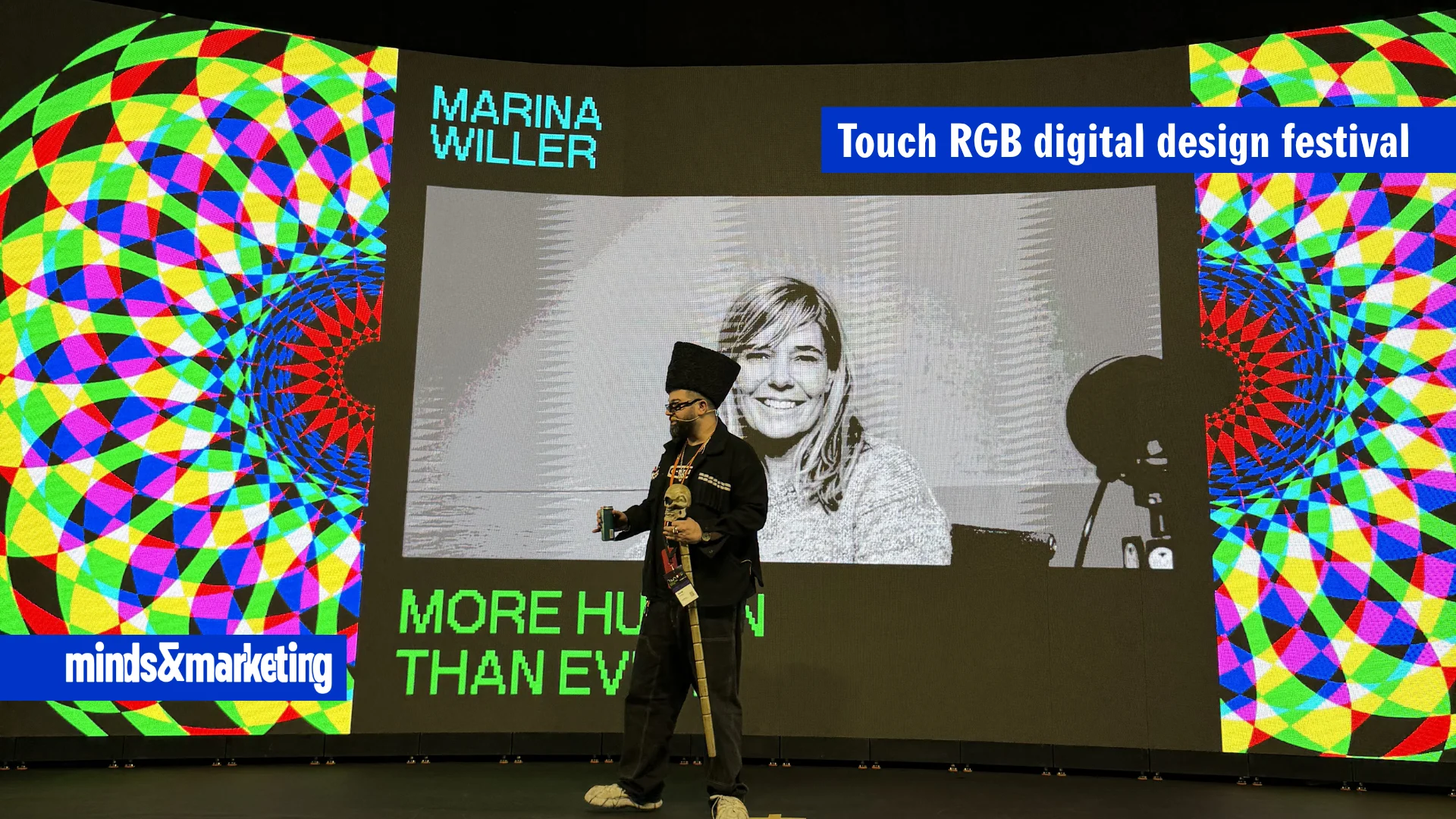
Marina Willer, partner at Pentagram London, highlighted another critical issue: the growing disconnect between humans and nature, and between humans and the real world. The more curious you are — the more you seek ideas in unexpected places — the less you rely on forced effort. Your brain naturally becomes a library of ideas.
Interestingly, across the two days, not a single speaker mentioned finding inspiration through other designers’ work or constant research. Instead, they spoke about visiting museums, walking in nature, and spending time with their children. Which leads us to the next point…
human perspective is decisive
In the age of AI, human perspective is more important than ever. Today, when anyone can generate visuals, what matters is no longer the output itself — but its depth.
AI is fast and precise, but it does not live, it does not accumulate experience, and it does not truly understand cultural context. AI is a tool. Humans are the source of ideas.
design is more than making design
Precisely because anyone can now become a “designer,” design has evolved far beyond simply creating visuals — something AI can do in seconds.
In the process of writing prompts, we often forget the very process that fuels creativity. AI accelerates execution, but it does not create the process itself.
As Marten Kuipers put it: “Using AI doesn’t make you a bad designer. Using only AI does.”
“design is dead. long live design.”
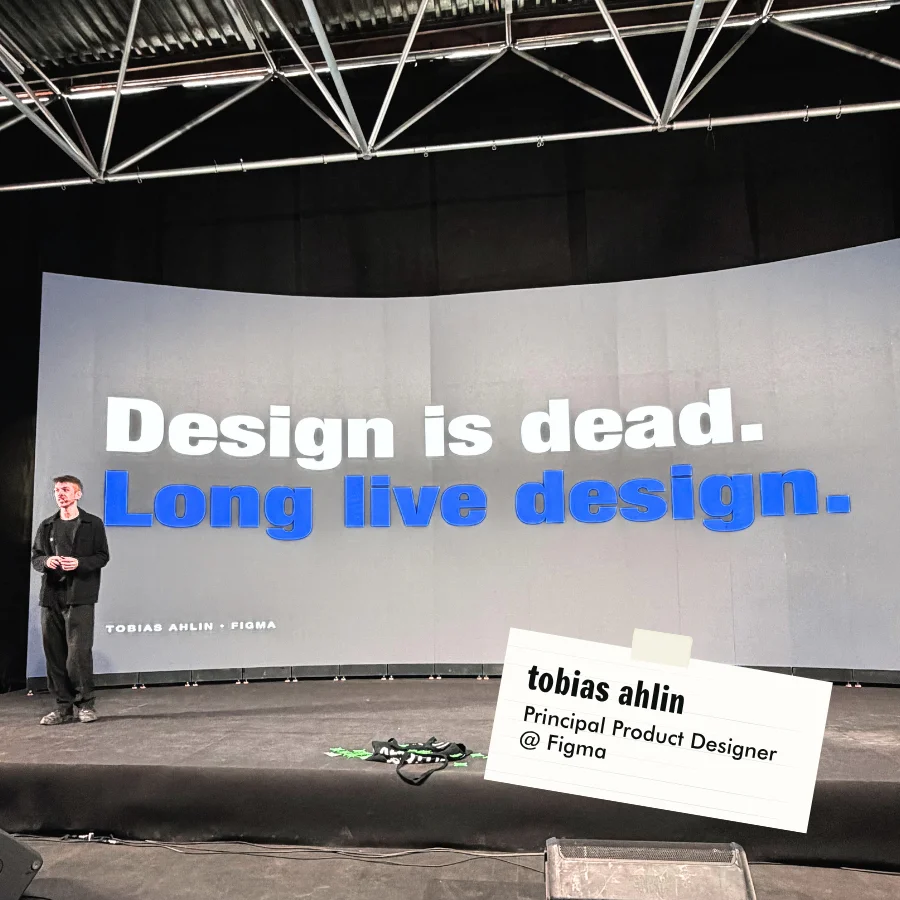
Design — in its traditional understanding — is dead. But in its contemporary form, it has never been more alive.
Thanks to AI, design is moving into an entirely new stage of evolution. As Figma’s Lead Product Designer Tobias Ahlin noted, the design process — as a multidimensional creative mechanism — is shifting from pixels to code, fundamentally transforming how the industry operates. For example, Meta is already asking designers to create through code rather than traditional tools.
Yet, the era of AI agents does not reduce design to a simplified, commodified output — identical, indistinguishable, and purely consumable. On the contrary, as processes become faster and more cost-efficient, more resources can be invested in the creative dimension. This opens up entirely new forms and possibilities for brand expression.
in summary:
Touch RGB 2026 sparked a number of reflections. If I were to distill them:
• People around me are using AI incorrectly — likely due to an incomplete understanding of its capabilities. This is a topic worth exploring more deeply with industry experts;
• Rebranding is far more than changing a logo — and even a logo is far more than a new shape. Stuart Watson’s presentation was particularly memorable, showcasing the journey behind the Premier League rebrand and its aftermath;
• Design is art. And true art cannot be created by machines. Personal experience, culture, history, and connection to nature remain decisive.
So, to the question — where do I find ideas? I found my answer: beyond the screen.
Thank you to the Touch Platform team for creating a space for dialogue in the design industry for the third consecutive year.
Long live design!