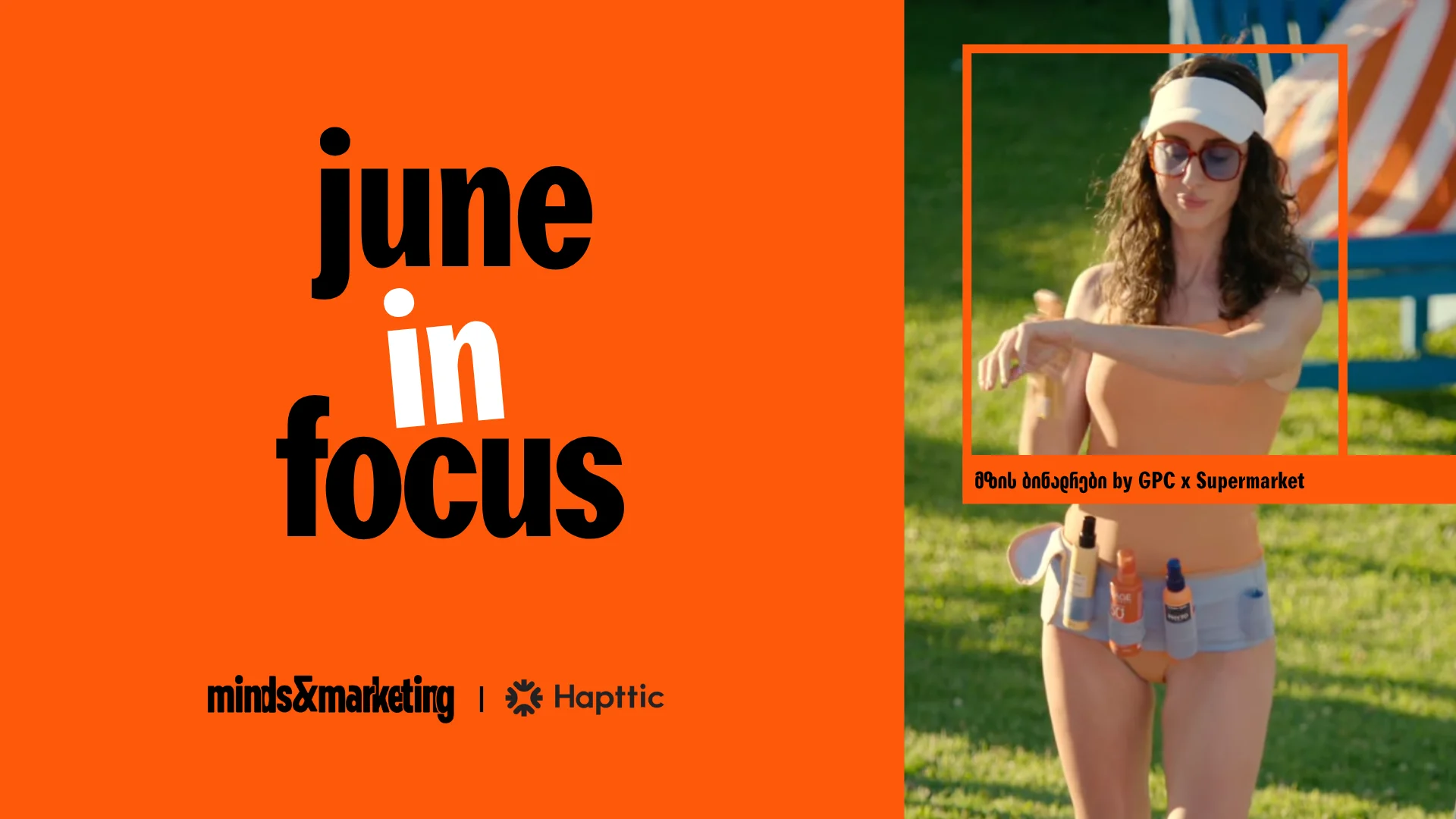
AI mary, check-up, father’s day, and the sun dwellers
june focus
Summer is typically a quieter season from a marketing perspective, but June proved to be surprisingly eventful. This month, together with Hapttic, we selected four campaigns that stood out for their strategic execution and audience response.
For context, Hapttic is an AI-powered marketing analytics platform that processes digital media data and delivers detailed semantic analysis of any brand or topic, helping uncover not only performance metrics but also the motivations behind consumer reactions.
zoommer x supermarket – ai expert mary
As brands continue integrating AI chatbots into their customer experience, the challenge is no longer simply implementing the technology. The real test is making conversations feel genuinely human. One of the most effective ways to achieve this is through personalization, giving AI a recognizable identity rather than presenting it as a generic assistant.
That is exactly what Zoommer has done with Mary, its AI expert.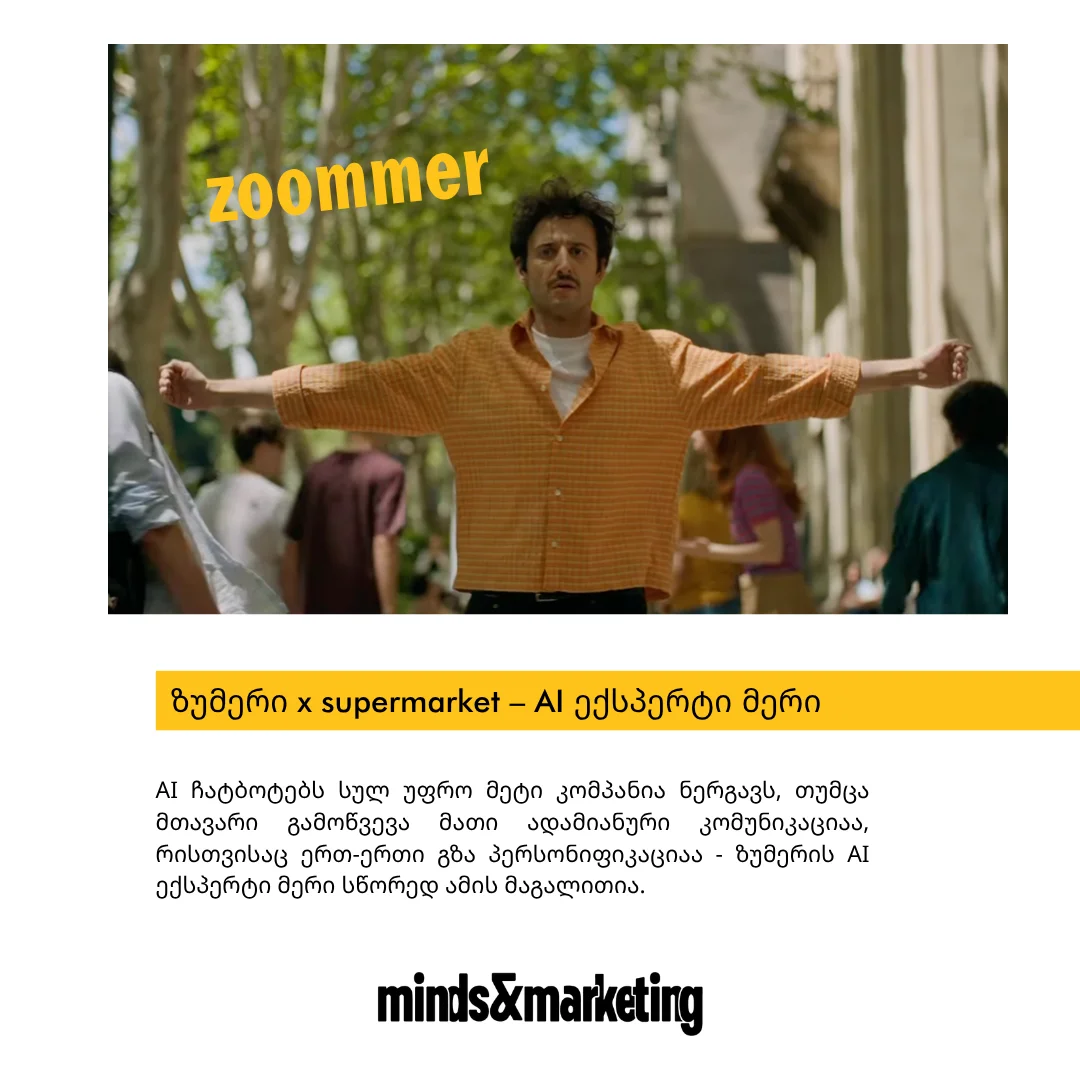
Although Mary can help with choosing any type of electronics, Zoommer introduced her capabilities with one simple message: "For choosing a TV that's neither too big nor too small, ask Mary."
Against the backdrop of Stephane and Mao's hit song "Hands," the main character walks from the store to his home with his arms stretched out in order to determine the exact TV size together with his wife.
The video is very much in Zoommer's style - simultaneously funny, absurd, and informative. You don't need to measure the wall by hand; you simply send Mary a photo of your wall, and she will recommend both the appropriate size and specific TV models.
In the end, the video received more than 5.5 million views, over 22,000 engagements, and 98% positive feedback.
Hapttic's semantic analysis revealed an interesting pattern: roughly 80% of positive comments focused on the creative concept and execution rather than the AI functionality itself. Even more striking, nearly half of those positive comments mentioned the soundtrack. The nostalgic music became an emotional trigger that significantly enhanced viewers' enjoyment of the campaign.
The takeaway is clear: technological innovation alone rarely captures attention. It is the emotional packaging around the innovation that makes people care.
todua clinic – the check-up campaign
Todua Clinic opened its campaign with a bold promise: "We're going to get your attention." Judging by the results, it delivered.
The central character - a doctor - uses every possible approach to convince viewers that regular health check-ups matter. Sometimes the message relies on humor, sometimes on fear, sometimes on irony, and occasionally on familiar public figures, including Duta Skhirtladze and Ninutsa Orjonikidze.
The main video surpassed 3 million views, while accompanying Reels accumulated hundreds of thousands more. Overall audience sentiment reached 75% positive, with only 15% negative reactions.
Hapttic's analysis shows that approximately 90% of comments beneath the main video focused not on the campaign itself but on trust in Todua Clinic. Users shared personal experiences, praised doctors, and highlighted the quality of care. This reinforces an important branding principle: when a company has already established credibility, advertising often becomes a platform where customers voluntarily validate the brand through their own stories.
Questions about the Check-up service itself represented only around 10% of the conversation under the main video.
The Reels, however, revealed a different trend. Many viewers were less interested in the service than in the terminology, asking what "Check-up" actually meant and suggesting that a Georgian equivalent would have been easier to understand.
This reflects a familiar communication challenge. Whenever brands introduce non-Georgian terminology, the language itself often becomes part of the conversation. Whether intentional or not, Todua Clinic may also be contributing to the gradual adoption of the term "Check-up" within the local healthcare vocabulary.
socar x maverik – my father, my road and my bridge
Father's Day still carries far less cultural weight in Georgia than Mother's Day. The reason is simple: it is a relatively new holiday, many people still do not know its date - the third Sunday of June - and comparatively few brands invest in dedicated campaigns.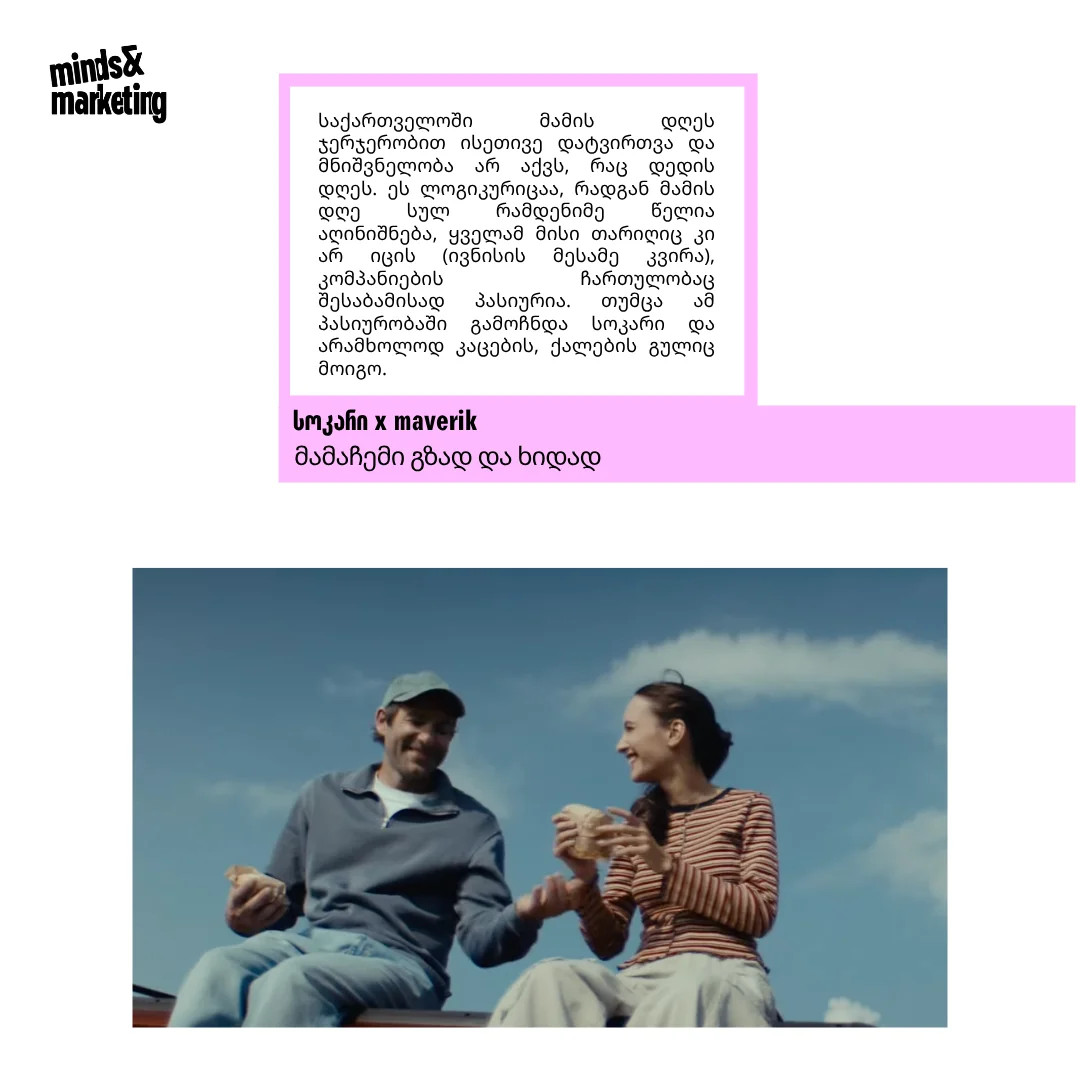
SOCAR chose to fill that gap.
The first film takes a cinematic approach, following the lifelong journey between father and child - from birth through every stage of life, highlighting both visible and quiet forms of support.
Its central message, "My father, my road and my bridge," works on two levels. It perfectly captures the father's role as a constant source of reliability while simultaneously aligning with SOCAR's own brand identity, which is inherently connected to roads, travel, and mobility.
The second video takes an entirely different approach.
SOCAR employees were invited to watch video messages secretly recorded by their children. As the fathers listened to heartfelt words from their sons and daughters, many became visibly emotional. The authenticity of those unscripted reactions made the experience just as moving for viewers.
The audience responded accordingly. Comments such as "I'm crying," "Dad is the best," and "Such an emotional video," alongside countless heart and tear emojis, demonstrated that the campaign established a genuine emotional connection.
Overall, the campaign generated more than 1.5 million views, over 25,000 interactions, and an engagement rate of approximately 2% - a strong result for a campaign of this scale. Audience sentiment reached an outstanding 99% positive.
Interestingly, the second film significantly outperformed the first in both views and comments. While the first video was equally emotional, the second benefited from something audiences increasingly value: authenticity. Real people experiencing real emotions proved even more compelling than cinematic storytelling.
gpc x supermarket – the sun dwellers
Every summer, pharmaceutical brands remind consumers to use sunscreen. This year, GPC and the supermarket chose a more original route.
Their campaign introduced an animated series narrated by actor Nugzar Chikovani. Whether intentional or simply nostalgic association, both the voice and writing evoke memories of one of the early 2000s' most beloved animated series, Kids from Room 402, where Chikovani was also one of the voice actors.
Each episode introduces a recognizable "sun personality." One character rushes outside to tan the moment the sun appears. Another constantly searches for shade. Someone burns almost instantly. Another applies excessive amounts of sunscreen.
These exaggerated personalities naturally connect with GPC's seasonal portfolio of sun protection and skincare products, making the commercial message feel contextual rather than forced.
After several animated episodes, the campaign transitions into live-action, reminding viewers that these personalities are not fictional - they are all around us.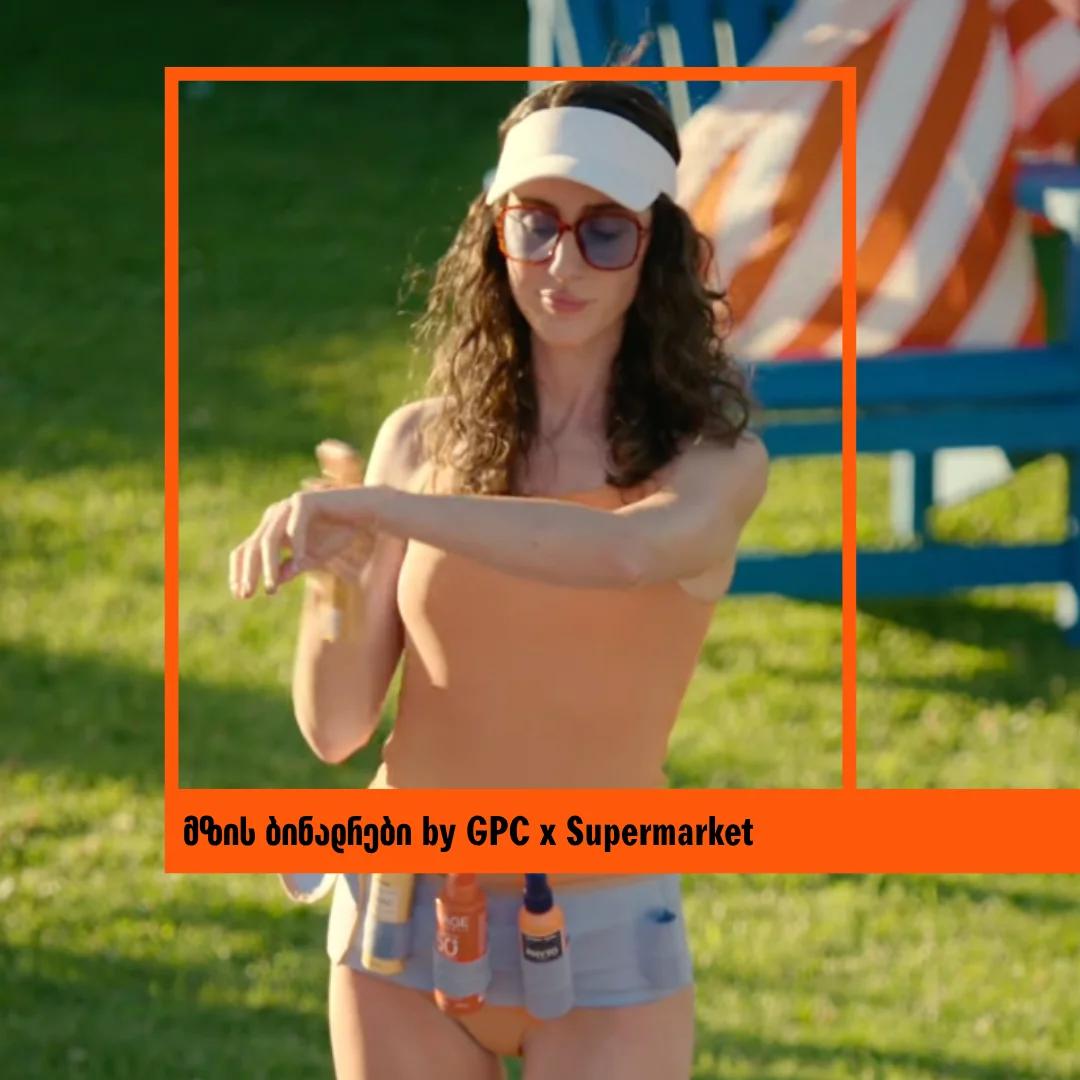
Audience sentiment was overwhelmingly positive, but Hapttic's analysis uncovered the campaign's strongest insight. Most reactions were not about the products at all. Instead, viewers identified themselves with the characters.
"That's me."
"I'm definitely the second type."
"I belong 100% in this category."
The content also generated frequent shares and friend tags, significantly increasing organic reach.
The strategic lesson is an important one: when advertising reflects familiar behaviors and everyday situations, audiences participate naturally. They identify with the characters, share the content, tag friends, and contribute their own experiences. That identification drives both organic engagement and long-term brand recall - even when the product itself is not the central character of the story.
key takeaways
Although these four campaigns come from entirely different industries and share little beyond attracting millions of views and capturing our attention throughout June, each offers a valuable strategic lesson.
- Technology works best when it feels human. Innovation does not require abandoning a brand's established voice.
- Strong customer experience reinforces trust, allowing campaigns to amplify an already credible reputation.
- Authentic human emotion consistently generates the strongest audience response.
- When consumers recognize themselves in a campaign's characters, organic engagement grows naturally.
Ultimately, all four campaigns are built around the same principle: people.
Whether through AI, healthcare, family relationships, or sunscreen, the most effective marketing continues to place human emotion at its center. Trends, platforms, and technologies evolve, but meaningful human connection remains the one competitive advantage that never loses relevance.