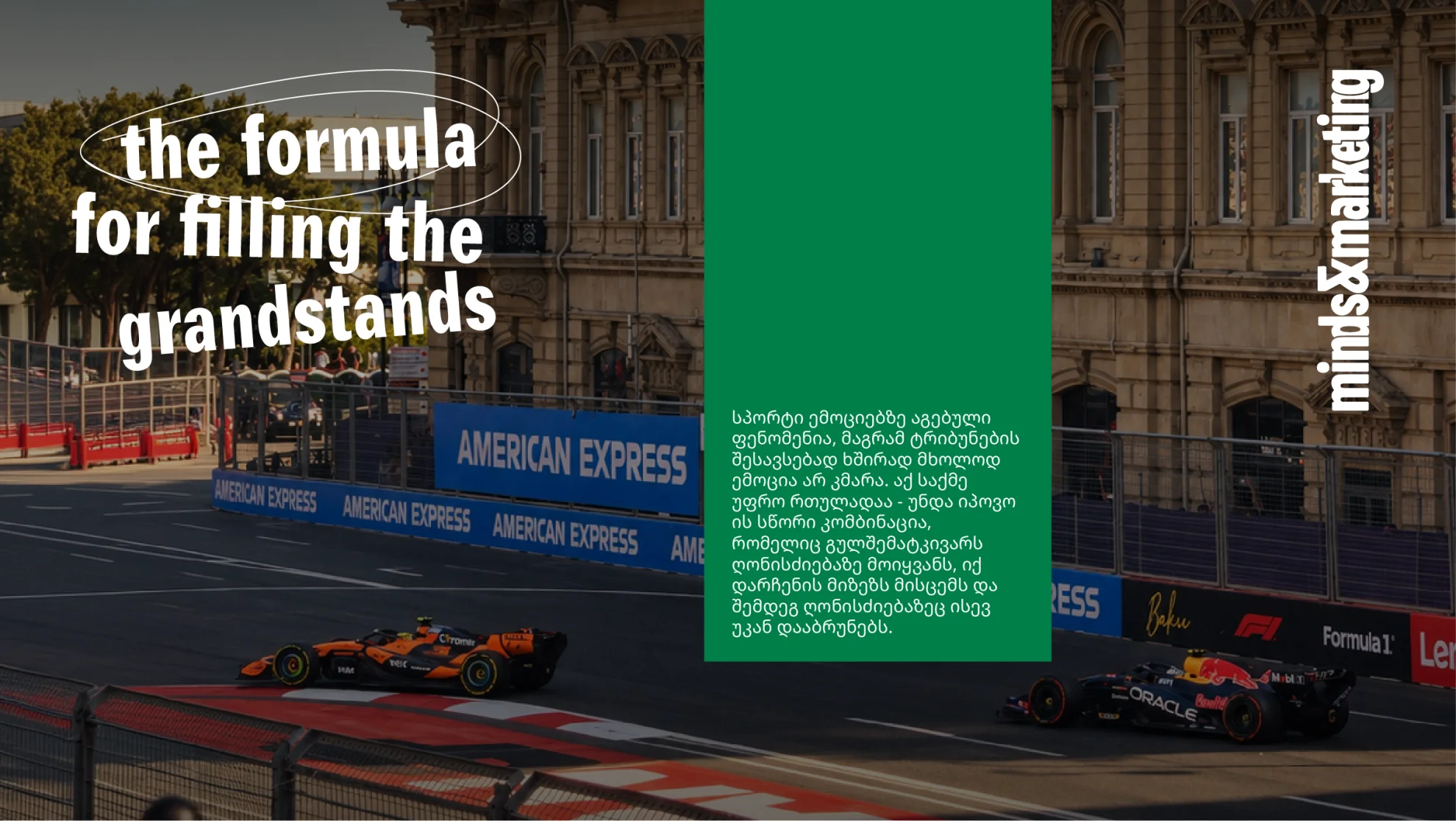
how do you fill the grandstands?
A marketing lesson from the Baku Grand Prix
What really makes someone buy a ticket to a sporting event? Is it the competition itself, the atmosphere, the entertainment, the sense of belonging, or a combination of everything?
Sport is built on emotion. But emotion alone isn't always enough to fill the stands. The real challenge is finding the right combination of factors that brings people to an event, gives them a reason to stay, and makes them want to return.
In Georgian sport, attracting fans and increasing attendance remain significant challenges. We know the problem, and we've discussed potential solutions many times. Yet the gap between theory and practice remains considerable.
So, let's look at one of the region's largest sporting events and explore what happens when fans are placed at the centre of the experience — not simply as spectators, but as active participants. The Formula 1 Azerbaijan Grand Prix offers an interesting case study for understanding what turns spectators into fans, and how fan experience and event marketing can become powerful drivers of attendance.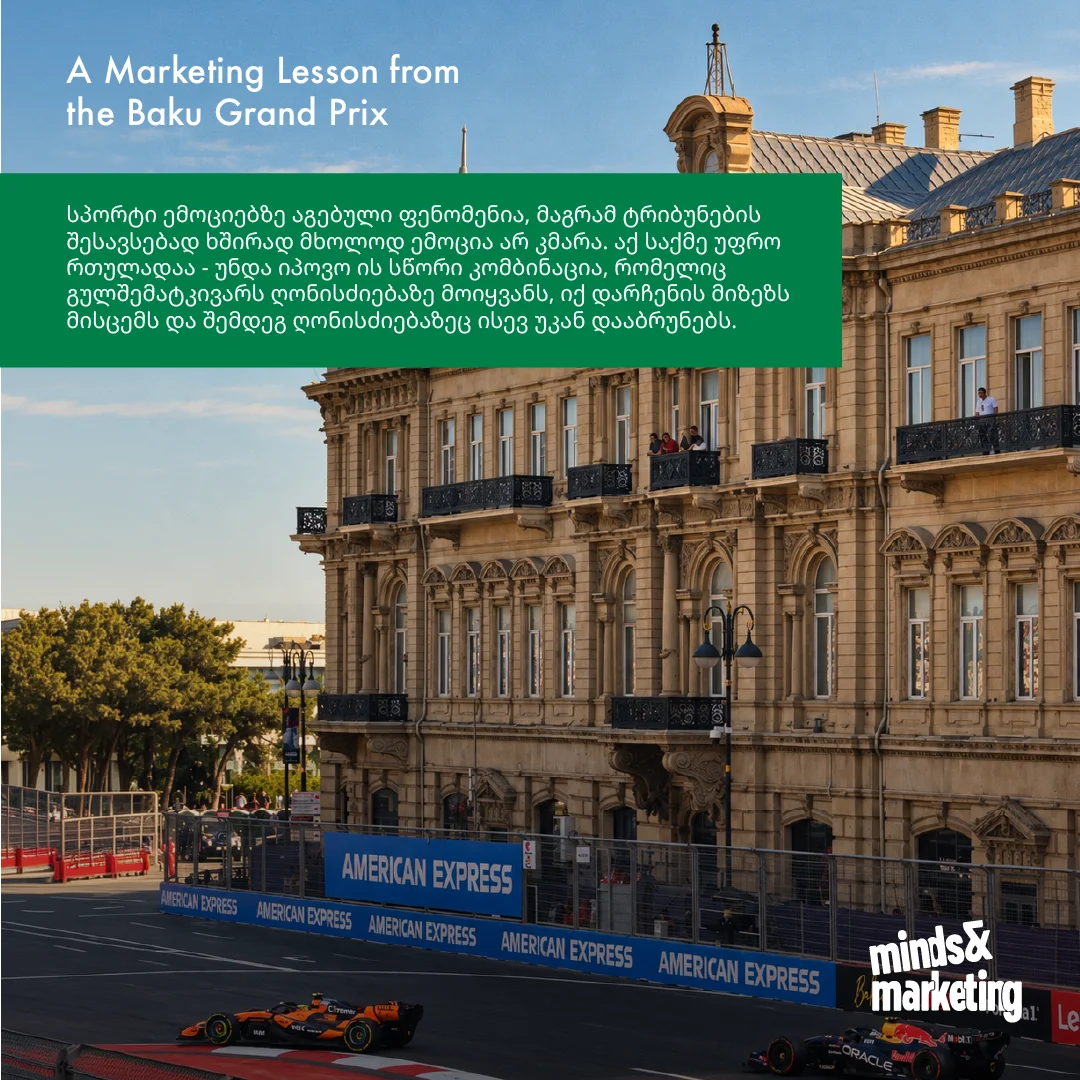
one of the region's biggest sporting events
Formula 1 is an unusual sport to experience live. Think about it: the cars speed past you in a matter of seconds, yet tickets often sell out weeks or even months in advance. So, what makes people spend an entire race weekend at the circuit? And, more importantly, what brings them back year after year?
From September 24–26, Azerbaijan hosted its Formula 1 Grand Prix, an event that has grown into one of the region's largest sporting spectacles. minds&marketing attended the Baku Grand Prix from a fan's perspective, observing what happened beyond the track, how the overall experience was designed, and which engagement mechanisms helped bring the event to life.
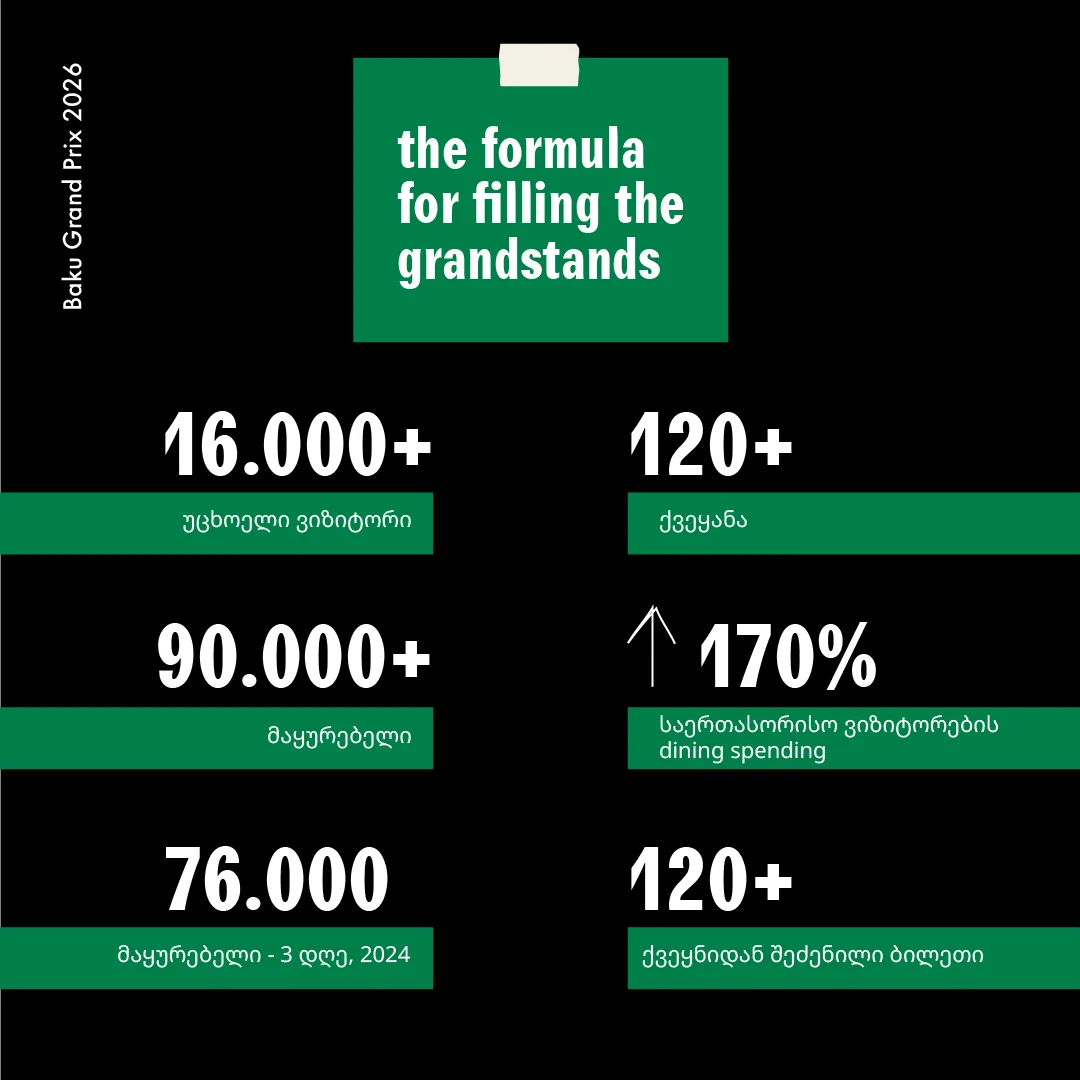
More than 16,000 international visitors, ticket buyers from over 120 countries, more than 90,000 spectators, and a 170% increase in international visitors' dining spending. These figures offer a sense of the event's scale.
In 2026, the Baku Grand Prix attracted more than 16,000 international visitors, setting a new record for Formula 1 in Baku. In 2025, the figure stood at approximately 14,000, representing year-on-year growth of around 14%. Tickets were purchased by fans from more than 120 countries.
But the scale of the event extends beyond international tourism. In 2024, the Baku City Circuit welcomed 76,000 spectators over three days, its highest attendance in eight years at the time. Growing demand has also driven infrastructure expansion: over the past three years, four new grandstands have been added, increasing capacity by more than 6,000 seats. By 2026, total grandstand capacity had exceeded 21,000.
And the impact doesn't stop at the circuit. According to Mastercard's 2025 data, international visitors' dining spending during the five-day period surrounding the Grand Prix was approximately 170% higher than the level expected without the event, while retail spending increased by 94% against the same baseline. On race day itself, dining spending exceeded the modelled baseline by 231%.
These numbers tell a story that goes beyond sport. They demonstrate how a well-designed sporting event can connect fan experience, tourism, local businesses, and the host city into a broader economic ecosystem.
Ultimately, people don't buy tickets just to watch a race. They buy the experience of being there. And this is where the most interesting part of sports event marketing begins.
when the event becomes an experience
In Baku, the fan experience begins long before you reach the circuit. It starts at the airport, where banners featuring Formula 1 teams and drivers welcome visitors. Near the exit, there's even a replica F1 car where fans can take photos. Before they've left the airport, their first photos and videos are already appearing on social media. Anticipation builds, and the fan is already part of the event.
We take a taxi to the hotel. Everywhere we look, the city carries the visual identity of Formula 1: banners, digital screens, posters, branded walls. The event is impossible to miss. Gradually, the city makes you feel that you're no longer just a visitor. You're part of something bigger, and suddenly, you can't wait for the next morning to arrive.
Morning comes. On our way to the circuit, we pass fans wearing merchandise from different teams. From a distance, we can already hear the unmistakable roar of Formula 1 engines. The excitement builds. Before we reach the entrance, volunteer marshals greet us with smiles, reinforcing a simple but important feeling: you're welcome here.
We're finally at the circuit. Fans of different teams move through the crowd, proudly wearing their team's caps and shirts. There's still some time before the next racing session, so let's explore the Fan Zone and see what people are doing when the cars aren't even on the track.
beyond the race: what keeps fans engaged?
A Formula 1 Grand Prix spans four days: media day, practice sessions, qualifying, and race day. Interestingly, fans actively attend throughout the event, not just on race day. But why would someone spend so much time at a circuit where the cars are visible for only a few seconds at a time?
The answer lies in everything happening around the race. At the Baku Grand Prix, the Fan Zone offered continuous opportunities for entertainment, interaction, and participation.
- Fan Stage — turning access into connection. One of the most anticipated activities is the Fan Stage, where fans can see their favourite drivers up close and interact with them directly. At the Baku Grand Prix, drivers from all ten teams take turns appearing on stage for approximately ten minutes, answering quick questions from fans.
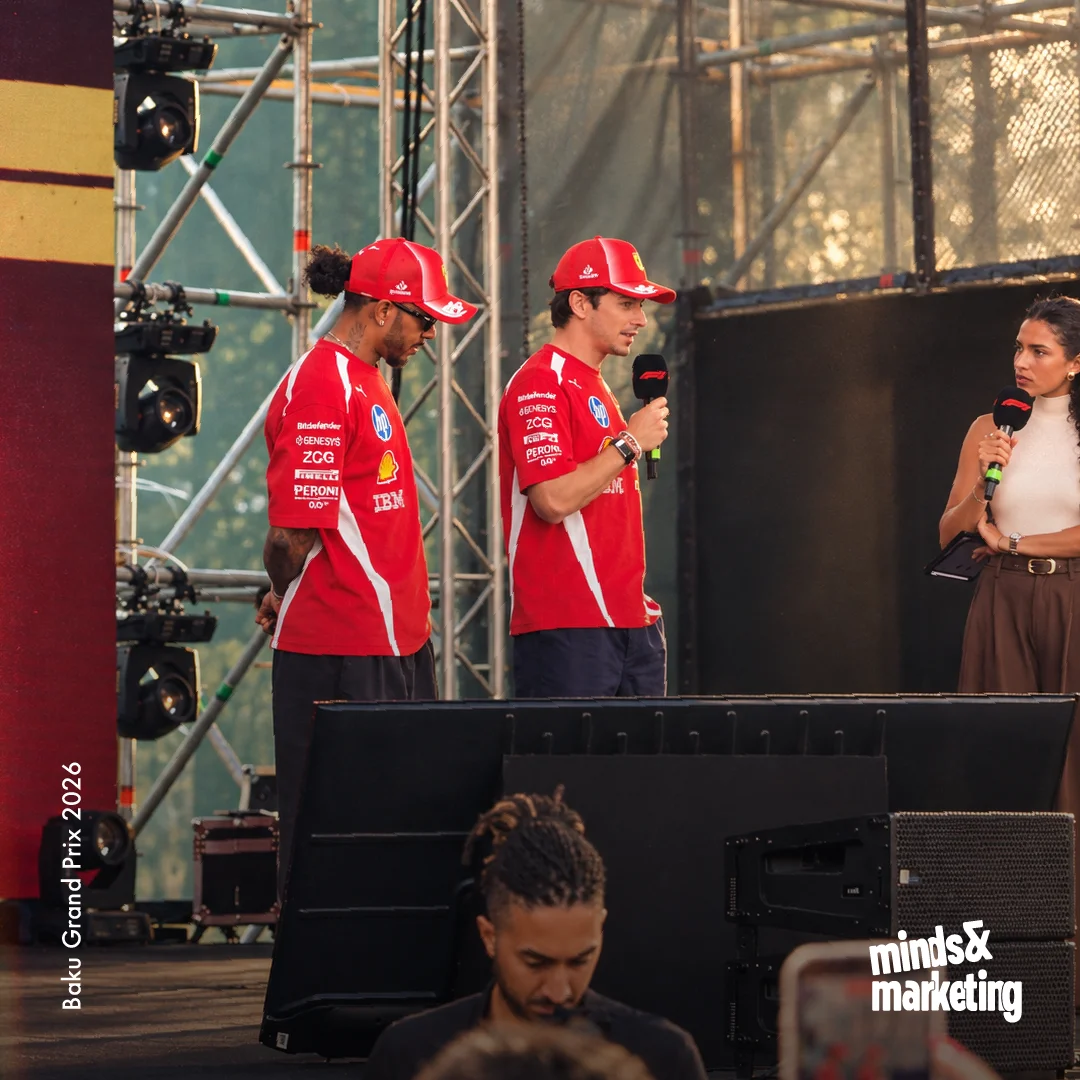
But what makes this format interesting isn't simply the opportunity to see a famous driver. It's the quality of the interaction. For example, Mercedes driver George Russell tried on a handmade helmet created by a fan, signed it, and returned it to its owner. A small gesture, perhaps, but for that particular fan, it became a personal moment with someone they admire. These are the interactions that turn a sporting event into a personal story worth remembering and sharing.
- Entertainment zones — turning waiting time into experience. The Fan Zone offered everything from racing simulators and gaming experiences to DJ performances and entertainment areas. Fans could virtually race through the streets of Baku, try a zipline, explore different attractions, or slide down a helmet-shaped slide. There was even a beauty zone where visitors could experiment with new hairstyles and makeup.
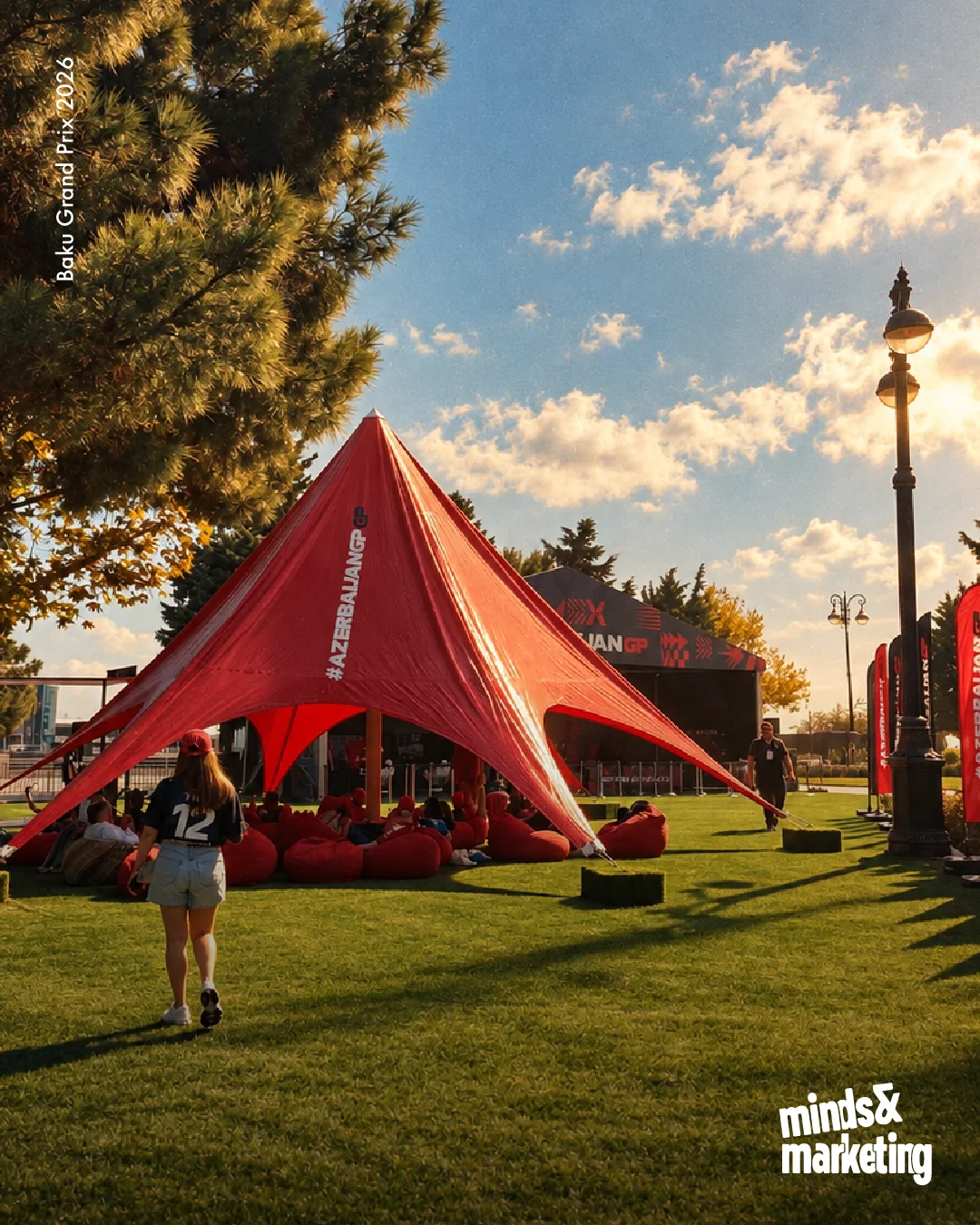
In other words, there was always something to do. And that's the strategic point: the time between racing sessions wasn't treated as waiting time. It became part of the experience itself. Instead of allowing engagement to pause whenever the cars left the track, organisers created multiple reasons for people to stay.
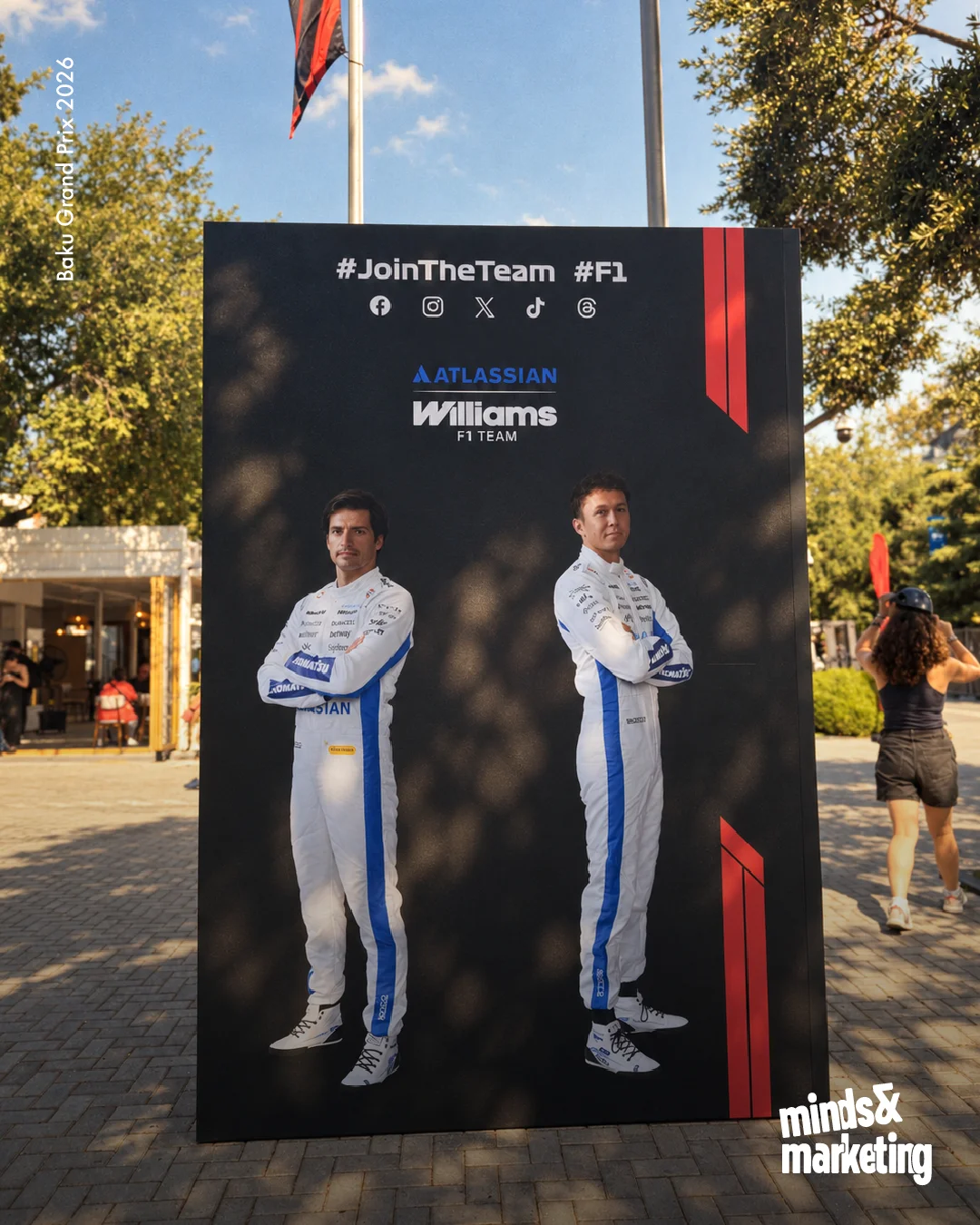
- UGC zones — when fans become media channels. Alongside entertainment, the Fan Zone featured installations designed to encourage user-generated content. Fans could take photos with racing suit displays that created the illusion of wearing their favourite drivers' uniforms, pose with driver posters, photograph the World Championship trophy, or capture a giant Formula 1 logo positioned by the sea.
These weren't just decorative elements. They gave people something worth capturing and sharing. And when fans share their experiences, they naturally become part of the event's media distribution. This reflects a broader shift in event marketing: the audience is no longer simply consuming the experience; it is actively creating and distributing content around it.
Beyond these activations, the circuit featured food outlets, official merchandise stores, sponsor experiences, and numerous other attractions. Everything was organised around one principle: throughout their time at the circuit, fans should always have something to see, do, try, or share. As a result, the hours before the race and the intervals between sessions became valuable parts of the overall experience.
what can Georgian sports brands learn?
Of course, the financial resources, infrastructure, and sponsorship opportunities available to Formula 1 are vastly different from those of Georgian sports clubs. But the point isn't to replicate Baku's model. It's to understand the thinking behind it.
How do fan engagement mechanisms work? What motivates people to attend sporting events? What makes an experience meaningful enough to repeat? And how can sports organisations design their events around those motivations?
For Georgian sport, the opportunity lies in making attendance less dependent on team performance, the reputation of an opponent, or the significance of a particular match. Fans need reasons to come, reasons to stay, and reasons to return.
There are several lessons worth considering:
- Build the brand before trying to fill the stands. Formula 1 demonstrates what happens when a strong sports brand places fans at the centre of its strategy. Before focusing on ticket sales or planning individual events, sports organisations need to build brands that people want to identify with, connect to, and become part of. Without a strong brand, attracting someone to a single event may be possible, but turning that person into a loyal fan is much harder.
- Start the experience long before matchday. Event marketing shouldn't begin the day before the competition. City branding, social media storytelling, ticket campaigns, and partner activations can start building anticipation weeks or months in advance. The goal is to make the upcoming event feel like something people want to be part of before it even begins. Matchday should become matchweek.
- Don't just sell sport. Sell emotion. Atmosphere, belonging, adrenaline, identity, access, and entertainment all contribute to the experience. The match or race is the central attraction, but it isn't the entire product. People come for the competition, yet their overall experience is shaped by everything surrounding it.
- Turn spectators into participants. Predict → Play → Participate → Share → Watch → Win → Return. Fan engagement becomes more meaningful when people have opportunities to participate rather than simply observe. The more ways fans can interact with an event, the more opportunities there are to deepen their connection with it.
- Make sponsorship part of the experience. For sponsors, the opportunity lies beyond logo placement. Activations, interactions, and benefits that genuinely improve the fan experience can create stronger associations with a brand. When a sponsor contributes something meaningful, it becomes part of what people remember.
- Design moments worth sharing. Today's fans are not just an audience; they are also potential content creators and distribution channels. Creating moments people naturally want to photograph, record, and share can extend the experience far beyond the venue. A single fan's story can become content that reaches thousands of others.
Ultimately, filling the stands isn't simply about organising a great match or delivering an exciting race. A sports brand needs to answer three fundamental questions: Why should fans come? Why should they stay? And why should they return?
If the only answer to all three is the competition happening on the field, then a significant part of the sports product's potential remains untapped.